People communicate in different ways.
Some prefer to say exactly what they think and express their needs directly.
Others choose more subtle ways to communicate, hoping others will understand their feelings or intentions.
Neither style is automatically good or bad.
However, the way people communicate can strongly influence how messages are received.
Understanding different communication styles can help you recognize your own habits, avoid misunderstandings, and create more effective conversations.
What Is Direct Communication?
Direct communication means expressing thoughts, feelings, and needs clearly and openly.
People who communicate directly often:
- Say what they mean
- Explain their expectations clearly
- Address problems openly
- Ask for what they need
For example:
“I need more time to finish this project.”
“I felt uncomfortable with what happened earlier.”
Direct communication focuses on clarity and reducing confusion.
What Is Indirect Communication?
Indirect communication often relies on suggestions, hints, or implied meanings.
People may communicate this way because they want to:
- Avoid conflict
- Protect someone’s feelings
- Maintain harmony
- Avoid appearing demanding
For example:
Instead of saying:
“I need help with this task.”
Someone might say:
“This has been a lot to handle lately.”
The listener may understand the message, but they may also miss the intended meaning.
Direct Communication vs Indirect Communication: Key Differences
| Direct Communication | Indirect Communication |
|---|---|
| Clearly states thoughts and needs | Suggests thoughts and needs indirectly |
| Reduces uncertainty | Requires interpretation |
| Addresses issues openly | May avoid uncomfortable topics |
| Creates faster understanding | May protect feelings in some situations |
| Requires confidence and honesty | Requires awareness of context |
Both styles can be useful depending on the situation.
The challenge is knowing when and how to use each approach.
The Benefits of Direct Communication
Direct communication can help people:
- Prevent misunderstandings
- Build trust
- Solve problems faster
- Create clearer expectations
In relationships and workplaces, unclear communication can often create frustration.
When people clearly express what they think and need, others have a better chance of responding appropriately.
The Benefits of Indirect Communication
Indirect communication is not always ineffective.
In some situations, a more subtle approach can help people:
- Show sensitivity
- Avoid unnecessary tension
- Consider cultural expectations
- Handle emotional situations carefully
The problem occurs when indirect communication replaces honest expression completely.
When Communication Styles Create Problems
Many conflicts happen when two people use different communication styles.
For example:
One person may think:
“If they needed something, they would just say it.”
The other person may think:
“If they cared, they would notice without me asking.”
These different expectations can create confusion and disappointment.
Understanding communication differences can help people respond with more awareness.
How to Develop a Healthier Communication Style
A balanced communicator learns to combine clarity with consideration.
Helpful habits include:
- Expressing thoughts honestly
- Choosing words carefully
- Considering the other person’s perspective
- Explaining expectations clearly
- Asking questions instead of assuming
Good communication is not about being direct all the time.
It is about making sure your message creates understanding.
Does this sound like you? There’s more to explore.
Explore the Collection →Awakening to Human Nature

Break the Anxiety Circle
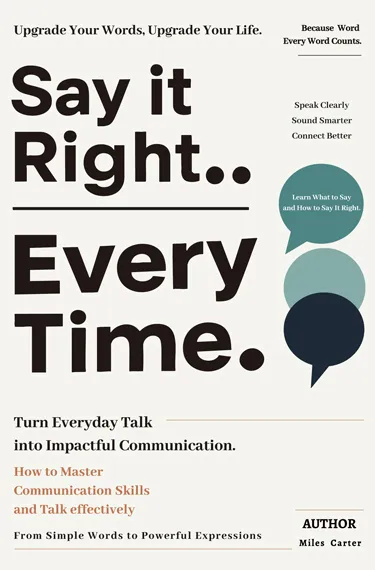
Say it Right..Every Time.
The Parent You Aspire to Be

A Book That Helps You Improve Communication Patterns
Understanding communication styles is only the beginning.
To create better conversations, people also need to understand how their words, emotions, and habits influence interactions.
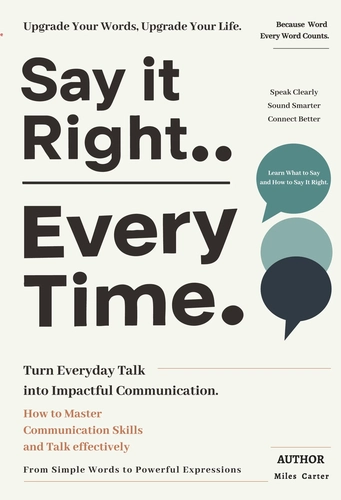
Say It Right Every Time by Miles Carter explores how readers can communicate with more intention and effectiveness.
The book focuses on:
- Expressing ideas more clearly
- Avoiding common communication mistakes
- Building stronger conversation habits
- Creating better understanding between people
It helps readers recognize that successful communication is not only about what they say, but also how their message is delivered.
Why Read Say It Right Every Time by Miles Carter?
This book may be helpful for people who:
- Want to improve everyday conversations
- Often experience misunderstandings
- Struggle to express thoughts clearly
- Want healthier relationships
- Hope to communicate with more confidence
Final Thoughts
Direct and indirect communication are two different approaches to expressing thoughts and feelings.
Direct communication often creates clarity.
Indirect communication can sometimes provide sensitivity and emotional awareness.
The key is learning how to communicate in a way that creates understanding.
By becoming more aware of your communication habits, you can build stronger relationships and more meaningful conversations.
For readers who want to improve the way they express themselves and develop better communication patterns, Say It Right Every Time by Miles Carter offers practical insights into becoming a more effective communicator.