Have you ever explained something but felt like the other person understood it differently?
Maybe your message was clear in your mind, but your words did not communicate the same meaning.
This is a common communication challenge.
Many misunderstandings happen not because people do not have good ideas, but because they struggle to express those ideas clearly.
Clear expression is an important skill that can improve:
- Personal relationships
- Workplace communication
- Social interactions
- Everyday conversations
Learning how to communicate your thoughts more effectively can help others understand you better and create stronger connections.
Why Do People Struggle to Express Themselves Clearly?
Expressing yourself clearly requires more than simply speaking.
Several common challenges can make communication difficult.
Unorganized Thoughts
Sometimes people know what they feel or think but have trouble putting those ideas into a clear structure.
When thoughts are unclear, messages can become confusing.
Fear of Being Judged
Some people avoid expressing their true opinions because they worry about how others will react.
This can lead to vague or incomplete communication.
Using Words That Do Not Match the Message
The same idea can be understood differently depending on the words and tone used.
Choosing the right words helps create clearer conversations.
Emotional Reactions
Strong emotions can make it harder to communicate calmly.
When people feel frustrated, nervous, or upset, they may say things they do not truly mean.
1. Organize Your Thoughts Before Speaking
One of the easiest ways to improve communication is to create more structure before you speak.
Before sharing an idea, ask yourself:
- What is the main point I want to express?
- What information does the other person need?
- What result do I hope to achieve?
A clear message usually starts with a clear thought process.
2. Use Simple and Direct Language
Many people believe complicated words make communication sound more professional.
However, clear communication is often simple communication.
Instead of using:
- Long explanations
- Unnecessary details
- Confusing expressions
Try focusing on:
- The main idea
- Specific examples
- Clear wording
People understand messages better when they do not have to guess what you mean.
3. Consider the Other Person’s Perspective
Good communication is not only about what you want to say.
It is also about how the other person receives your message.
Before speaking, consider:
- What does this person already know?
- What concerns might they have?
- How can I explain this in a way they understand?
Understanding your listener can make your communication more effective.
4. Pay Attention to Tone and Timing
The same sentence can create different reactions depending on how and when it is said.
Communication includes:
- Words
- Tone of voice
- Facial expressions
- Timing
A message that is technically correct may still create conflict if it is delivered without consideration.
5. Practice Saying What You Really Mean
Many people avoid direct communication because they want to avoid discomfort.
However, unclear communication often creates bigger problems later.
Learning to express yourself honestly and respectfully can help you:
- Set healthier boundaries
- Share your needs
- Build trust
- Strengthen relationships
Does this sound like you? There’s more to explore.
Explore the Collection →Awakening to Human Nature

Break the Anxiety Circle

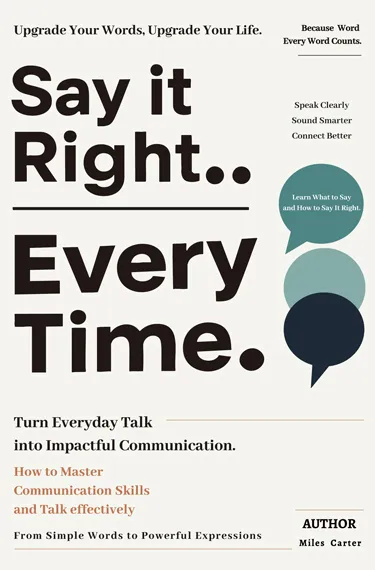
Say it Right..Every Time.
The Parent You Aspire to Be

Common Communication Habits That Create Misunderstandings
Some habits can make conversations less effective.
Assuming Others Understand Without Explanation
People cannot always know what you mean unless you communicate clearly.
Talking Too Much Without a Clear Point
More words do not always create better understanding.
Avoiding Important Conversations
Ignoring issues can create confusion and emotional distance.
Focusing on Winning Instead of Understanding
Good communication is about connection, not proving who is right.
How Say It Right Every Time Helps You Communicate More Clearly
Improving communication requires awareness and practice.
Say It Right Every Time by Miles Carter explores how people can develop stronger communication habits and express themselves more effectively.
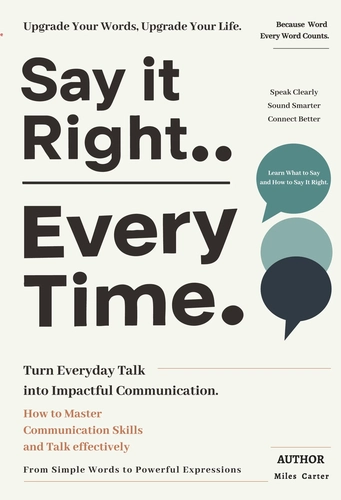
The book focuses on:
- Communicating thoughts with greater clarity
- Reducing misunderstandings
- Building better conversation habits
- Creating stronger connections through language
For readers who want to improve everyday communication and become more confident in expressing their ideas, this book offers practical insights that can be applied in real situations.
Final Thoughts
Clear communication is a skill that improves with practice.
You do not need to become a perfect speaker to express yourself effectively.
You simply need to understand your message, consider your audience, and choose your words with intention.
When people understand what you truly mean, conversations become easier, relationships become stronger, and connections become deeper.