You have probably seen the videos. Someone cross their arms—they are closed off. Touch their nose—they are lying. Lean in—they are interested.
The problem with most body language advice is that it turns human behavior into a checklist. One gesture equals one meaning. It is simple. It is memorable. And it is wrong.
Real body language is not about memorizing gestures. It is about reading patterns, context, and clusters of signals. The people who are actually good at reading others do not look for one thing. They look at everything—and then they look at what changed.
The two books below take different approaches to the same skill. One is the classic reference. The other gives you a practical framework for using it in real life.
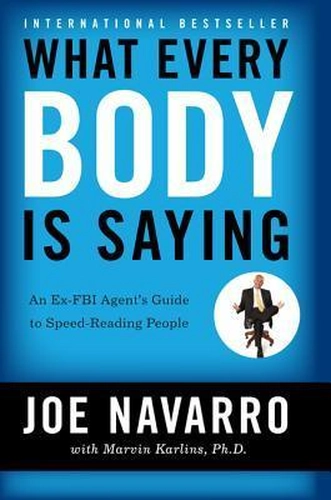
What Every Body Is Saying by Joe Navarro
The gold standard for understanding nonverbal communication.
Navarro spent 25 years as an FBI counterintelligence agent. He interviewed spies, criminals, and terrorists. He learned to read people in high-stakes situations where a wrong read could cost lives.
His book is a field guide to body language. He organizes behaviors by body part—the feet, the legs, the torso, the arms, the hands, the face—and explains what each movement typically indicates. A person who points their feet toward the door is ready to leave. Someone who touches their neck may be feeling stressed. A palm-up gesture usually signals openness.
What makes this book essential is the focus on clusters. A single gesture means nothing on its own. But when combined with other signals, it tells a story. Navarro teaches you to read the whole picture, not just isolated moments.
It is the book that makes body language feel systematic and reliable. But it is also the book that leaves you with one question: now what?
For anyone who wants the definitive reference on what the body actually says.
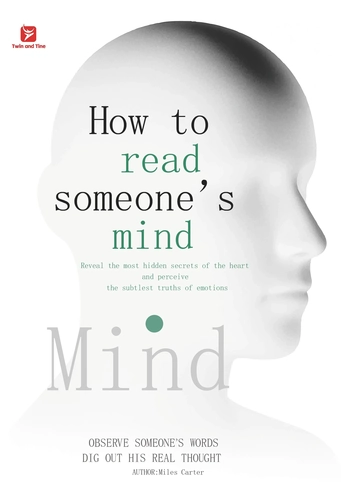
How to Read Someone’s Mind by Miles Carter
From observation to insight—what to actually do with what you see.
Navarro teaches you to read the signals. Carter teaches you what to do with them.
Where Navarro is a reference manual, Carter is a practical framework. He breaks reading people into four dimensions: the face, the body, the voice, and the context. You learn to combine facial expressions, gestures, vocal changes, and situational cues into a complete picture.
A forced smile does not reach the eyes—that tells you something. A crossed arm might mean defensiveness—or it might mean they are cold. The book trains you to distinguish between the two by looking at the whole context, not just one gesture.
The book also covers patterns over time. A single off moment means very little. A consistent shift in behavior tells you something real. Most people have patterns in how they communicate. When those patterns break, something has shifted underneath.
What makes this book valuable is the application. You are not just learning to observe. You are learning to understand. And understanding is what changes how you show up in conversations.
For anyone who wants to move from “I notice things” to “I understand what they mean.”
These two books approach body language from different angles. Navarro gives you the definitive reference—what each gesture typically means and how to read clusters. Carter gives you the practical framework—how to combine signals with context and what to do with what you see.
They are not substitutes. They are complements. One teaches you to see. The other teaches you to understand.
Frequently Asked Questions
Which book should I read first?
Start with Navarro if you want a systematic reference for what each gesture means. Start with Carter if you want to apply body language in real conversations and relationships.
Do these books overlap?
Yes and no. Navarro focuses on the signals themselves. Carter focuses on the framework for interpreting them. Together, they cover both sides of reading people.
Do I need to memorize everything to be good at reading body language?
No. The best readers do not memorize. They pay attention to patterns, context, and what changes. Both books emphasize this.