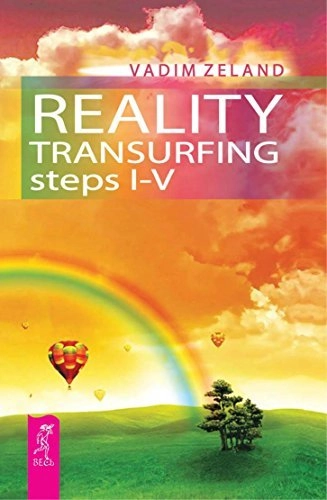
I picked up this book with a mug of cold coffee and a chip on my shoulder. A 700-page self-help tome written by a former quantum physicist from Russia who calls himself “Nobody” on his author bio. I was ready to hate it. I read the first chapter sitting in my kitchen, and I remember thinking this is either the most profound thing I have ever encountered or complete nonsense. Maybe both. The question that kept nagging me through all five volumes: how can a book this strange, this repetitive, this utterly confident in its own mythology, still manage to describe my life so accurately that I felt exposed?
Vadim Zeland’s central claim is simple enough to state and difficult to swallow. Reality is not fixed. There are infinite versions of every moment, every outcome, every life path, and we choose which one we occupy through our thoughts, our energy, and most crucially, through something he calls “importance.” The more importance we assign to a goal, the more we push it away. The more we need something, the less likely we are to get it. This is counterintuitive. It also happens to be true in ways I could not argue with after testing it.
The Protagonist Is You, and That Is Terrifying
There is no protagonist in this book. No hero, no love story, no villain with a tragic backstory. Zeland writes about a faceless “you” throughout, which sounds like a gimmick but becomes genuinely unsettling. You are the main character. Your job, your relationships, your bad habits, your secret dreams, all of it becomes the plot. The core conflict is between your current self and the version of you that exists in another reality line, the one who made different choices, the one who does not sabotage success out of fear.
Here is where it gets uncomfortable. Zeland claims that most people are controlled by what he calls “pendulums,” which are energy structures that feed on human attention. Think of them as collective belief systems, social media trends, political movements, even workplace cultures. They are not evil, exactly. More like parasitic. They demand your energy, your outrage, your constant engagement, and in return they give you a sense of belonging. The problem is that belonging comes at the cost of your own intentions. You spend your life serving the pendulum instead of yourself.
I recognized myself immediately. I have spent years worrying about what colleagues think, refreshing feeds I claim to hate, assigning desperate importance to outcomes I could not control. Zeland asks a brutal question: who is living your life, you or the pendulums you feed? That question hung over me for weeks after finishing the book. The answer was not flattering.
The Core Metaphor That Works
The central image of this book is the “slide.” Zeland describes reality as composed of countless slides, each one a variation of a scene, like frames in a film reel. Your intention, combined with your energy, determines which slide you land on. This metaphor sounds like new age fluff, but it has a strange practical power. Visualize the outcome you want, then release your grip on it entirely. Do not attach importance to whether it happens. Just know it is available to you and move on. This is the technique readers call “slides,” and it appears throughout the book in different forms.
What struck me most was the chapter on coordination. Zeland argues that when you are in the right place at the right time, doing the right thing, life flows with minimal effort. You do not force doors open. You walk through ones that are already ajar. This is the opposite of hustle culture, and I will admit my first instinct was to dismiss it as lazy philosophy. Then I remembered every job I got through a random conversation, every relationship that started when I stopped looking, every opportunity that appeared right after I gave up trying to control the outcome.
There is a pattern here that Zeland names with brutal clarity. The harder you chase, the faster it runs. The more you need, the less you receive. The book explains this through the concept of “excess potential,” which is the energy created when you inflate the importance of something. That excess potential creates a balancing force, a “wind” that pushes you away from your goal. The solution is to reduce importance. Care deeply, but hold your desires loosely.
Where the Book Tests You
I will be honest about the flaws. This book is far too long. The first nine chapters repeat the same principles with different metaphors, and I found myself skimming sections that felt like padding. The translation has awkward moments, and the author’s quantum physics references are more poetic than scientific. If you have read Neville Goddard or other manifestation writers, you will recognize familiar territory dressed in Russian formalism. Zeland is not saying anything entirely new. He is saying it with unusual rigor and a complete lack of warmth, which some readers will find refreshing and others will find off-putting.
The book also makes claims that are impossible to verify. Dreams are described as visits to other reality lines. Evil entities feed on human suffering. The author positions himself as a “retranslator” of ancient knowledge, not a creator. I cannot accept all of this, and I suspect you will not either. That does not matter. The practical core—the ideas about importance, intention, and pendulums—works regardless of whether you believe the metaphysical scaffolding around it.
People who feel stuck in patterns they cannot explain will find something here. People who try hard and still fail. People who are tired of hustle culture and want permission to try a different approach. People who are skeptical of self-help but curious about why some people seem to succeed effortlessly. If you require strict scientific evidence before trying anything, skip it. If you get angry when a book asks you to consider that your beliefs might be creating your prison, skip it. If you are looking for a quick fix with no internal work, skip it.
What I Gained
This book changed how I approach most things in life. I have stopped forcing outcomes. I have reduced my importance on things I cannot control. I have started paying attention to which “pendulums” I feed with my attention and which ones I can simply walk away from. The results have been subtle but real. Projects flow more easily. Relationships feel less strained. I worry less and accomplish more. It sounds dramatic, but the shift in perspective feels like removing a heavy coat I did not know I was wearing.
The book will not give you a step-by-step plan for getting rich or finding love. It will not offer you a pill to swallow. What it offers is a lens through which to see your own patterns, and then the uncomfortable freedom to change them. I recommend this book to anyone who has ever felt like they are fighting the current instead of swimming with it. Read it slowly. Skip the repetitive parts. Test the principles with a small goal first. Then decide for yourself whether Zeland is a madman or a messenger.
I still do not know who Vadim Zeland is, and he insists that does not matter. He is right. What matters is whether you are willing to ask yourself the question this book keeps returning to: what if your reality is not fixed, and what if you have more control than you think?

