You have probably met someone like this.
They are charming. They say all the right things. They smile at the right moments. But something feels off. You cannot name it. You just do not trust them.
The trait that makes people instantly distrust someone is not arrogance. It is not rudeness. It is not even dishonesty—because dishonesty often takes time to detect.
The trait is incongruence.
When someone’s words do not match their body language. When their tone does not match their content. When they say one thing but you sense another. Your brain registers the mismatch before you consciously notice it. You feel uneasy. You do not know why. But you know something is off.
Incongruence is a signal. It tells you that the person is not fully present, not fully honest, or not fully aware of themselves. They are performing instead of connecting. And your instincts pick up on that immediately.
If you want to understand why some people trigger that feeling and others do not—and what you are missing when you miss it—these three books cover different angles of the same question.
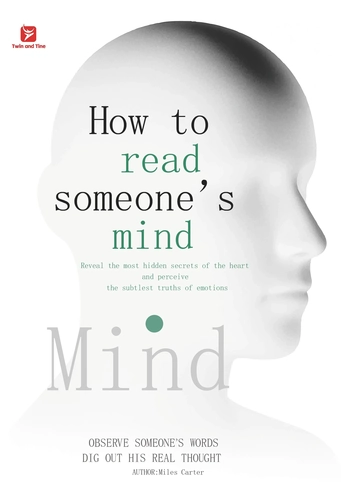
How to Read Someone’s Mind by Miles Carter
What signals tell you someone is incongruent?
Incongruence rarely announces itself. It shows up in small ways. A forced smile that does not reach the eyes. A tone that does not match the words. A hesitation before answering. A body that leans away while the mouth says “I agree.”
Carter’s book teaches you to read the signals people reveal through their face, body, voice, and behavior over time. The mismatch between what someone says and what they do. The pattern of inconsistency that you explained away because you wanted to believe the best.
Once you learn to see these signals, you stop ignoring what your instincts already know. You stop wondering “what is off?” and start seeing exactly what it is.
For anyone who has ever felt something was off and wished they could name it.
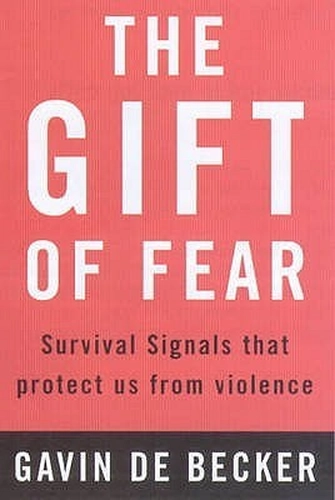
The Gift of Fear by Gavin de Becker
Why do you feel uneasy around certain people before you know why?
De Becker’s book is built on one argument: fear is a gift. Your intuition is not random. It is your brain processing information faster than your conscious mind can keep up. It registers incongruence—the mismatch between what someone projects and what they are—before you can articulate it.
The book explains why some people trigger that feeling of distrust. They are not always obviously threatening. They are often charming. But your brain picks up on something beneath the charm. A shift in energy. A subtle manipulation. A performance that does not quite hold together.
De Becker teaches you to trust that feeling. To stop overriding your instincts with politeness or wishful thinking.
For anyone who has ever ignored their gut and later wished they had not.
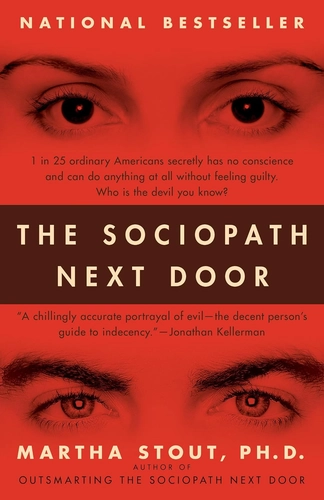
The Sociopath Next Door by Martha Stout
What happens when someone feels no guilt—and how do you spot them?
Incongruence is often a signal of something deeper. A lack of empathy. A lack of guilt. A lack of genuine emotional connection. People who feel no remorse can mimic emotions convincingly. They can say the right things. They can appear caring. But something about them feels hollow.
Stout’s book argues that about 4% of people have antisocial personality disorder—sociopathy. They are not all criminals. Many are in offices, relationships, and social circles. They are charming. They are successful. They are also incapable of genuine emotional connection.
What makes this book essential is the practical guidance. Stout gives you specific signs to look for and specific strategies for protecting yourself.
For anyone who has ever wondered why someone seemed perfect—but felt wrong.
These three books each approach distrust from a different angle. Carter helps you read the signals you are missing. De Becker teaches you to trust your instincts. Stout reveals the personality trait that makes people feel hollow.
If you want to stop ignoring that feeling of distrust and start understanding what it is telling you, start with the one that matches where you are stuck.
Frequently Asked Questions
What is the most reliable sign someone is not trustworthy?
Incongruence. When their words, tone, body language, and behavior do not align. A person who is congruent may still have flaws. A person who is incongruent is not safe to trust.
Why do some people feel “off” even when they are being polite?
Because politeness is a performance. Congruence is not about being polite. It is about being real. When someone is performing, your instincts pick up on the gap between the performance and the person.
Can I learn to read these signals, or do I need to be naturally intuitive?
You can learn. Intuition is pattern recognition. The people who seem instinctively good at reading others have just practiced paying attention to the right things. Books like these speed up the process.
| Best for | |
|---|---|
| How to Read Someone’s Mind | Learning to see the signals of incongruence |
| The Gift of Fear | Trusting your instincts when something feels off |
| The Sociopath Next Door | Recognizing the absence of empathy or guilt |