Have you ever had the same worry appear in your mind again and again?
Maybe you keep replaying a conversation.
Maybe you constantly imagine what could go wrong.
Maybe your mind keeps searching for answers to questions that do not have clear solutions.
This experience can feel exhausting.
Many people believe they overthink because they are weak or unable to control their minds.
However, anxious thinking is often connected to how the brain tries to protect us.
Understanding why these patterns happen is the first step toward changing them.
Why Does Your Brain Repeat Anxious Thoughts?
The brain naturally looks for potential problems.
From a survival perspective, noticing danger and preparing for possible challenges helped humans stay safe.
However, in modern life, this protective system can sometimes become overactive.
Instead of helping you solve a real problem, your brain may continue creating possible scenarios.
This can lead to:
- Constant worrying
- Replaying past situations
- Imagining negative outcomes
- Feeling mentally exhausted
The problem is not that you have thoughts.
The problem is getting stuck inside them.
Anxiety Creates a Thought Loop
Anxious thoughts often follow a repeating pattern.
A small concern appears.
↓
Your brain tries to find an answer.
↓
You analyze more details.
↓
The uncertainty creates more anxiety.
↓
The cycle continues.
This is why simply telling yourself “stop worrying” usually does not work.
The brain is not responding to a lack of logic.
It is responding to a perceived threat.
1. Learn to Notice Thoughts Instead of Becoming Them
One of the most important skills for managing anxiety is creating distance from your thoughts.
Instead of thinking:
“I am going to fail.”
Try changing it to:
“I am having a thought that I might fail.”
This small change creates separation between you and the anxious story your mind is creating.
Thoughts are information.
They are not always facts.
2. Stop Trying to Find Perfect Certainty
Many anxious thoughts come from the desire to know exactly what will happen.
You may think:
“What if I make the wrong decision?”
“What if something goes wrong?”
“What if I cannot handle it?”
But life rarely provides complete certainty.
Learning to accept some uncertainty can reduce the pressure your mind puts on you.
Emotional strength does not come from controlling everything.
It comes from trusting yourself to handle what happens.
Does this sound like you? There’s more to explore.
Explore the Collection →Awakening to Human Nature

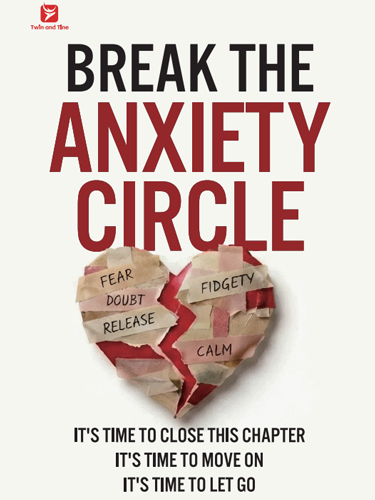
Break the Anxiety Circle
Say it Right..Every Time.
The Parent You Aspire to Be

3. Redirect Your Attention
Your brain strengthens the patterns you repeatedly practice.
If you spend hours focusing on worries, those thoughts become easier to repeat.
You can create healthier mental patterns by intentionally shifting your attention.
Try:
- Going for a walk
- Exercising
- Writing down your thoughts
- Learning a new skill
- Spending time with people you care about
The goal is not to escape your emotions.
The goal is to teach your brain that anxiety is not the only thing that deserves your attention.
4. Understand Your Anxiety Triggers
Everyone experiences anxiety differently.
Some people become anxious about relationships.
Others worry about work, health, finances, or future decisions.
Pay attention to patterns:
- When do anxious thoughts usually appear?
- What situations trigger them?
- What emotions come before them?
Understanding your triggers helps you respond more intentionally.
5. Create New Responses to Stress
Breaking anxious thought patterns requires practice.
Instead of immediately reacting to anxiety, try creating a pause.
You can:
Take a Moment Before Reacting
A short pause can prevent anxious thoughts from controlling your actions.
Question the Thought
Ask whether your fear is based on facts or assumptions.
Choose a Helpful Response
Focus on what you can control instead of what you cannot.
Small changes in response can gradually change your relationship with anxiety.
Can You Completely Stop Anxious Thoughts?
The goal is not to eliminate every anxious thought.
Everyone experiences worry sometimes.
A healthier goal is learning how to respond differently.
When you understand your thoughts, you can:
- Feel emotions without being controlled by them
- Make decisions with more confidence
- Recover faster from stressful moments
- Create more inner stability
Anxiety may still appear, but it no longer has complete control.
How Break the Anxiety Circle Helps You Understand Anxiety Patterns

Breaking anxious thought cycles often requires more than temporary solutions.
Break the Anxiety Circle by Miles Carter focuses on understanding the patterns behind anxiety and overthinking.
The book helps readers explore:
- Why anxious cycles develop
- How repeated thoughts affect emotions
- Ways to create healthier mental habits
- How to regain control over your mindset
For anyone who feels trapped in constant worry or overthinking, this book provides practical insights for building a calmer relationship with your thoughts.
Final Thoughts
Anxious thoughts can feel powerful, but they do not have to control your life.
By understanding how thought patterns work, creating emotional distance, and practicing healthier responses, you can gradually build more calm and confidence.
Changing your relationship with anxiety takes time.
But every time you pause, observe, and choose a different response, you are creating a healthier mental pattern.