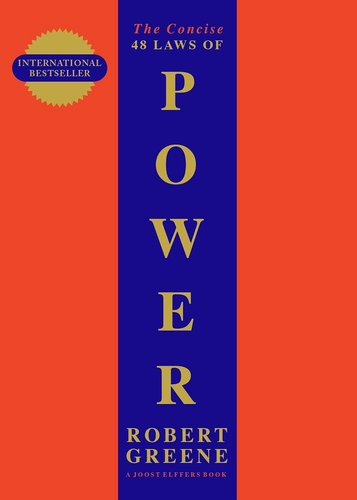
I found this book on a train platform in a city I no longer remember the name of. The cover was worn, and someone had underlined half the laws in angry pencil. I bought it because I was twenty-three and confused about why the most talented people I knew kept losing to the most tactical ones. That question never quite left me. It sits somewhere in the back of my throat even now. The Concise 48 Laws of Power presents itself as a summary of Greene’s larger work, but it functions as something leaner and sharper. A set of observations about how humans actually behave when they want something. The real question this book forced me to confront was not whether power is evil. It was whether I could recognize the game being played around me without becoming a player myself.
What the Book Actually Argues
Robert Greene builds his argument on a simple foundation. Every interaction carries a power dynamic, whether we acknowledge it or not. The person who understands this dynamic shapes the interaction. The person who ignores it gets shaped instead. The concise edition strips away much of the historical padding from the original, leaving the bones of each law exposed. What remains is uncomfortable reading. Law 14 tells us to pose as a friend while working as a spy. Law 15 instructs us to crush our enemy totally. These are not suggestions for moral living. They are descriptions of behavior that has recurred across centuries of courtiers, generals, and executives. Greene is not inventing these patterns. He is documenting them.
The Structure That Makes It Stick
What makes this book effective is not its philosophy but its structure. Each law follows a consistent rhythm. A bold statement. A historical example. A concluding remark. The reader never gets lost. The examples draw from figures like Louis XIV, Talleyrand, and Sun Tzu, grounding abstract principles in concrete moments. I will admit the format has limits. Some laws feel repetitive, and the historical anecdotes are compressed to the point of losing texture. The book reads more like a field guide than a work of literature. That is both its strength and its weakness. It gives you tools quickly, but it does not give you the nuance of when to set those tools down.
The Uncomfortable Truth
Here is what unsettled me most. The book works. I tested a few principles in low-stakes situations, and they produced results. Saying less than necessary made people lean in. Guarding my reputation changed how colleagues approached me. That effectiveness is precisely what makes the book dangerous. It flatters the reader into thinking they are learning neutral information when they are actually absorbing a worldview where every interaction is a transaction. There were moments I wanted to throw the book across the room. Not because it was wrong, but because it was right about things I preferred not to see. The reader who takes every law literally will become exhausting to be around. The reader who dismisses the book entirely will remain blind to the game being played on them.
The Gift That Saves It
What saves this book is its honesty about human nature. Greene does not pretend that power dynamics disappear when we ignore them. He simply names what most of us prefer to leave unnamed. That naming is valuable, even if the application requires discernment. The concise format actually helps here. It presents the laws without excessive justification, forcing the reader to supply their own moral framework. I found myself arguing with the book constantly. That argument was the most productive part of the experience. It clarified what I actually believed about trust, ambition, and the kind of person I wanted to be.
Choosing How to See the Game
This book suits people who feel naive in competitive environments and want to understand the rules of the game. It suits professionals navigating office politics, entrepreneurs negotiating deals, and anyone who has been burned by someone more strategic than themselves. It does not suit readers looking for comfort or validation. It will not tell you that kindness always wins or that authenticity always prevails. The book is also not for anyone who wants a step-by-step guide to success, because the laws describe tendencies rather than guarantees. What you get instead is a mirror, and you may not like everything you see in it.
The Only Choice That Matters
I have read this book twice. The first time I took notes on every law. The second time I took notes on which laws made me uncomfortable, and why. The second reading taught me more. This book does not give you power. It gives you awareness, which is the only kind of power that does not corrupt. You will still have to decide what to do with that awareness. Greene gives you no help there, and perhaps that is the point. The laws are neutral. The application is everything. We do not get to choose whether power exists in our lives. We only get to choose whether we understand it. That choice is ours alone.

