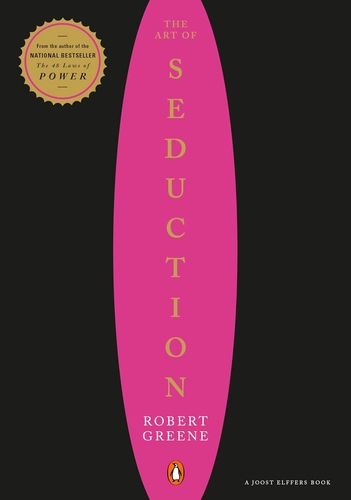
I bought Robert Greene’s The Art of Seduction on a Tuesday afternoon, mostly out of spite. A man I knew, the kind who uses words like “frame” and “outcome independence,” kept quoting it. I wanted ammunition to prove it was trash. I told myself I was reading it for research, to catalogue the tricks so I could warn my friends. I did not expect to underline half the book and then sit in my kitchen, staring at the wall, feeling slightly sick. The central argument here is uncomfortable: we are not seduced against our will. We are seduced because we are starving for a version of ourselves that someone else dares to see first. Greene’s book is not about how to catch a partner. It is about how we all, constantly, beg to be caught.
The Empty Space Between People
Greene, a cynical and brilliant historian, breaks the book into archetypes: the Siren, the Rake, the Charmer, the Star. I expected to hate these figures, these cartoon villains. Instead, I found myself recognizing them in the mirror. He describes the Coquette, who withdraws to create longing, and I thought of a friend who texts back after three days, on purpose. He describes the Ideal Lover, who mirrors your soul back to you, and I thought of the last person I dated, who loved everything I loved until I realized I loved nothing about them. The plot of this book, if you can call it that, is the seduction process itself, a slow ritual of attention, mystery, and strategic absence. I was hooked by the case studies—Cleopatra and Kennedy and Casanova—but the real suspense was internal. I kept asking, have I been the seducer or the target? The answer, horrifyingly, was both. This is not a moral book. It is a descriptive one. It shows you the game board and then points out that you are a piece on it, not the player holding it.
The Collusion We All Participate In
The core theme is not power, as the marketing suggests. It is collusion. Greene argues, convincingly, that the “victim” of seduction is always a willing participant, often more invested than the seducer. He points to the moment of crisis, the moment of surrender, as the moment the target has been waiting for. I remember a story he tells about the French court, where a lady of high station was seduced by a man who barely spoke to her. He simply looked at her, then looked away. She did the rest, constructing an entire romance in her head. This is the key imagery of the book: the empty space between people, the silence that we fill with our own projections. Greene’s craft is in showing that the seducer’s greatest tool is not charm, but the target’s own imagination. We are not fooled by others. We are fooled by ourselves, with a little help. This book is deeply uncomfortable because it removes our favorite excuse: I didn’t know what they were doing. You knew. You just liked the story they helped you tell.
What the Book Can and Can’t Do
Greene occasionally treats his historical anecdotes as proof rather than illustration, and some of his claims about gender dynamics feel dated and essentialist, even for a book published in 2001. The chapter on political seduction is cynical to the point of being useless; he reduces complex historical movements to the charisma of individuals. Also, the book is long, dense, and at times repetitive, like being lectured by a very smart, very smug friend. It is not a practical manual for most people. If you read it looking for pickup lines, you will be lost by page fifty. It is better read as a work of dark psychology, a taxonomy of human weakness.
Anyone who has ever wondered why they fell for someone who was clearly wrong for them will find something here. Anyone who works in sales or marketing and wants to understand the mechanics of persuasion. Anyone who writes fiction and needs to understand how attraction operates. If you are very happy and secure in your relationships, skip it. If you are prone to paranoia and seeing manipulation everywhere, skip it. It will feed your worst instincts. The book will not make you a better seducer. It will make you a more honest observer of your own motives, which is a far more valuable and painful gift. I finished it and felt exposed, not empowered.
The Shape of Our Own Longing
This book won’t teach you how to get the person you want. It will teach you why you want them, and that is a much harder lesson. I came for ammunition and left with a confession. The strongest cage was never iron bars. It was the warm, golden cage of being seen, even falsely, even briefly. I still think about that man who quoted the book, and I wonder if he knows that the real trick was not in the technique, but in my willingness to be captured. Greene’s ultimate insight is that we are all walking around with empty spaces, and anyone who notices them has a key to our door. The question is not whether we will be seduced. The question is whether we can learn to recognize the shape of our own longing before someone else uses it against us.

