During the day, there is usually something competing for your attention. Work needs to be finished, messages need to be answered, people need your attention, and everyday responsibilities keep your mind occupied. Then the evening arrives, the house becomes quiet, and you finally have a chance to rest. Yet instead of feeling peaceful, your mind suddenly becomes louder. You remember something you said earlier, start thinking about tomorrow, worry about a decision you have not made, or begin imagining everything that could go wrong. For many people, nighttime anxiety is not simply about having too many thoughts. It is what happens when a busy mind finally has enough silence to focus on everything it postponed during the day.
Why Anxiety Can Feel Stronger at Night
Nighttime changes the environment around you.
There are fewer distractions, fewer conversations, and often fewer immediate tasks that require your attention. That creates space for thoughts that were pushed aside earlier to come back.
The Quiet Can Make Thoughts Feel Louder
A concern that seemed manageable at 3 p.m. can feel much more serious at 11 p.m.
The problem itself may not have changed.
Your attention has.
During the day, you might briefly think about an upcoming conversation and then return to work. At night, there may be nothing else competing for your attention, so the same thought can expand into a much longer internal discussion.
You may start with one question and end up imagining ten different outcomes.
Your Mind May Be Trying to Prepare You
Nighttime worrying can sometimes feel as though your brain is doing something useful.
You may think that if you carefully consider tomorrow’s problems tonight, you will be better prepared.
You review what needs to happen.
You imagine possible difficulties.
You think about how someone might respond.
You create backup plans.
The intention may be preparation, but the result can be mental exhaustion.
Preparation Has a Natural Stopping Point
Useful preparation usually leads to something concrete.
You write down what you need to remember.
You prepare what you need for tomorrow.
You decide what action you will take.
Then there is nothing more to do until the situation actually happens.
Anxiety-driven thinking is different because it keeps generating new possibilities after the practical preparation is already finished.
When Tomorrow’s Problems Enter Tonight
One of the most common nighttime anxiety patterns is worrying about something that has not happened yet.
You might have an important meeting tomorrow and begin imagining everything that could go wrong.
Perhaps you will forget something.
Maybe someone will disagree with you.
What if you cannot answer a question?
What if the meeting does not go as planned?
The mind can keep creating scenarios because there is no immediate event to provide new information.
The Future Becomes a Blank Space for Anxiety to Fill
When you do not know what will happen, your imagination can supply possibilities.
Some of those possibilities may be realistic.
Others may be extremely unlikely.
But once you become emotionally invested in them, they can all begin to feel equally important.
Not Every Thought You Have at Night Needs to Be Solved
A useful shift is learning to distinguish between a thought that requires action and a thought that simply wants your attention.
If you need to remember something tomorrow, write it down.
If you need to prepare something, prepare it.
If there is a decision that genuinely needs to be made, give yourself a reasonable time to consider it.
But if you have already done what you can, continuing to think may not provide anything new.
Ask Yourself One Simple Question
“Is there something I can actually do about this tonight?”
If the answer is yes, identify the smallest useful action.
If the answer is no, the next step may be allowing the problem to wait until tomorrow.
That does not mean ignoring it.
It means recognizing that midnight is not always the best time to solve tomorrow’s problems.
Why Replaying the Past Can Keep You Awake
Nighttime anxiety is not always about the future.
Sometimes it comes from the past.
You may remember something awkward you said earlier that day. You may replay an argument from several weeks ago. You may wonder whether you handled a situation differently than you should have.
Because the event has already happened, there is no new action available.
Yet your mind continues reviewing it.
Reflection Can Become Rumination
Reflection can help you learn from an experience.
You might realize what you could do differently next time and then move forward.
Rumination tends to repeat the same material without reaching a useful conclusion.
You replay the conversation.
You imagine another version.
You question your response.
Then you replay it again.
The situation stays the same while your emotional reaction grows.
The Anxiety Cycle Can Start With Something Very Small
A nighttime anxiety episode does not necessarily begin with a major problem.
It might start with a notification.
A thought about money.
A reminder of something unfinished.
A conversation from earlier.
A question about tomorrow.
The initial trigger may be small, but the response can become increasingly complicated.
Trigger → Interpretation → Anxiety → More Thinking
You notice something.
You give it a meaning.
The meaning creates anxiety.
The anxiety makes you think more.
The additional thinking creates new concerns.
Those concerns increase the anxiety.
Eventually, you may not even remember what started the process.
This is why understanding the pattern can be more useful than trying to solve every individual thought.
What Your Nighttime Worry May Be Telling You
Recurring nighttime anxiety can sometimes reveal what your mind is struggling with during the day.
Maybe you have been avoiding a difficult decision.
Maybe you are carrying too many responsibilities.
Maybe you are worried about how someone sees you.
Maybe you have been trying to maintain control over situations that cannot be completely controlled.
Look for the Theme Behind the Worry
Instead of focusing only on the latest thought, ask what connects your recent worries.
If different situations repeatedly lead to the same fear of failure, rejection, uncertainty, or losing control, you may be seeing a deeper emotional pattern.
Recognizing that pattern can be more valuable than analyzing the individual situations separately.
Does this sound like you? There’s more to explore.
Explore the Collection →Awakening to Human Nature

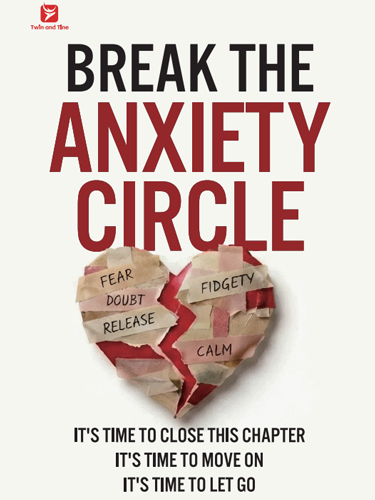
Break the Anxiety Circle
Say it Right..Every Time.
The Parent You Aspire to Be

How to Create More Mental Space Before Bed
You do not need an elaborate nighttime routine to reduce mental stimulation.
A few simple changes can help create a clearer boundary between the end of the day and the beginning of rest.
Write Down Tomorrow’s Concerns
If your mind keeps reminding you about unfinished tasks, put them somewhere outside your head.
A short list can be enough.
You do not need to solve everything before going to sleep.
You only need to know that you will remember it tomorrow.
Give Worry a Defined Time
If you regularly spend hours thinking about the same issue at night, consider giving yourself time earlier in the day to think about it intentionally.
This creates an opportunity to examine the concern when you are more alert instead of allowing it to take over your bedtime.
Reduce the Habit of Checking
Repeatedly checking messages, emails, social media, or information about something you are worried about can keep your brain engaged.
If nothing has changed, another check may only create another opportunity for anxiety.
You Do Not Have to Win an Argument With Every Thought
One of the most exhausting habits associated with anxiety is trying to prove every worry wrong.
You think:
“What if this happens?”
Then you answer it.
“But what if that happens instead?”
You answer that too.
Then another possibility appears.
Soon, you are having an endless debate with your own mind.
Some Thoughts Can Be Left Unanswered
You do not have to prove that everything will be fine.
You can simply recognize that you do not know exactly what will happen.
That uncertainty may feel uncomfortable, but discomfort does not automatically mean danger.
Learning to leave some questions unanswered can gradually reduce the need to keep analyzing them.
Break the Anxiety Circle by Miles Carter

Understanding why the same worries keep returning
Break the Anxiety Circle by Miles Carter is particularly relevant to the experience of recurring anxiety because it looks beyond individual worries and focuses on the patterns that keep anxiety going.
For someone who becomes anxious at night, the issue may not be the specific thought that appears before bed. One night it may be work. Another night it may be a relationship. Another night it may be a financial concern or something that happened in the past.
The subject changes, but the process can remain familiar.
A thought appears, uncertainty increases, more analysis follows, and the mind becomes increasingly focused on possible problems.
The Bigger Question Is Why the Cycle Continues
Understanding this pattern can change the way you approach nighttime anxiety.
Instead of trying to solve every thought before falling asleep, you can begin noticing when your mind has entered the familiar cycle and recognize that more thinking may not actually make the situation better.
That perspective is one of the reasons Break the Anxiety Circle can be useful for readers who feel that their worries repeatedly return in different forms.
What If the Goal Is Not to Stop Every Anxious Thought?
It is tempting to believe that a calm night means having a completely quiet mind.
But thoughts will naturally appear.
The goal does not have to be eliminating every uncomfortable thought.
The Goal Is to Stop Following Every Thought
You can notice a concern without analyzing it for an hour.
You can acknowledge uncertainty without creating ten possible outcomes.
You can remember an uncomfortable moment without replaying the entire conversation.
You can recognize that tomorrow matters without trying to live tomorrow tonight.
This creates a healthier distance between having a thought and reacting to it.
Final Thoughts
Nighttime anxiety can make the quietest part of the day feel like the busiest. When distractions disappear, worries that were pushed aside can suddenly become much more noticeable. The mind starts reviewing the past, predicting the future, and searching for certainty that may not be available.
Creating a calmer evening is not simply about forcing yourself to stop thinking. It can begin with recognizing which thoughts require action and which ones are simply part of an anxiety pattern. Writing down unfinished concerns, creating boundaries around checking and problem-solving, and learning to tolerate unanswered questions can all help create more mental space.
If you often find that your worries become stronger at night or that different concerns repeatedly lead to the same cycle of overthinking, Break the Anxiety Circle by Miles Carter offers a useful perspective for understanding what may be happening beneath those recurring anxious patterns.