Parenting can be deeply rewarding, but it can also leave parents feeling mentally and emotionally exhausted. There are days when the demands seem endless: getting everyone ready in the morning, keeping up with work and household responsibilities, responding to constant questions, managing disagreements, and trying to be emotionally available even when you have very little energy left. After enough stressful days, even small problems can feel much bigger than they normally would. If you have ever reached the end of the day wondering why you were so frustrated with your child, you are not necessarily dealing with a parenting failure. You may simply be carrying more stress than you realize.
The challenge is that parental stress does not always stay separate from family relationships. When adults feel overwhelmed, they may become less patient, communicate more sharply, or react automatically instead of responding thoughtfully. That is why some of the most useful parenting books are not only about children’s behavior. They also help parents understand their own emotions, expectations, and daily pressures.
Parenting Stress Can Change the Way You Respond
Stress affects more than your mood.
When you are already overwhelmed, a child refusing to put on shoes can feel like a major problem. A teenager questioning a rule can feel more disrespectful than it might on another day. A messy room can become the final trigger after hours of responsibilities.
The situation itself may be relatively small.
Your emotional capacity is what has changed.
The Same Child Can Feel Very Different on Different Days
This is one reason parents sometimes feel confused by their own reactions.
You may calmly handle the same behavior on Monday and completely lose your patience on Thursday.
That does not necessarily mean your parenting philosophy has changed.
It may simply mean your stress level has changed.
Recognizing that difference can be the first step toward making parenting feel more manageable.
Stress Is Not Always a Sign That You Are Doing Parenting Wrong
There is a lot of pressure surrounding modern parenting.
Parents are expected to be patient, emotionally available, informed, consistent, involved, and supportive while also managing work, relationships, finances, household responsibilities, and their own personal needs.
Trying to meet every expectation at once can create another problem: parents begin judging themselves whenever they fall short.
The Pressure to Be a Perfect Parent Can Create More Stress
You may start thinking:
“Why can’t I handle this better?”
“Other parents seem to manage everything.”
“I know what I should do, so why can’t I actually do it?”
These thoughts can create a cycle in which stress leads to a difficult interaction, the difficult interaction leads to guilt, and guilt creates even more emotional pressure.
Breaking that cycle requires more than another parenting rule.
It requires a different way of looking at yourself as a parent.
3 Books for Parents Who Feel Overwhelmed by Parenting
The Parent You Aspire to Be by Miles Carter

Best for reflecting on the parent you want to become
The Parent You Aspire to Be by Miles Carter approaches parenting from the perspective of personal growth and emotional awareness.
Instead of treating every parenting challenge as a problem that needs to be solved through a specific technique, the book encourages parents to consider the person they are becoming through the experience of raising a child.
That perspective matters when stress starts affecting everyday interactions.
A parent may know how they want to communicate, yet find themselves reacting differently when they are tired or overwhelmed.
The book encourages greater awareness of these moments and explores how parents can become more intentional in the way they communicate and respond.
It touches on themes such as emotional awareness, patience, communication, connection, and the influence parents have through everyday interactions.
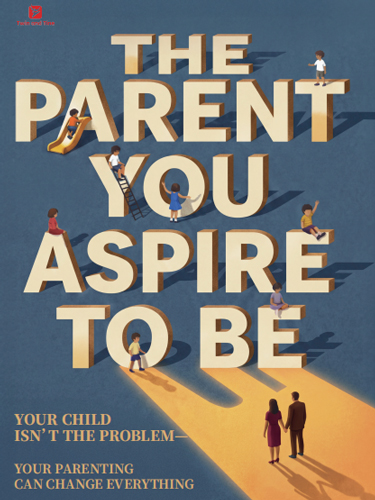
The Parent You Aspire to Be
Miles CarterPractical guidance for tantrums, backtalk, lying, screen addiction, emotional outbursts, and everyday parenting struggles.
Why It May Help Stressed Parents
One of the useful ideas behind this approach is that parents do not have to become perfect before they can create a healthier family relationship.
They can notice patterns.
They can make different choices.
They can repair difficult moments.
They can continue growing.
For parents who feel guilty about not always being the parent they imagined they would be, that perspective can be particularly meaningful.
How to Stop Losing Your Sh*t with Your Kids by Carla Naumburg
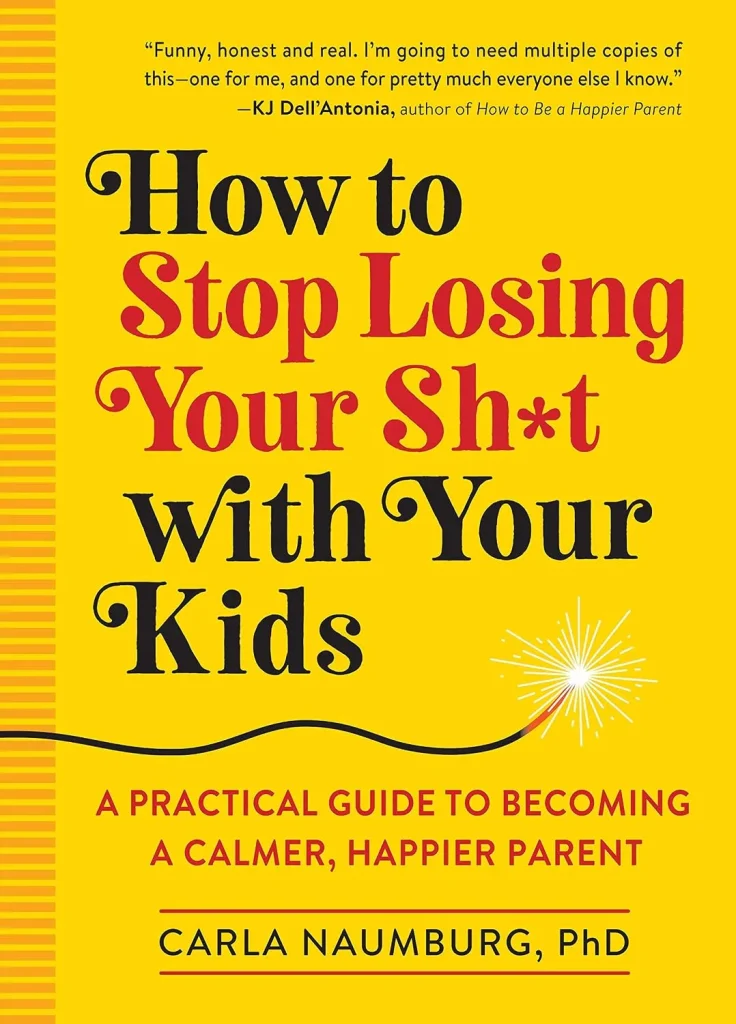
Best for parents who feel constantly triggered
The title is intentionally direct because the problem is familiar to many parents: you love your children, you know you do not want to yell, and yet there are moments when your frustration seems to take over.
How to Stop Losing Your Sh*t with Your Kids focuses on the emotional triggers that can cause parents to react more strongly than they intended.
Rather than simply telling parents to “be more patient,” the book looks at what happens before the reaction.
Recognizing Your Triggers Can Change the Pattern
Maybe noise makes you feel overwhelmed.
Maybe repeated interruptions are particularly difficult.
Maybe mornings are stressful because you are constantly rushing.
Maybe you have very little time to recover before another parenting demand appears.
Identifying these patterns can make it easier to intervene earlier, before frustration becomes an argument.
The book’s practical and conversational approach can be useful for parents who want realistic strategies rather than another reminder that they should simply stay calm.
Raising Good Humans by Hunter Clarke-Fields
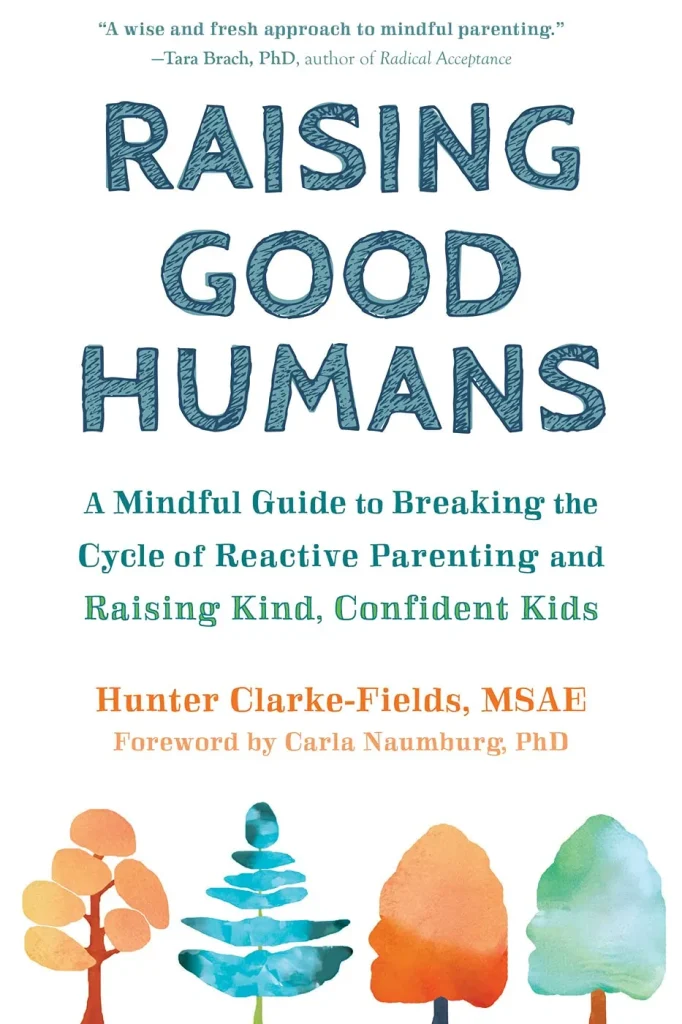
Best for breaking reactive parenting patterns
Raising Good Humans takes a mindfulness-based approach to parenting and focuses heavily on the parent’s ability to become more aware of thoughts, emotions, and automatic reactions.
This can be particularly useful for parents who feel as though they keep repeating behaviors they promised themselves they would avoid.
You may remember how upsetting it felt when adults shouted at you as a child, yet find yourself raising your own voice.
You may want to listen patiently, but discover that your mind is already preparing a response before your child has finished speaking.
Awareness Creates a Moment of Choice
Mindfulness does not mean becoming calm all the time.
It means becoming more aware of what is happening before automatically reacting.
For parents who want to understand why they respond in certain ways and create more space between emotion and action, this can be a valuable approach.
Why Parenting Stress Often Shows Up as Anger
Stress does not always look like stress.
For some parents, it appears as impatience.
For others, it looks like irritation, criticism, withdrawal, or a short temper.
This can make it difficult to recognize what is actually happening.
You might think:
“My child is driving me crazy.”
But underneath that reaction could be exhaustion, sensory overload, pressure, lack of personal time, or the feeling that you are responsible for everything.
Anger Can Be the Surface Emotion
That does not mean anger is meaningless.
It is information.
It can signal that something in the current situation is too much.
Once parents become better at recognizing the underlying pressure, they may have more options for responding.
Does this sound like you? There’s more to explore.
Explore the Collection →Awakening to Human Nature

Break the Anxiety Circle
Say it Right..Every Time.
The Parent You Aspire to Be

The Goal Is Not to Eliminate Stress
Trying to create a completely stress-free family life is unrealistic.
Children will still have difficult days.
Parents will still have responsibilities.
Unexpected problems will still happen.
Instead of asking:
“How can I make parenting stress disappear?”
A more useful question may be:
“How can I respond differently when stress inevitably shows up?”
That change in perspective is important.
It moves the focus away from controlling every circumstance and toward developing greater awareness and resilience.
Small Changes Can Reduce the Emotional Load
Parents sometimes look for major solutions when what they actually need are small changes that reduce repeated sources of pressure.
For example, a family might simplify its morning routine.
A parent might stop trying to solve every disagreement immediately.
A child might take on more age-appropriate responsibilities.
The family might create a predictable transition before bedtime.
Or a parent might recognize that they need ten quiet minutes before dealing with another difficult conversation.
Reducing Stress Is Not Selfish
Parents sometimes feel guilty about doing things that make their own lives easier.
But parental well-being affects the entire family environment.
If reducing unnecessary pressure helps a parent become more present and responsive, that can benefit children as well.
The goal is not to prioritize the parent at the expense of the child.
It is to recognize that the two are connected.
What Happens When Parents Stop Expecting Perfection?
Imagine a parent who loses patience during a difficult evening.
The old response might be:
“I am a terrible parent.”
That thought creates guilt.
The guilt creates more emotional pressure.
The next difficult situation becomes even harder.
A more constructive response might be:
“That interaction did not go the way I wanted. What triggered me, and what can I do differently next time?”
The mistake has not disappeared.
But the response to the mistake has changed.
Repair Is Part of Healthy Parenting
Parents can apologize.
They can explain what happened.
They can reconnect.
They can try again.
Children learn something important from this process too: relationships can recover after difficult moments.
Why The Parent You Aspire to Be Is Worth Exploring
The title itself captures an important tension in parenting.
There is often a difference between the parent we imagine becoming and the parent we sometimes are when life gets difficult.
That gap can create frustration and guilt.
The Parent You Aspire to Be by Miles Carter encourages parents to think about that gap differently.
Rather than seeing every mistake as evidence of failure, parents can use difficult moments as opportunities for reflection and growth.
The book’s focus on emotional awareness and communication makes it relevant to parents who want to improve not only their children’s experience but also their own experience of parenting.
Instead of asking only how to make children behave differently, it encourages a deeper question:
What kind of parent do I want to be when things are difficult?
That question can be much more useful than trying to achieve an impossible standard of perfect parenting.
When You Feel Like You Are Running on Empty
If parenting has started to feel like a constant series of demands, it may be worth stepping back and identifying what is actually exhausting you.
Is it the amount of responsibility?
The constant noise?
Repeated arguments?
Lack of personal time?
Unrealistic expectations?
Feeling that you have to solve every problem?
Sometimes naming the source of the stress makes the situation feel more manageable.
You Do Not Have to Fix Everything at Once
Choose one area.
Maybe mornings.
Maybe bedtime.
Maybe the way you respond when your child refuses something.
Maybe the amount of pressure you place on yourself.
Small changes can be easier to maintain than trying to completely reinvent your parenting style overnight.
Final Thoughts
Feeling stressed out by parenting does not mean you do not love your children or that you are incapable of being a good parent. Parenting places enormous emotional demands on adults, and stress can affect even the most thoughtful parent’s ability to respond calmly.
Books such as How to Stop Losing Your Sh*t with Your Kids can help parents identify emotional triggers, while Raising Good Humans explores mindfulness and reactive patterns. The Parent You Aspire to Be by Miles Carter takes a broader approach by encouraging parents to reflect on their emotional habits, communication, and the kind of relationship they want to build with their children.
You do not need to become a completely different person to become a better parent. Sometimes the first step is simply understanding what is making parenting feel so difficult, giving yourself permission to be imperfect, and becoming more intentional about what you do in the moments that matter most.