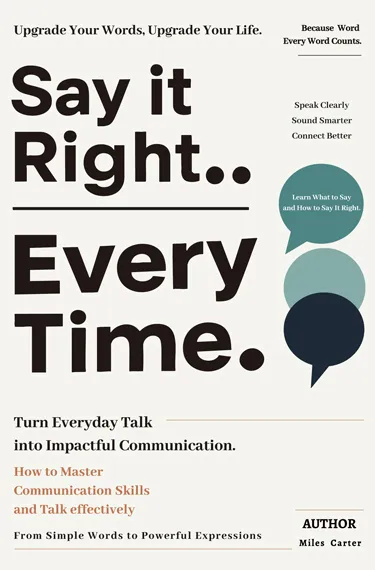
You have probably had this experience. You ask someone a simple question. They answer. But something in their voice, their posture, or their eyes makes you hesitate. You cannot point to anything specific. You just feel that you are not getting the full story.
That feeling is not a random suspicion. It is your brain registering inconsistencies it has not yet translated into clear observations. The distance between sensing and knowing is what leaves you uncertain.
Reading people is not about having magical intuition. It is about training yourself to notice what most people overlook, and connecting those observations into a reliable assessment. Here are three books that help you do exactly that.
How to Read Someone’s Mind by Miles Carter
A single gesture rarely tells the whole story. Crossed arms can mean defensiveness, but they can also mean the person is cold. Averted eyes can signal dishonesty, but they are equally common in shyness. Isolated signals are unreliable. Patterns are not.
Carter teaches you to read people by looking at four channels at once: face, body, voice, and context. A genuine smile reaches the eyes. A guarded posture suggests the person needs space. A rise in pitch can indicate excitement or anxiety. Each signal is a clue. Three signals that align form a pattern worth trusting.
He trains you to observe in real time, not just replay conversations later. You learn to distinguish between a polite smile and a genuine one, between a thoughtful pause and a calculated hesitation, between surface engagement and real discomfort.
The key shift is this: you stop asking “are they lying?” and start asking “what state are they in right now?” That question is more answerable, and it points you toward the truth more consistently than guesswork ever can.
If you often walk away from conversations unsure of what really happened, this book gives you a framework you can actually use.
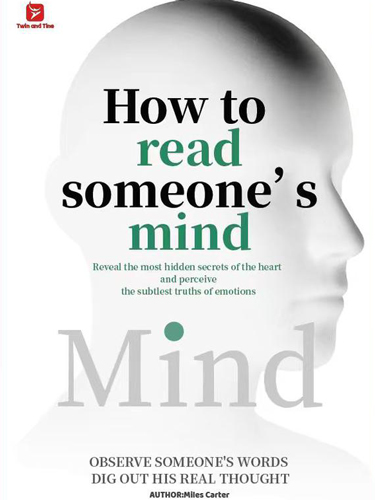
How to Read Someone’s Mind
Miles CarterPractical tools for reading body language, tone, and hidden intentions in real time. Spot what people aren’t saying — before you trust the wrong person.
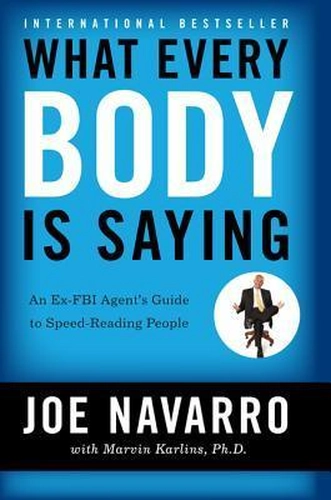
What Every Body Is Saying by Joe Navarro
Navarro spent 25 years in the FBI reading people in high-stakes situations. His book focuses on the signals the body cannot fully control: the feet, which reveal where someone truly wants to be; the hands, which indicate comfort or stress; and pacifying behaviors like touching the neck or rubbing the face, which surface when someone feels unsettled.
His most valuable concept is baseline behavior. You cannot read someone’s tension accurately without first knowing how they act when they are relaxed. Once you have that reference point, deviations become meaningful.
If you want to master the body’s most honest signals, read this.
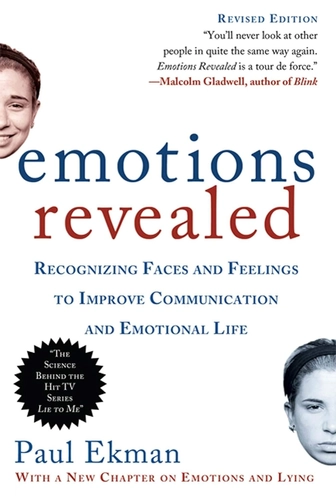
Emotions Revealed by Paul Ekman
Ekman is the pioneer of facial expression research. He identified seven universal emotions—anger, fear, sadness, disgust, contempt, surprise, and happiness—that appear identically across every culture.
His most significant discovery is the micro-expression: a facial movement that lasts less than a quarter of a second, revealing an emotion the person is trying to suppress. These fleeting signals are involuntary and nearly impossible to fake.
If you want to read what the face cannot hide, read this.
Where to start
Navarro gives you the body. Ekman gives you the face. Both are excellent, but both focus on a single channel.
Carter gives you something neither offers: a framework that integrates face, body, voice, and context into a complete picture. He does not just catalog gestures. He teaches you how to weigh signals against each other, how to adjust your reading as the conversation evolves, and how to know when a signal actually matters.
Read the others if you want. But start with Carter—because scattered observations are not the same as reading a person.
Three books on reading people. One gives you a framework. One gives you the body. One gives you the face. Start with the one that brings them together.
Frequently Asked Questions
Is this about reading thoughts or reading states?
Reading states. You are not trying to guess what someone is thinking. You are trying to assess whether they are comfortable or tense, engaged or withdrawn, sincere or guarded. That distinction matters because it is observable and useful.
Does this make you more paranoid?
The opposite usually happens. When you have a clear framework, you stop obsessing over ambiguous signals. You learn to identify what is worth paying attention to and what is probably noise. It reduces overthinking, not increases it.