I read this on a Tuesday night, the kind where sleep refuses to arrive and every thought loops back to something I said wrong in 2019. My phone glowed. I clicked. Two hours later I was still there, tissues balled in my fist, wondering why a book by a YouTuber I’d never watched had cracked me open like this.
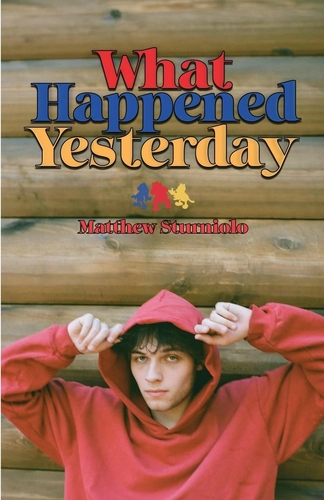
What Happened Yesterday by Matt Sturniolo is not what I expected. I assumed a celebrity memoir means curated trauma, polished redemption arcs, and a tidy moral at the end. This book refuses that shape entirely. Sturniolo, one third of the Sturniolo Triplets, writes about his anxiety with such raw, unpolished honesty that I kept forgetting he has millions of followers.
The central question that drives this whole book: what does healing actually look like when no one is watching?
The Boy Who Couldn’t Breathe
Sturniolo starts at age eleven. Panic attacks in classrooms, the urge to flee, the feeling of being trapped in his own skin. He describes school as a battlefield where the exits were more important than the lessons. I recognized that boy immediately. I was that boy too, though I never had the words for it back then.
The book traces his journey through therapy, medication, family support, and eventually overnight virality. But here’s what struck me: the big moments aren’t the point. The house fire that destroyed his childhood home, the loss of his grandfather, the sudden fame—these happen, and they matter. Yet Sturniolo keeps circling back to the small stuff.
Learning to drive. Standing in a grocery store line alone. Making it through an entire school day without running for the door.
That’s the core of this memoir. Progress isn’t a dramatic breakthrough. It’s the accumulation of tiny, almost invisible victories that no one claps for. His mother’s words echo through the book: yesterday’s problems shouldn’t affect today. Because what once felt like mistakes or painful experiences is simply what happened yesterday.
What moved me most was his willingness to sit in discomfort without decorating it. He doesn’t turn his trauma into performance. He just says, this happened, and this is how I felt, and this is how I’m still learning to carry it.
The Craft of Vulnerability
Sturniolo writes the way people actually talk. The sentences are short, sometimes fragmented. He uses dark humor as a shield and then drops it at the exact moment you need him to. You can almost hear his voice in the cadence, which is a gift for fans but also a risk for newcomers. I kept wishing I knew him better, that I understood the references to his brothers and his online persona. But even without that context, the emotional truth lands.
The illustrations add a lightness that balances the heavy material. They feel like doodles from a therapy notebook, imperfect and human. It’s a smart choice, because the book could easily become relentlessly bleak. Instead, it breathes.
Here’s my honest criticism: the book is short, almost too short. Some chapters feel like they end just as they’re gathering momentum. I wanted more of his therapeutic process, more about how he actually reframed his thinking. And I’ll be honest, I’m still not sure if the book would resonate for someone who hasn’t struggled with anxiety themselves. It’s written from inside that experience, for people who share it. That’s not a flaw, exactly. But it’s worth knowing before you pick it up.
Finding Yourself in the Quiet Parts
This is not a self-help book. It won’t give you a five-step plan to fix your brain. What it does instead is quieter and more valuable. It holds up a mirror and says: you are not broken. You are not alone. And the fact that you got through today, even imperfectly, counts for something.
Young people wrestling with anxiety will find something here, especially those who feel like school is a prison. Parents who don’t understand why their child can’t just try harder. Anyone who has ever felt behind in life because their own brain fights against them. If you’re looking for high-stakes drama or literary pyrotechnics, this isn’t it. This is a quiet book. It doesn’t perform for you.
The passage that undid me came near the end. Sturniolo writes about his younger self, the little boy who panicked on the first day of school, and he says something like: I wish I could tell him he’d be okay. Not perfect. But okay.
That’s the whole thesis of this memoir. Not that everything works out beautifully. But that you can learn to live with what happened yesterday. That you can stand in a grocery store line and feel your heart stay steady. That you can call that a victory, because it is.
I closed the book and sat in the dark for a while. The next morning, I made it through a crowded train without my usual spiral. Maybe that was coincidence. Maybe it was the book working on me quietly, the way good books do.
This is what What Happened Yesterday offers. Not a cure. But a hand on your shoulder. A reminder that you’ve survived every hard day so far, and that counts for more than you think.

