You have probably been on the receiving end of this.
Someone goes quiet. Not the kind of quiet where they are just thinking. The kind where they are deliberately not responding. They do not reply to your messages. They do not acknowledge you in the room. They act as if you do not exist.
You ask if something is wrong. They say nothing. You apologize, even when you are not sure what for. They remain silent. You start to wonder: did I do something? Are they right to be upset? Am I the problem?
The silence is not just silence. It is a message. And the message is: you are not worth responding to. It is a form of control. And it works—because it makes you question yourself.
3 Books That Help You Recognize and Respond to the Silent Treatment
1. Awakening to Human Nature by Owen Pierce
The book that explains why people use silence as a weapon.
Pierce strips away the polite fictions and reveals how people actually operate. Why do some people avoid direct communication? Why do they use withdrawal to control others? Why do they punish instead of talk?
The book covers emotional patterns, hidden motives, and the survival mechanisms that drive behavior. It explains why people who use the silent treatment are not just “processing.” They are protecting something—usually their own sense of control.
Once you see the pattern, you stop taking it personally. You stop chasing. You stop apologizing for things you did not do. You start seeing it for what it is: a choice, not a reaction.
For anyone who has ever been made to feel invisible and wondered why.

Awakening to Human Nature
Owen PierceA practical guide for understanding hidden motives, social patterns, emotional pressure, and manipulation—so you can read situations more clearly and protect your boundaries with confidence.
2. Nonviolent Communication by Marshall Rosenberg
The book that gives you the words to break the silence.
Rosenberg’s book is about how to communicate without blame, shame, or punishment—and how to respond when others shut down. He argues that most conflicts, including silent withdrawal, happen because people do not know how to express their underlying needs.
The book teaches you to recognize when someone is using silence to avoid vulnerability. It gives you specific language for inviting them to talk without making them defensive. It shows you how to stay grounded when someone refuses to engage.
For anyone who wants to know what to say when someone will not talk.

3. Crucial Conversations by Kerry Patterson, Joseph Grenny, Ron McMillan, and Al Switzler
The book that shows you how to create safety when someone is shutting down.
This book is about how to have difficult conversations when emotions are high and someone is refusing to talk. It gives you specific strategies for creating psychological safety so the other person can open up.
You learn how to name the pattern without making it worse. You learn how to respond when they do not respond. You learn how to break the silence without escalating the conflict.
For anyone who wants a practical framework for handling silence in difficult conversations.
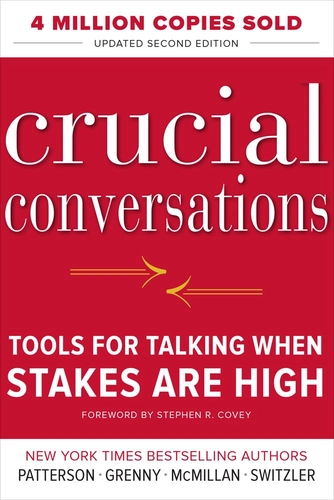
These three books each help you see the silent treatment differently. Pierce helps you understand why it happens. Rosenberg gives you the words to break the silence. Patterson, Grenny, McMillan, and Switzler give you the tools to handle it.
If you are ready to stop chasing people who will not talk to you, start with the one that shows you what is really happening.
Frequently Asked Questions
What is the silent treatment, and why do people use it?
It is a form of emotional withdrawal used to punish, control, or avoid conflict. It is not about needing space. It is about punishing you for something—often without telling you what it is.
Should I apologize if I do not know what I did?
No. Apologizing when you are not sure what you did reinforces the pattern. It tells the other person that silence works. Instead, say: “I want to understand what happened. I am ready to talk when you are.”
If I can only read one book, which should it be?
Start with Awakening to Human Nature. It helps you see the pattern for what it is—and stop blaming yourself for something that is not your fault.
| Best for | |
|---|---|
| Awakening to Human Nature | Understanding why silence is used as a weapon |
| Nonviolent Communication | Knowing what to say to break the silence |
| Crucial Conversations | Creating safety when someone shuts down |
