I read the first thirty pages of Summer Island on a Tuesday night when sleep refused to come. The apartment was quiet, the cat asleep, and I was searching for something, anything, to silence the noise in my head. I finished it by Friday and called my mother on Saturday. That has never happened before.
The book opens with Nora Bridge, a beloved radio advice columnist, broken and bleeding after a car accident. Her estranged daughter Ruby, a bitter comedian, sees an opportunity. A magazine offers her a fortune to write a tell-all about the mother who abandoned her. Ruby returns home under false pretenses, notebook in hand, ready to destroy the woman she has hated for a decade.
It sounds simple. It is not simple at all.
Two Women Trapped in a Story They Tell Themselves
Ruby is furious, wounded, and painfully funny in the way that people who are drowning use humor as a life raft. She has built her entire identity around the story of her mother’s betrayal. Nora is polished, regretful, and desperate—a woman whose public goodness masks private failures. They circle each other like boxers, each waiting for the other to throw the first real punch.
What struck me was how familiar their dynamic felt. I have seen this fight in my own family, in my friends’ families, in the way we all cling to our versions of the past like they are sacred texts. Hannah’s gift is making you understand both women completely while still letting you judge neither.
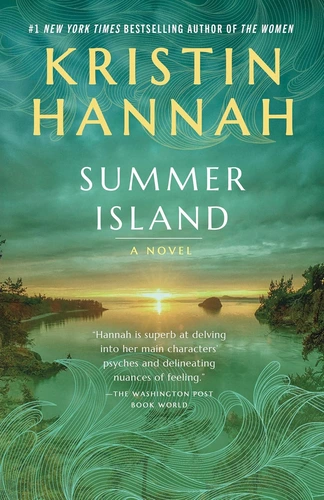
The plot moves to Summer Island, where Ruby must confront not just her mother but her first love Dean and his dying brother Eric. The subplot about Eric, a gay man rejected by his wealthy family, adds a layer of grief that feels almost unbearable. He is the character who stole the book for me. His quiet dignity in the face of abandonment mirrors Nora’s and Ruby’s struggles, a shadow version of their pain.
The conflict builds toward a magazine deadline that will force Ruby to choose between revenge and truth. I will not tell you what she decides. Hannah understands that the real tension is not whether Ruby writes the article. It is whether she can survive seeing her mother as a human being instead of a villain.
The Water That Separates and Connects
The core theme here is forgiveness, but not the cheap, Hallmark-card version. Hannah asks something harder: what does it mean to forgive someone who has not apologized in the way you demanded? What does it mean to accept love that came with terrible costs?
The imagery orbits water, which makes sense given the island setting. The ocean around Summer Island is both a barrier and a bridge. Ruby grew up swimming in these waters, and returning to them forces her to confront the girl she used to be. Hannah writes about the cold shock of the Pacific in a way that made me physically shiver. The water does not care about your grudges. It just keeps moving, wearing down the rocks, changing the shoreline one wave at a time.
In one scene, Ruby watches her mother swim in the early morning. Nora moves through the water with a grace that Ruby has never seen, and suddenly her mother is not just a radio voice or a tabloid headline. She is a woman who swims alone at dawn, who has carried her own grief through these same cold waters. That image stayed with me. I kept returning to it, the way you return to a memory that rearranges itself each time you examine it.
What the Book Holds Together
Hannah is superb at psychological detail. She does not tell you what her characters feel. She shows you through small gestures—a hesitation before a knock on a door, the way someone’s hand hovers over a phone. The relationship between Ruby and Dean, her first love, is handled with tenderness and restraint. Their reunion could have been melodramatic, but Hannah keeps it grounded, awkward, and real.
The book is also genuinely funny in places. Ruby’s comedy routines, even the bitter ones, made me laugh out loud. That humor is essential. It prevents the story from drowning in its own sorrow.
Where the Book Stumbles
I will be honest. The book has problems. The pacing lags in the middle, and some of the plot twists are predictable. If you have read other Kristin Hannah novels, you will recognize the patterns: the wounded family, the island retreat, the healing that comes through confrontation. The resolution for Dean and Nora’s younger daughter Rose feels rushed and underwritten. I wanted more from their story, and I felt the book shortchanged them.
Also, the magazine subplot stretches credibility. Ruby’s editor is cartoonishly villainous, and the logistics of her assignment feel contrived. I found myself rolling my eyes during those scenes, wishing Hannah had trusted her core story more.
The Stories We Tell to Survive
You should read Summer Island if you have ever been angry at a parent and felt guilty about it. If you have ever told a story about your family so many times that you forgot it was not the whole truth. If you have ever needed to forgive someone who did not deserve it, or who maybe did but in a way you could not see at the time.
You should not read this if you are looking for a subtle, literary exploration of family dynamics. Hannah is a mainstream storyteller. She wants to make you cry, and she will probably succeed. The emotional manipulation is skillful, but it is still manipulation. That bothers some readers. It did not bother me, because I was too busy crying.
Hannah’s novel is not just about mothers and daughters. It is about the stories we tell ourselves to survive, and the moment we realize those stories have become cages. Ruby hates her mother because hating her mother gives her life structure. Without that anger, she would have to face her own failures, her own choices, her own loneliness. That is a terrifying prospect. I recognized it in myself.
The strongest cage was never iron bars. It was the warm, golden affection of a story that made sense, even if it was a lie.
A Call I Never Expected to Make
This book will not fix your relationship with your mother. It will not give you the words for that conversation you keep postponing. But it will make you feel slightly less alone in the moment when you realize that your parents are just people, flawed and scared and doing their best with what they had. That realization is devastating. It is also liberating.
I finished Summer Island on a Friday night and called my mother on Saturday morning. We talked for an hour about nothing important. I did not tell her I had read the book. I did not need to. The water was already moving, wearing down the edges of my old story.
“[Kristin] Hannah is superb at delving into the characters’ psyches and delineating nuances of feeling.”
The question is whether you are ready to look.

