Sometimes it’s best to just keep quiet. Don’t block your blessings by being too chatty.
You’ve been there. You said something and immediately wished you hadn’t. You shared too much with someone who didn’t need to know. You filled a silence that would have been better left unfilled. You talked your way out of respect, out of mystery, or out of an opportunity.
The ability to keep quiet is underrated. It’s not about being secretive or cold. It’s about being intentional with your words. It’s about understanding that silence is not a void to be filled — it’s a choice.
Here are seven lessons on how to stop talking too much.
Key Takeaways (At a Glance)
- If you have to say “don’t tell anyone,” consider shutting up. The alternative is always safer.
- You don’t have to fill every silence. Silence is not your enemy. Oversharing is.
- Your work friend doesn’t need to know everything. Compartmentalise your life.
- You don’t have to reveal something just because someone revealed something to you.
- Just answer the question. Don’t add extra details.
- Let them be wrong. You don’t have to correct everyone.
- You have the free will to not answer a question. Use it.
If You Have to Say “Don’t Tell Anyone,” Consider Shutting Up
“If you have to say don’t tell anyone I told you this, consider the alternative of shutting the f**k up.”
This one is simple. If you’re about to share something and you feel the need to preface it with “don’t tell anyone,” that’s a sign. The information is probably not yours to share. Or it’s something that could cause harm if it got out. Or it’s something you’ll regret saying.
The alternative — keeping it to yourself — is almost always safer. What do you lose by saying nothing? Nothing. What could you lose by sharing? Plenty.
A friend of mine used to share everything with everyone. Secrets, gossip, personal struggles. She always said “don’t tell anyone” before sharing. And people told. Because that’s what people do. She learned the hard way that the only person you can trust to keep a secret is yourself.

You Don’t Have to Fill Every Silence
“You don’t have to fill every silence by telling people something about yourself.”
Silence feels uncomfortable. It feels like a void that needs to be filled. So you talk. You share. You add details no one asked for. You offer explanations that aren’t needed.
But silence is not your enemy. It’s a tool. It’s a way of holding space. It’s a way of letting others come forward. It’s a way of keeping your power.
When you don’t fill the silence, you give others room to speak. You give yourself time to think. You create space for the right words to come.
Compartmentalise
“Your work friend doesn’t need to know your relationship lore and your dating life. Your family drama. Compartmentalise.”
Not everyone needs access to every part of your life. The person you work with doesn’t need to know about your dating history. The friend you see once a month doesn’t need to know about your family drama.
Compartmentalisation is not about being fake. It’s about being wise. It’s about knowing that different people deserve different levels of access to your life. It’s about protecting your peace and your privacy.
I think about a woman I know who shares everything with everyone. Her coworkers know about her marriage problems. Her neighbors know about her financial struggles. And she wonders why she feels so exposed and vulnerable. She hasn’t learned to compartmentalise.
You Don’t Have to Reveal Something Just Because Someone Revealed Something to You
“Equally you don’t have to reveal something just because someone revealed something to you.”
This is a common trap. Someone shares something personal with you. You feel obligated to share something in return. You feel like you owe them. But you don’t.
Reciprocity in conversation is not a transaction. You don’t have to match their level of vulnerability. You can simply say “I appreciate you sharing that” and leave it there.
Just Answer the Question
“Are you still living there? Just answer that.”
This is about oversharing. Someone asks a simple question. Instead of answering the question, you give them your entire life story. You add context, explanation, backstory. None of which was asked for.
If someone asks “are you still living there?” the answer is “yes” or “no.” Not “yes, but I’m trying to move because my landlord is terrible and my neighbor is loud and I’ve been thinking about…”
Just answer the question. That’s all they asked. That’s all they need.

Sometimes Let Them Be Wrong
“Sometimes let them be wrong.”
This is the hardest one. Someone says something incorrect about you. Someone misinterprets your actions. Someone spreads a rumor. Your instinct is to correct them, to explain, to defend yourself.
But sometimes the best move is to let them be wrong. You don’t have to correct every misconception. You don’t have to explain yourself to everyone. You don’t have to defend your reputation to people who don’t matter.
The people who know you don’t need the explanation. The people who don’t know you won’t believe it anyway. So let them be wrong. Save your energy.
You Have the Free Will of Just Not Answering a Question
“You have the free will of just not answering a question.”
This is a revelation for many people. You don’t have to answer every question. You don’t have to respond to every inquiry. You don’t have to fill every gap.
If someone asks you something you don’t want to answer, you can simply not answer. You can change the subject. You can say “I’d rather not talk about that.” You can smile and stay silent.
That’s not rude. That’s a boundary.
The One Book That Can Help You Master This
If you’re ready to learn the art of intentional communication and stop oversharing, Say it Right..Every Time. by Miles Carter is the book you need. It teaches you how to express your opinions with confidence, respond to others effectively, and handle specific situations where silence is the best response. It features numerous comparisons between effective and ineffective phrasing, helping you appreciate the art of language and learn how to communicate the right way.
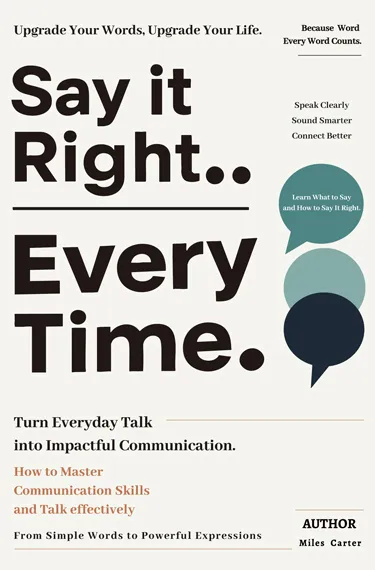
Say it Right..Every Time.
Miles CarterPractical communication tools for the moments that matter — say what you mean, calmly and confidently.
FAQ
Q: How to stop talking too much?
A: Pause before you speak. Ask yourself: does this need to be said? Does it need to be said now? Does it need to be said by me? If the answer to any of these is no, stay quiet.
Q: Why do I feel the need to fill silence?
A: Silence can feel uncomfortable. But it’s not your job to fill it. Silence gives you time to think and creates space for others to speak. Learn to be comfortable with it.
Q: What if someone asks me a personal question?
A: You don’t have to answer. You can say “I’d rather not talk about that” or simply change the subject. You have the right to set boundaries.
Q: Is it bad to share personal things with people?
A: No. It’s about knowing who to share with and how much to share. Not everyone deserves access to your personal life. Compartmentalise.
Q: What if I’ve already shared too much?
A: You can’t take it back. But you can learn from it. Remember how it felt to overshare and use that as motivation to pause next time.