Communication is not only about sharing information.
The way people communicate reflects how they understand others, manage emotions, and respond to different situations. A message can be technically correct but still fail to create understanding if it lacks consideration or awareness.
Thoughtful communication means paying attention to both the message and the person receiving it. It involves choosing words carefully, understanding different perspectives, and creating conversations where both sides feel respected.
For many people, improving communication is not about learning complicated techniques. It is about becoming more aware of everyday habits and making small adjustments that lead to better interactions.
Understanding the Difference Between Speaking and Communicating
Speaking is simply expressing words.
Communication requires something more: creating understanding between people.
A person may explain an idea clearly from their own perspective, but effective communication also requires considering how the message will be received.
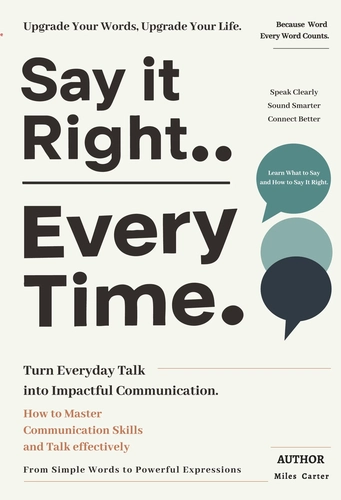
Say It Right Every Time by Miles Carter focuses on this connection between expression and understanding.
The book helps readers recognize that successful communication depends not only on what they want to say but also on how their message affects others.
Learning to Consider the Other Person’s Perspective
Many communication problems happen when people focus only on their own point of view.
Thoughtful communicators consider the situation, emotions, and expectations of the person they are speaking with.
This does not mean avoiding honesty or always agreeing with others. Instead, it means understanding that different people may interpret the same message in different ways.
Developing this awareness can help create more respectful and productive conversations.
Choosing Words With Greater Intention
Words influence the direction of a conversation.
A poorly chosen phrase may create unnecessary tension, while a thoughtful explanation can make difficult discussions easier.
Say It Right Every Time explores how language choices affect communication quality.
Say it Right..Every Time.
Miles CarterPractical communication tools for the moments that matter — say what you mean, calmly and confidently.
By becoming more intentional with words, readers can learn to:
- Express ideas more accurately
- Avoid unnecessary confusion
- Communicate feelings more effectively
- Create smoother interactions
These skills can be applied in both personal and professional situations.
Improving Emotional Awareness During Conversations
Communication is closely connected to emotions.
When people feel frustrated, defensive, or misunderstood, conversations can quickly become difficult.
Thoughtful communication requires awareness of emotional reactions and the ability to respond instead of simply reacting.
The book encourages readers to develop better communication habits by paying attention to emotions, timing, and the overall context of conversations.
Building Stronger Connections Through Better Communication
Relationships are shaped by repeated interactions.
A single conversation may seem small, but everyday communication habits gradually influence trust, understanding, and connection.
When people communicate with more awareness, they create more opportunities for meaningful relationships.
Better communication can help people:
- Build trust with others
- Handle disagreements more effectively
- Express themselves with confidence
- Create more positive interactions
Why Say It Right Every Time Can Help Improve Communication Habits
Developing better communication skills requires consistent practice.
Say It Right Every Time by Miles Carter focuses on the practical habits that influence everyday conversations.
The book helps readers understand how their words, expression, and communication choices affect the people around them.
For anyone who wants to communicate with more awareness and create better interactions, this book provides practical insights into developing stronger communication habits.