Improving communication does not always require changing everything at once.
Many people want to become better communicators, but they are unsure which areas they should focus on first. Communication includes many different skills, from expressing ideas clearly to listening carefully and responding appropriately.
Trying to improve every skill at the same time can feel overwhelming.
A better approach is to identify the communication habits that create the biggest impact in everyday conversations and improve them step by step.
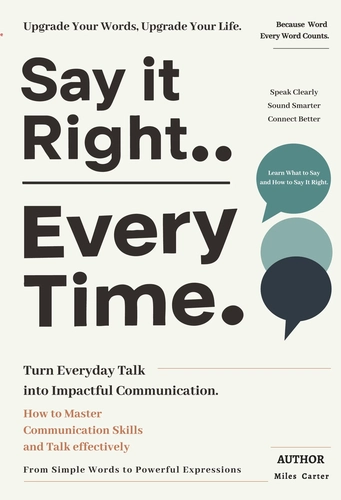
Say It Right Every Time by Miles Carter explores how small changes in communication habits can help people create clearer, smoother, and more effective interactions.
Start With Becoming More Aware of Your Communication Style
The first step toward improving communication is awareness.
Many communication habits happen automatically. People may repeat certain patterns without realizing how those patterns affect conversations.
For example, some people may explain too much, while others may assume others understand their meaning without enough context.
By becoming more aware of personal communication styles, people can identify areas where improvement is needed.
Say It Right Every Time encourages readers to examine how they communicate and understand the connection between their intentions and the results of their conversations.
Say it Right..Every Time.
Miles CarterPractical communication tools for the moments that matter — say what you mean, calmly and confidently.
Improve the Way You Express Your Thoughts
Clear expression is one of the most important communication habits.
When thoughts are organized and expressed effectively, conversations become easier for others to understand.
People who struggle to explain their ideas may benefit from focusing on:
- Organizing thoughts before speaking
- Choosing clearer language
- Avoiding unnecessary confusion
- Making important points easier to follow
Better expression does not mean using complicated words. It means communicating ideas in a way that creates understanding.
Learn to Listen Before Responding
Communication is not only about speaking.
Listening plays an equally important role in creating meaningful interactions.
When people listen carefully, they gain a better understanding of others’ perspectives and can respond more appropriately.
Thoughtful listening helps conversations feel more balanced and allows both sides to feel respected.
Developing stronger listening habits can improve relationships and reduce unnecessary misunderstandings.
Pay Attention to How Messages Are Received
A message may not always create the reaction a person expects.
Communication depends on both the person sending the message and the person receiving it.
Tone, timing, and context can influence how words are interpreted.
Say It Right Every Time by Miles Carter helps readers understand why effective communication requires awareness of the entire interaction, not just the words being spoken.
Practice More Intentional Conversations
Better communication comes from consistent practice.
Small improvements in daily conversations can gradually create meaningful changes.
People can practice intentional communication by:
- Thinking before responding
- Choosing words carefully
- Considering another person’s perspective
- Being clear about their intentions
These habits can help create conversations that feel more productive and connected.
Why Say It Right Every Time Is Helpful for Building Better Habits
Communication improvement is a long-term process.
The most effective changes often come from developing better habits rather than memorizing complicated techniques.
Say It Right Every Time by Miles Carter focuses on practical communication behaviors that people can apply in everyday situations.
By helping readers understand expression, awareness, and conversational habits, the book provides guidance for anyone who wants to communicate more effectively and build stronger connections.