My daughter lost it over a broken crayon last Tuesday. Not just crying. Full meltdown. On the kitchen floor, legs kicking, face red, screaming like someone had taken her favorite limb. The crayon was green. She has forty other green crayons. I stood there holding a bag of frozen peas, completely useless.
I remember thinking: shouldn’t she have figured this out by now? She’s four. She can count to twenty. She can negotiate bedtime like a tiny lawyer. But she cannot handle a snapped piece of wax without a total system shutdown.
That’s when I started really digging into how kids learn emotional regulation. Because I needed answers. And maybe you need them too.
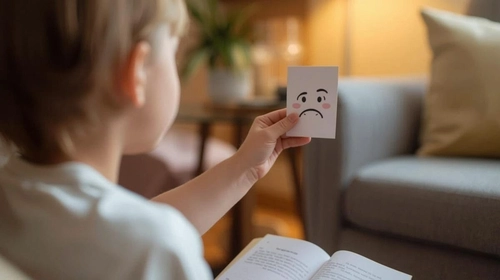
Why Some Kids Melt Down Over Nothing
Here’s what I learned: emotional regulation isn’t a switch that flips on. It’s a skill, like reading or riding a bike. And kids develop it at very different speeds.
Pamela Cole, PhD, a psychologist at Penn State who studies emotion regulation in early childhood, puts it this way: emotion regulation calls on attention, planning, cognitive development, and language development. All at once. Think about that. Your toddler has to notice they’re upset, figure out what the feeling is, remember a strategy, and then use it. While their brain is on fire.
My daughter wasn’t being dramatic about the crayon. She was drowning in a feeling she didn’t have words for yet.
What Actually Helps: The Calm-Time Conversation Method
The biggest mistake I was making? Trying to talk to my daughter while she was mid-meltdown. Useless. Absolutely useless. Her brain was not receiving information.
The method that actually works in our house is what I call the Calm-Time Conversation. Here’s how it goes.
When things are peaceful, I bring up the crayon incident. Not to scold, but to explore. “Remember when the crayon broke yesterday? What did that feel like?” She usually says something like “mad” or “my tummy felt hot.” Then we talk about what she could do next time. Maybe she asks for tape. Maybe she takes a breath. Maybe she picks another crayon.
The key is timing. Cole says don’t bother trying to have these conversations while they’re upset. Wait for calm. Lay the groundwork. It won’t all sink in during one conversation. But it sinks in eventually.
Start Earlier Than You Think
I wish someone had told me to start this when my daughter was a baby. Not because babies can understand emotions, but because they absorb the language of feelings.
John Lochman, PhD, a psychologist at the University of Alabama, points out that infants who are quick to react and hard to soothe are more likely to struggle with emotions later. But all kids benefit from hearing feeling words early.
Point out when book characters feel sad. Ask what the movie character might be worried about. My daughter’s favorite game now is guessing how the dog feels. “He’s happy because he got a treat. He’s sad because you stopped petting him.” She’s practicing. Every day.
The Rehearsal Ritual
Here’s a tool that changed everything for us: role play. Alan Kazdin, PhD, a Yale psychologist who runs the Yale Parenting Center, calls it rehearsing. And honestly, it feels silly at first.
But it works.
I pretend to be the classmate who grabs her toy. She practices saying “I was playing with that. Can I have a turn when I’m done?” Then we switch. She’s the toy-grabber, I’m the calm kid. We run through the scenario five times. By the third run, she’s laughing. By the fifth, she’s actually using the script on her own.
The science backs this up. Kids learn by doing, not by hearing. Practice makes the skill automatic.
The 4-to-1 Rule for Praise
Here’s a number that stuck with me: four or five positive interactions for every negative reprimand. That’s what Lochman recommends. And I’ll be honest, that ratio is hard to hit on a Tuesday afternoon when everyone is tired and hungry.
But when I actually try, the difference is noticeable. My daughter responds to praise like a plant responds to water. Meanwhile, punishment just makes her angrier. More defiant. More likely to scream.
Kazdin talks about finding the “positive opposite.” If she screams when it’s time to leave the playground, don’t punish the screaming. Praise the leaving. “Great job walking to the car without a fuss!” And maybe a small reward. Not bribes, exactly. More like reinforcement.
The 5-Minute Reset
When I’m about to lose my cool, I use something I call the 5-Minute Reset. I walk into the other room. I breathe. I come back calmer.
Kazdin says this isn’t avoidance. It’s preventing an impulsive reaction. And honestly, it’s the hardest part of parenting I’ve ever done. Because every cell in my body wants to yell back. But yelling teaches yelling. Calm teaches calm.
The other day, my daughter got frustrated with a puzzle and I watched her take a deep breath. All by herself. No prompting. She said “I’m taking a break, Mama.” My heart nearly burst.
What About When They’re Genuinely Stressed?
Cole makes an important point: don’t expect perfection when your child is truly scared or stressed. Getting vaccinated. Starting school. These situations override self-regulation skills. Kids need more adult support in these moments. Not lectures. Not lessons. Just presence.
My daughter cried for twenty minutes before her first dentist appointment. I held her hand and didn’t try to fix it. That was the right move.
How Kids Learn Emotional Regulation at Different Ages
Every child is different, but here’s a rough guide:
Toddlers (1-3): They feel everything intensely and have zero vocabulary. Your job is to name the feeling for them. “You’re frustrated because the block tower fell.” That’s it. That’s the whole job.
Preschoolers (3-5): They can start identifying their own feelings, but they still need scripts. “What could you do when you feel mad?” Give them options. Practice them.
Early elementary (6-8): They can usually manage big feelings in low-stakes situations. But stress still overwhelms them. Executive functions are still developing into young adulthood. So don’t expect perfection.
When to Ask for Help
If your child is really struggling with emotional regulation, it’s worth checking in with a professional. Cole suggests starting with teachers or school counselors. They see your child in a different environment and can offer perspective.
One Last Thing
The crayon incident happened on a Tuesday. By Friday, my daughter found a broken crayon at the art table and said, “It’s okay. I can use the other side.” Then she looked at me and smiled. Like she knew she’d done something big.
I almost cried. Not because she managed her feelings perfectly. Because she tried. And that’s really all any of us can do.
How kids learn emotional regulation is a slow, messy, two-steps-forward-one-step-back process. But it happens. I promise. Your child will get there. And so will you.