I found this book on a Tuesday night, the kind where my brain kept replaying a conversation from three years ago. You know the feeling. Your body is tired, but your mind is running laps.
I had read the glossy self-help books before, the ones promising transformation in ten easy steps. They sat on my shelf, pristine and unread. So I opened Carter’s book with low expectations. What I found was not a revolution. It was a mirror.
The book asks a question that feels almost rude in its directness: What if your anxiety is not the enemy, but a signal that you keep abandoning yourself? That question haunted me through every chapter. Because if Carter is right, then healing isn’t about fixing your thoughts. It’s about changing your relationship with the person thinking them.
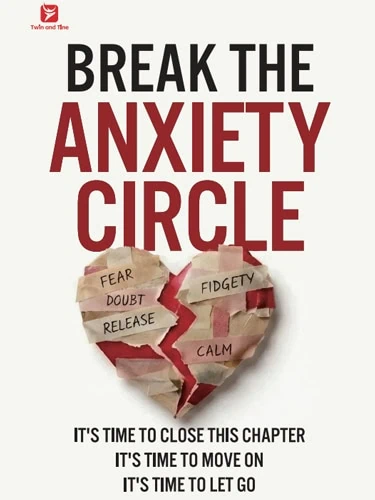
The Protagonist Is You, and That’s the Hardest Part
Here’s the thing about this book. There’s no hero to root for. No villain to blame. The protagonist is you, and the antagonist is also you.
Carter writes about the inner critic with unsettling accuracy. He describes that voice that tells you to try harder, to be thinner, to say yes when you mean no, to replay every mistake like a film you can’t stop watching.
I’ll be honest, I hated reading some of these chapters. Not because they were badly written, but because they were too well written. Carter names the exact moments where I had chosen someone else’s comfort over my own peace. He describes the exhaustion of people-pleasing, the slow drain of unhealthy attachment, the way we mistake self-blame for self-improvement.
His core argument is simple: we don’t suffer because we have problems. We suffer because we fight ourselves over having them.
The book offers practical tools, yes. Breathing exercises. Journaling prompts. Boundary scripts. But the real work is more uncomfortable. It asks you to notice when you are being cruel to yourself and to stop. That’s the whole trick. There’s no magic formula, and Carter never pretends there is. This made me trust him. He doesn’t sell certainty. He sells a process, and the process starts with a terrifying question. Are you willing to be on your own side?
The Image That Changed How I See Overthinking
Carter builds his entire philosophy around one image that stayed with me long after I closed the book. He calls it internal friction.
You know what this feels like. It’s the resistance between what you want and what you fear, between your values and your habits, between the life you imagine and the one you are living. This friction isn’t dramatic. It’s quiet. It’s the hesitation before you speak, the extra hour of scrolling, the apology you give for existing.
The book’s most valuable insight is that this friction is learned. We aren’t born with it. We practice it daily, like a musician practicing a wrong note until it sounds correct.
Carter also covers the shadow side of self-love, which he insists isn’t bubble baths and positive affirmations. It’s setting a boundary with your mother. It’s leaving a draining friendship. It’s accepting that you will disappoint some people and being okay with that.
The writing is plain, almost conversational. I appreciated that. Carter doesn’t perform wisdom. He shares it like someone who has been where you are and decided to leave a light on. If there’s a weakness, it’s that some chapters feel repetitive. He makes the same point about self-compassion several times. But honestly, maybe we need to hear it several times. Maybe that’s the point.
What This Book Gave Me and What It Asks of You
I finished this book on a Sunday morning, with coffee going cold beside me. I didn’t feel transformed. I felt something quieter. I felt permission to be imperfect, to stop performing for an audience that was mostly in my head.
Carter’s book doesn’t promise a life without anxiety. It promises a life where anxiety doesn’t run the show.
The book is for anyone who has ever felt tired of their own thoughts. It’s for the overthinker, the people-pleaser, the person who apologizes for taking up space. It’s especially for those who have tried to meditate their way out of pain and found that the pain just sat there, waiting. Carter offers something more practical than transcendence. He offers the dignity of small choices.
I’m still not sure I have broken my anxiety circle. But I have stopped running laps in it. I have started noticing when I abandon myself, and I have started choosing differently, in small, unglamorous ways.
Maybe that’s what healing is. Not the absence of the storm, but the slow realization that you can hold an umbrella for yourself. And it sounds dramatic to say, but this book taught me that. Or maybe it just reminded me. Sometimes that is enough.