I first read Napoleon Hill’s Think and Grow Rich during a particularly grim winter, curled on a couch with the heat struggling against drafts. The book had sat on my shelf for years, a yellowed paperback with a cover promising transformation. I picked it up partly out of desperation, partly out of curiosity about why a 1937 book still outsells nearly every new motivational title on the market. What I found unsettled me in ways I did not expect.
The premise is deceptively simple: thoughts become things. Hill, tasked by Andrew Carnegie with interviewing the era’s greatest minds, spent two decades distilling their success into a philosophy. Desire, faith, persistence, the Master Mind alliance. The book’s core question, the one that kept me turning pages: can a system built on mystical vibrations and ether-thoughts still hold power in an age of evidence and skepticism?
The Three-Foot Problem
Darby, the man who caught a vision of gold in the Colorado hills, is the book’s emblematic figure. He drilled, he dug, he poured his savings into the earth. Then the vein vanished. He quit, sold his equipment to a junkman, and watched the new owner discover the lode just three feet from where he stopped. Hill uses Darby’s story to hammer the persistence principle. The man’s failure was not geological. It was a failure of belief.
What struck me most was how Darby’s lesson kept echoing in my own life. I counted the times I had stopped at three feet: the language course abandoned at lesson twelve, the manuscript shelved after one rejection, the business idea that died in a notebook. Hill’s insistence that desire must be burning, not lukewarm, felt less like motivation and more like an accusation. He does not want you to want success. He wants you to be consumed by it, to the point where failure becomes psychologically impossible. That intensity is uncomfortable to read. It is even more uncomfortable to measure yourself against.
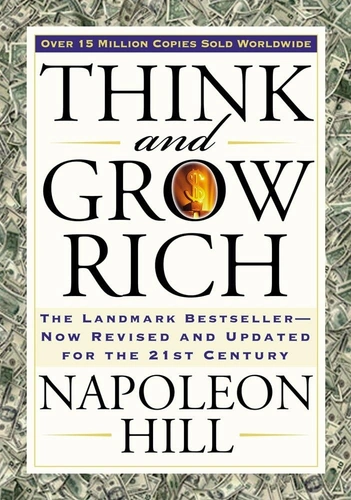
Hill’s method for cultivating this desire involves writing your goal, reading it aloud twice daily, and picturing yourself already in possession of the money. I tried it for a week. I felt ridiculous. I also noticed, with some irritation, that I started making phone calls I had been postponing and drafting plans I had been avoiding. The book’s power does not reside in its logic. It resides in its insistence on action.
The Mysticism You Have to Swallow
The core theme of Think and Grow Rich is that desire, properly focused, becomes a self-fulfilling prophecy. Hill argues that the subconscious mind, once instructed with sufficient emotional force, will find ways to manifest the goal. He calls this autosuggestion. The image that anchors the book for me is not the vault of riches or the successful entrepreneur. It is the abandoned mine shaft where Darby gave up. That hole in the ground, three feet short of gold, is the shape of every abandoned ambition I have ever nurtured.
But here is where the book gets difficult. Hill’s framework drifts into territory that modern readers will find hard to swallow. He speaks of thought vibrations traveling through the ether, of an infinite intelligence that responds to human desire, of an undiscovered organ in the brain that receives hunches. The chapter on sex transmutation, where he argues that sexual energy can be redirected toward creative achievement, reads like a Victorian doctor explaining dreams. I found myself rolling my eyes at the “highly sexed” successful men he cites as evidence.
And yet. There is something to the madness. Hill understands that humans are not rational calculators. We are creatures of appetite, fear, and longing. His insistence that desire contains a sexual component is clumsy, but his underlying observation—that raw energy can be channeled toward achievement—has been validated by a century of psychology. The packaging is dated. The engine still runs.
What the Fever Dream Gives You
I will be honest about the book’s flaws. The writing style veers into infomercial territory, with excessive capital letters and declarations that “ALL ACHIEVEMENT, ALL EARNED RICHES, HAVE THEIR BEGINNING IN AN IDEA.” Hill makes claims without evidence, presenting speculation as proven fact. He contradicts himself, at one point insisting the steps require no sacrifice, then elsewhere demanding that you burn all bridges behind you. The mystical passages will make skeptical readers want to throw the book across the room.
Anyone stuck in a cycle of wishing without acting will find something here. Anyone who has abandoned a goal at the three-foot mark. Anyone who needs permission to want something intensely. If you’re seeking practical financial advice or evidence-based strategies, this is not the book for you. This is not a money management book. It is a psychological priming device.
The chapter on the Master Mind alliance, where Hill argues that coordinated effort among a like-minded group multiplies individual capability, remains genuinely useful. The roundtable idea—gathering people who share your purpose—is practical and applicable. The persistence chapter, with its insistence that quitters never win, has entered the cultural bloodstream for good reason.
The Question That Won’t Leave
What I take away from this book is not the mysticism. It is the permission to take my own desires seriously. Hill’s methods for creating a definite plan, writing it down, and reviewing it daily are simple enough that I have actually maintained them. The book did not make me rich. It made me more honest about what I want and more willing to act on it. That is a strange gift from a book that sometimes reads like a fever dream.
This book will not give you a step-by-step path to wealth. It will not respect your skepticism or your need for evidence. But it will sit in your mind like a small, persistent voice asking whether you stopped at three feet. That question, once asked, is difficult to silence.
“The starting point of all achievement is desire. Keep this constantly in mind. Weak desire brings weak results, just as a small fire makes a small amount of heat.” I have read those lines three times since finishing the book. The first time I nodded. The second time I felt uncomfortable. The third time I went back to work.
