Money is often treated as a math problem. Earn more, spend less, invest wisely, and the rest should follow. But real financial decisions rarely feel that simple.
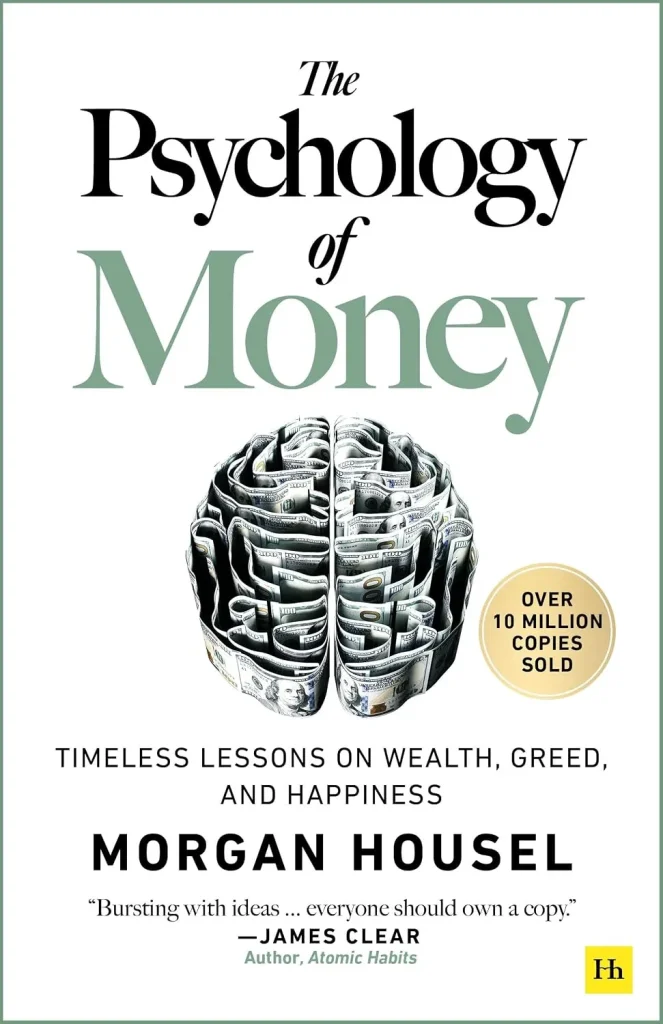
People make choices about money based on fear, confidence, family experiences, social expectations, and personal goals. The Psychology of Money by Morgan Housel explores this human side of finance and explains why knowing the numbers is only part of becoming financially successful.
Rather than presenting wealth as a competition or promising a quick path to financial freedom, Housel takes a more reflective approach. He asks readers to consider how their behavior and emotions influence the way they earn, spend, save, and invest.
About The Psychology of Money
The Psychology of Money is a collection of insights about how people think about wealth and make financial decisions. Morgan Housel draws on stories and observations rather than relying on complicated financial formulas.
A central idea throughout the book is that financial success depends heavily on behavior. Two people can have similar incomes and access to the same financial information yet make completely different decisions because their experiences and attitudes toward money are different.
The book therefore looks beyond traditional financial advice. It explores topics such as patience, risk, greed, luck, compounding, lifestyle choices, and the difference between being wealthy and simply appearing wealthy.
Money Decisions Are Often Personal
One of the book’s most compelling points is that people rarely make financial decisions in a vacuum.
Someone who grew up during financial uncertainty may view money very differently from someone who experienced economic stability. A person who has recently achieved financial success may also take risks that someone with a different history would avoid.
This helps explain why there is no single financial strategy that works perfectly for everyone.
Understanding this can also make people less judgmental about financial behavior. What looks irrational from the outside may make more sense when viewed through someone’s personal experiences and priorities.
Key Ideas From The Book
Behavior Can Matter More Than Financial Knowledge
Knowing how money works is useful, but knowledge alone does not guarantee good decisions.
A person can understand investing principles and still panic during a market decline. Someone can know the importance of saving and still spend impulsively. The challenge is often not knowing what to do, but consistently doing it.
Housel’s approach places considerable importance on patience, self-control, and long-term thinking. These qualities may not sound exciting, but they can have a significant effect on financial outcomes.
Getting Rich and Staying Wealthy Are Different
Another important distinction is between accumulating money and keeping it.
Building wealth may require ambition and risk-taking, but preserving wealth often requires caution, flexibility, and the ability to avoid unnecessary risks. A strategy that helps someone make money is not necessarily the same strategy that helps them protect it.
This idea encourages readers to think beyond short-term financial wins and consider whether their choices are sustainable.
Enough Can Be More Valuable Than More
Modern culture often encourages people to measure success by how much they own. The book questions this mindset by exploring the idea of knowing when you have enough.
Constantly increasing the target can create a situation where financial success never feels satisfying. Someone can earn more, buy more, and still feel behind.
For Housel, financial independence is partly about having enough control over your money that you do not have to constantly chase a larger number.
What Makes The Psychology of Money Worth Reading?
The biggest strength of The Psychology of Money is its accessibility. Readers do not need an advanced understanding of finance to appreciate the ideas because the book focuses primarily on behavior and decision-making.
The stories also make abstract financial concepts easier to remember. Instead of presenting wealth as a collection of formulas, Housel shows how ordinary human tendencies can influence financial outcomes.
Another appealing feature is the book’s realistic attitude toward uncertainty. Financial success is not presented as something that can be perfectly predicted or controlled. Luck, timing, risk, and unexpected events all play a role.
That does not mean financial planning is pointless. Rather, it encourages readers to build strategies that can survive uncertainty instead of assuming everything will go according to plan.
A Different Way to Think About Wealth
Perhaps the most memorable lesson is that wealth is not always visible.
Expensive possessions may show what someone has spent, but they do not necessarily reveal how financially secure that person is. Savings, flexibility, and the ability to make choices without financial pressure may be much less visible—but potentially much more valuable.
This perspective can change the way readers evaluate their own financial goals. Instead of asking only how much they want to earn, they may start asking what they actually want money to allow them to do.
That shift makes the book relevant beyond investing. It becomes a conversation about freedom, priorities, and the kind of life people want their money to support.
Who Should Read The Psychology of Money?
This book is a good choice for anyone who wants to develop a healthier relationship with money.
It may be particularly useful for readers who:
- Want to improve their financial habits
- Are interested in saving and long-term wealth building
- Struggle with impulsive spending
- Want to understand financial behavior
- Are beginning to learn about investing
- Want to rethink what financial success means to them
It is also accessible enough for readers who do not consider themselves financially knowledgeable. The emphasis is less on technical strategies and more on developing a thoughtful mindset around money.
Final Thoughts
The Psychology of Money offers a refreshing reminder that financial success is not purely a matter of numbers. Our experiences, emotions, habits, and expectations can influence money decisions just as strongly as financial knowledge.
For readers trying to build wealth without becoming consumed by the pursuit of it, the book provides plenty to think about. Its lasting lesson is perhaps the simplest one: managing money well is not only about making the right calculations—it is also about understanding yourself.