You were the person they called when they needed advice.
You showed up when things went wrong. You listened, helped, introduced them to people, covered for them, or simply made their life easier.
Then things got better for them.
And somehow, you stopped hearing from them.
No argument. No explanation. No dramatic ending. Just less. Less contact. Less effort. Less of the warmth you had come to expect.
And eventually, you start wondering:
“Did they ever actually value me?”
It’s a painful question. But it may not be the most useful one.
Here is a different way to look at it:
Sometimes what feels like abandonment is actually the moment you finally discover what the relationship was built on.
The Need That Connected You May Have Disappeared
Most relationships form around something. Sometimes it’s shared values. Sometimes it’s history. Sometimes it’s genuine mutual care.
But sometimes, it’s need.
And when the need disappears, the relationship often changes—because the reason for the connection was never as stable as you assumed.
This doesn’t mean the person never cared about you. It means the relationship may have been more situational than you realized. They needed support, and you provided it. They needed guidance, and you gave it. They needed access or validation, and you offered that too.
But when their situation changed—when they found a new partner, a new job, a new circle, or simply felt more stable—the need that once brought you together faded.
And when the need fades, so does the intensity of the connection.

Why People Pull Away
There isn’t always one single reason. But here are the most common patterns behind the distance.
1. Their Priorities Shifted
People change. They get promoted. They start new relationships. They have children. They move cities. They join new communities.
None of these are betrayals. But they do reorganize where people invest their time and attention.
If you were important to them during one phase of life, you may not hold the same place in the next. That doesn’t mean they never valued you. It means the context changed.
2. They Found a New Source of What You Provided
This is the uncomfortable one.
If what you offered was support, validation, or practical help, and they found that elsewhere—a new partner, a therapist, a mentor, a new group of friends—they may no longer need you in the same way.
Again, this doesn’t mean they were using you. But it does mean the relationship may have been more dependent on what you gave than you realized.
3. You Mistook Dependence for Closeness
This is the most important distinction in this entire article.
Dependence is not the same as genuine closeness.
Someone can depend on you heavily, rely on you, even cling to you—and it still may not be true closeness. It may simply be that you were the most available, the most capable, or the most willing person in their life at that moment.
When people depend on you, they need you.
When they genuinely connect with you, they want you.
The first is based on utility. The second is based on mutual regard.
Both can exist in the same relationship. But they are not the same thing.
This leads to a harder question:
“Was I important to them—or was what I provided important to them?”
Sometimes the answer is both. And that is okay.
But if you realize that the relationship only functioned when you were providing something, and faded the moment you stopped—then you have useful information.
The Loyalty Test: What Happens When You Stop Being Useful?
This is the simplest and most revealing question you can ask about any relationship:
What happens when you stop being useful?
Not confrontationally. Not as a test you announce. Just quietly observe.
- Friendship: You stop being the one who always plans, always listens, always helps. Do they step up? Or does the friendship fade?
- Workplace: You stop advancing their career or making their life easier. Do they still value your input? Or do you become invisible?
- Dating: The excitement of the chase fades, and attention is no longer rewarded with validation. Does the effort continue? Or does it shrink?
- Family: You stop doing what everyone expects of you. Does the dynamic shift? Or is there room for you to be different?
The answers may tell you more about the foundation of those relationships than another promise ever could.
How to Tell the Difference Between Genuine Connection and Need-Based Attachment
Not every relationship that shifts is a betrayal. Some people genuinely move on. But if you want to distinguish between a real connection and one that was built on need, here is a useful framework:
| Need-Based Attachment | More Genuine Connection |
|---|---|
| They mostly contact you when they need something | They contact you even when nothing is needed |
| Conversation centers around their problems | They show curiosity about your life |
| Their warmth increases when you help | Their behavior remains relatively consistent |
| They disappear when circumstances improve | The relationship survives changes in circumstance |
| You feel useful more often than known | You feel known, not just useful |
No single behavior proves that someone is using you. What matters is the pattern over time.
This distinction is part of a larger question about human nature: how much of what people do is driven by genuine attachment, and how much is shaped by need, incentives, expectations, and circumstance?
That’s the broader question explored in Awakening to Human Nature.
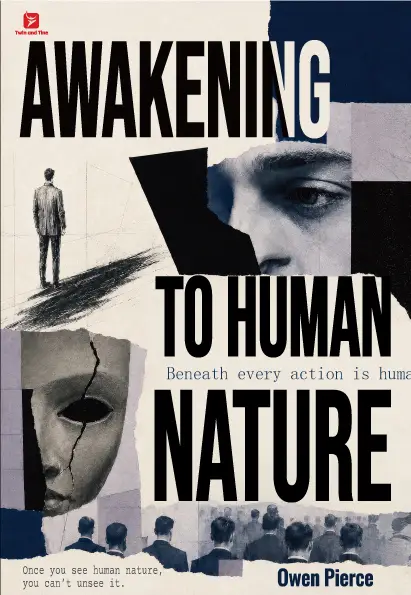
Awakening to Human Nature
Owen PierceA practical guide to recognizing hidden motives and protecting yourself from manipulation.
Don’t Confuse Losing Access With Losing Your Worth
This is important.
Someone needing you less does not automatically mean you became less valuable.
It may simply mean the circumstance that once connected you has changed.
The person who pulled away may not have abandoned you in the way you think. They may have simply outgrown their need for what you were providing. And if the relationship was built on that foundation, there was no way for it to survive.
That is not a statement about your worth. It’s a statement about the architecture of the relationship.
What Should You Do When Someone No Longer Needs You?
Once you recognize the pattern, here is what actually helps:
1. Stop trying to earn your place back.
You can’t rebuild a relationship by giving more to someone who already moved on. More effort doesn’t make a one-sided connection mutual.
2. Observe reciprocity instead of demanding explanations.
You don’t need to have a difficult conversation about every distance you notice. Often, behavior will tell you more than words ever could.
3. Don’t make yourself useful just to keep someone close.
This is one of the most common mistakes. People make themselves indispensable, hoping the person will stay. But that is not connection—that is leverage.
What This Reveals About Human Nature
The uncomfortable lesson isn’t that people are selfish.
It’s that need, incentives, expectations, and circumstances can shape relationships more than we realize.
Once you understand that, abandonment becomes information rather than a verdict on your worth.
You stop asking:
“Why did they leave me?”
And start asking:
“What was this relationship really built on?”
That question changes everything.
If this changed the way you think about why people pull away, explore the ideas behind it in Awakening to Human Nature.
Awakening to Human Nature
Owen PierceA practical guide for understanding hidden motives, social patterns, emotional pressure, and manipulation—so you can read situations more clearly and protect your boundaries with confidence.
We don’t just recommend books here—we explain the patterns behind human behavior so you can see people more clearly, before they disappoint you.