You notice something strange.
They always seem to have time for you when they need advice. When they’re having a crisis, you’re the first person they call. When they need a favor, you’re suddenly important again.
But when you’re the one having a difficult week? Somehow, they’re busy.
You may have experienced this without immediately calling it “being used.” Because being used rarely feels like being used at first. It often feels like being needed.
And that is exactly why it’s so hard to recognize.
Being Needed Can Feel Like Being Loved
When someone depends on you, it creates a sense of importance. You’re the one they turn to. You’re the one who can help. You’re the one who shows up.
That can feel a lot like being valued.
But here is the distinction that changes how you see relationships:
Someone can need what you provide without deeply valuing who you are.
This doesn’t mean every person who needs you is using you. Sometimes, need and genuine care coexist. But when the relationship is built on what you provide—rather than on mutual regard—the dynamic is unstable.

What Does It Actually Mean to Use Someone?
Not every request for help is exploitation. Not every unequal moment is a sign of bad intentions.
Here is a useful way to think about it:
The problem begins when the relationship repeatedly benefits one person while the other person’s needs, boundaries, or well-being are treated as secondary.
| Type | What It Looks Like |
|---|---|
| Healthy exchange | Both people give and receive over time. The relationship has balance, even if it fluctuates. |
| Uneven period | One person needs more support for a season—but there is still mutual care, and the imbalance eventually shifts. |
| Exploitative pattern | One person consistently takes. The other consistently gives. Boundaries are ignored. The pattern repeats without change. |
Most people are not looking for exploitation. They are looking for a relationship. But when you are the one consistently giving, it can take a long time to realize the pattern is not temporary.
7 Signs Someone May Be Using You
Here are the patterns that matter—not isolated moments, but repeated behavior.
1. They Become Warmer When They Need Something
You notice a shift. When they have a problem, they reach out. When they need advice, they’re attentive. When they need a favor, they’re suddenly very interested in your life.
Then, when the need passes, the warmth fades.
2. Your Value Seems Tied to What You Can Provide
The relationship revolves around what you do for them, not who you are. You’re valued for your ability to listen, solve problems, offer money, make introductions, or provide emotional support.
But outside of that role, their interest drops.
3. They Rarely Show Up When You Need Them
You might spend two hours helping them through a breakup, a work problem, or a financial mess. But when you need twenty minutes to talk about something difficult in your own life, they suddenly have somewhere else to be.
4. They Push Your Boundaries When You Say No
When you say “I can’t help with that,” they may become distant, annoyed, or make you feel guilty. The relationship seems to come with an unspoken expectation: you are supposed to be available.
5. They Know a Lot About What You Can Do for Them, but Little About You
They know you can lend money, fix problems, listen for hours, cover shifts, or connect them with people. But they don’t know what you’re struggling with. They don’t ask. They don’t remember.
6. The Relationship Becomes Distant When You Stop Giving
This is the clearest test. When you stop over-extending—when you pull back, say no, or stop initiating—the relationship fades. They don’t reach out. They don’t notice.
7. You Feel More Useful Than Known
This is the most important sign of all.
When you feel valuable mainly when you’re useful, you are not in a relationship. You are in a role.
But One Sign Isn’t Enough
Here is the warning that most articles skip:
Someone asking you for help doesn’t mean they’re using you.
Someone being unavailable doesn’t mean they don’t care. And an unequal relationship during one difficult period doesn’t automatically make it exploitative.
What matters is the pattern.
Ask yourself:
- Has this been happening for months? Years?
- Have you already talked about it and nothing changed?
- Does the pattern shift when you need something?
- Does the relationship survive when you stop over-giving?
Look for a pattern, not a moment.
The Reciprocity Test
Here is a practical tool you can use in any relationship where you feel uncertain.
Stop focusing on what they say. Pay attention to what happens in four situations:
| Question | What to Observe |
|---|---|
| When you say no, what happens? | Do they respect it? Or do they push, guilt, or withdraw? |
| When you need help, what happens? | Are they genuinely available? Or do they become busy? |
| When you have nothing to offer, do they still contact you? | Does the relationship continue, or does it fade? |
| When their needs are met, does the relationship continue? | Do they stay connected, or do they disappear until they need something again? |
You are not testing whether someone pays you back. You are observing whether the relationship still exists when the exchange becomes less convenient.
The more useful question isn’t simply whether someone is using you. It’s why the relationship changes when the thing connecting you changes.
That’s where understanding human nature becomes more useful than memorizing relationship red flags. Awakening to Human Nature explores the role of need, incentives, self-interest, and loyalty in shaping how people behave toward one another.
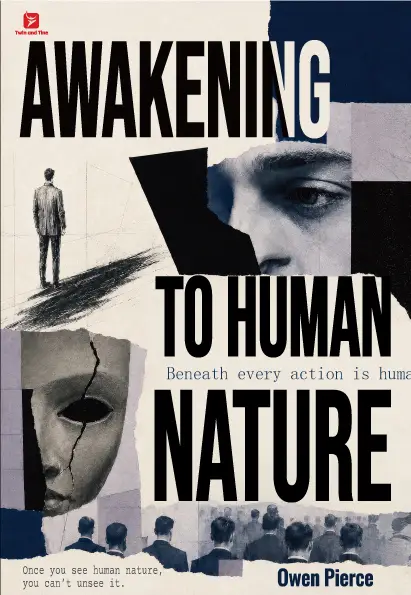
Awakening to Human Nature
Owen PierceA practical guide to recognizing hidden motives and protecting yourself from manipulation.
Why Smart People Stay in One-Sided Relationships
It’s tempting to think that people who stay in one-sided relationships are simply naive. But the truth is more complex.
Hope. Maybe things will change. Maybe if I give a little more, they’ll finally see how much I’ve been there.
History. We’ve known each other for years. You don’t walk away from that. You don’t want to be the one who gave up.
Identity. You are the person they can always count on. Being needed has become part of how you see yourself.
Investment. You’ve already given so much. Walking away would mean admitting that much of it was not reciprocated.
Sometimes we keep giving not because the relationship is healthy, but because admitting what it has become would force us to reinterpret everything we’ve already invested.
What to Do If You Think Someone Is Using You
If you see the pattern clearly, here is what actually helps.
1. Stop Proving Your Value Through Usefulness
You don’t need to earn your place in a healthy relationship. If the only way to stay important to someone is to keep providing, the relationship is not sustainable.
2. Set One Clear Boundary and Observe the Response
You don’t need to confront them. You don’t need to announce you are “testing” them. Just say no to one request, or say “I can’t help with that right now.”
Then observe.
Do they respect it? Do they push back? Do they pull away?
Their behavior will tell you more than a conversation ever could.
3. Let the Relationship Reveal Itself Without Over-Functioning
Stop being the one who always initiates, always gives, always fixes. Step back. Give the relationship space to show what it is made of.
If it fades, you’ve learned something important about the relationship. If it survives, you may have discovered something more valuable than any warning sign.
Understanding the Pattern Beyond One Relationship
Awakening to Human Nature is not simply a book about identifying bad people. It is about understanding the forces that influence human behavior: need, incentives, self-interest, expectations, status, perception, and loyalty.
If you’ve ever wondered whether someone values you or simply values what you provide, the book explores the deeper patterns behind that question—so you can stop guessing and start seeing clearly.
Start with the free sample:
Awakening to Human Nature
Owen PierceA practical guide for understanding hidden motives, social patterns, emotional pressure, and manipulation—so you can read situations more clearly and protect your boundaries with confidence.
The goal isn’t to become suspicious of everyone. It’s to understand what keeps a relationship alive—and recognize when you are carrying more of it than the other person.