You know the feeling. You say something and immediately wish you could take it back. Or you stay quiet because you are not sure how to say what you mean. Or you replay a conversation for hours, thinking about what you should have said instead.
Communication is not about being clever with words. It is about being understood. And for most of us, that does not come naturally. We react instead of respond. We rush instead of listen. We say too much or not enough.
Here is the good news. You can get better at this. It is not a personality trait you are stuck with. It is a skill. And like any skill, it improves with the right tools and practice.
Quick answer: How do I become a better communicator?
You slow down, figure out what kind of conversation you are actually having, match the other person’s tone, and adjust based on how they are reacting instead of sticking to a script.
Here are three communication books that take different approaches. One gives you practical scripts for everyday situations. One teaches you to recognize the three types of conversations happening beneath the surface. One breaks down the science of why we talk the way we do and how to do it better.
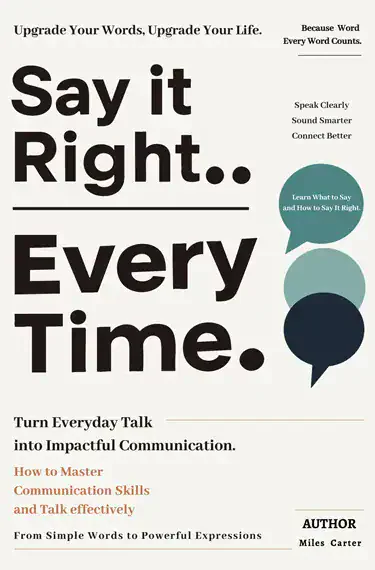
Say It Right Every Time
Practical tools for the moments that matter. Say what you mean, calmly.
This book by Miles Carter is for those moments when words really count. A job interview. A tough conversation with a coworker. Telling someone no without feeling guilty. Giving feedback that actually helps instead of hurts.
What makes this book stand out is the side-by-side comparisons. For every situation, Carter shows you a clunky, ineffective way to say something. Then he shows you a better way. You can see the difference immediately. No vague advice. No theory. Just real scripts you can use.
The book covers daily conversations, workplace interactions, and emotional connections. You learn how to handle conflict, set boundaries, make requests, and express opinions with confidence. Each chapter includes real-life scenarios with specific examples.
You stop second-guessing yourself. You start saying the right thing in the moment.
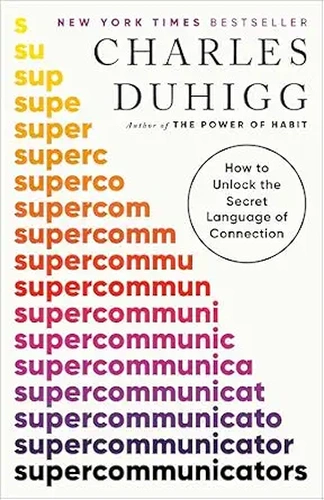
Supercommunicators
How to unlock the secret language of connection.
Charles Duhigg, the author of The Power of Habit, wrote this book to answer one question. What makes some people so good at connecting with others?
His answer is simple. Every conversation is actually three conversations at once. There is the practical conversation, which is about facts and solving problems. There is the emotional conversation, which is about feelings. And there is the social conversation, which is about identity and how we see ourselves in relation to others.
The problem is that most people do not recognize which conversation they are having. So they respond to a practical question when the other person is looking for emotional support. Or they offer solutions when the other person just wants to be heard. That mismatch is what causes most misunderstandings.
Duhigg shows you how to identify the type of conversation happening and match it. He tells stories that make the research stick. A jury room where one person leads a divided group to consensus. A CIA officer recruiting a foreign agent. A surgeon trying to convince a patient to choose the less risky treatment.
The book teaches you to hear what is really being said, not just the words. And it gives you practical tools to connect with almost anyone.
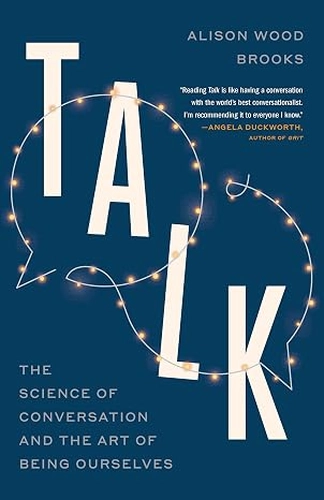
Talk
The science of conversation and the art of being ourselves.
Alison Wood Brooks is a Harvard Business School professor who studies the psychology of conversation. She argues that conversation is one of the most complex things we do. We do it all the time, but we are often not very good at it.
This book breaks down why. It explains the hidden architecture behind our everyday chats. Why some conversations feel easy and others feel painful. Why we sometimes say things we do not mean. Why we misinterpret what others are saying.
Brooks offers practical tools based on real research. She introduces the TALK Maxims, a framework for improving how you communicate. The book covers difficult conversations, but it also covers the easy ones. Because even small talk matters. Even casual chats can build connection or create distance.
What I like about this book is how grounded it is. Brooks does not just tell you to be a better listener. She explains what gets in the way of listening and how to get past it. She gives you specific things to try. Not abstract advice. Real techniques you can use in your next conversation.
Which Book Should You Read First?
If you need practical scripts for real situations right now, start with Say It Right Every Time. It gives you exact words to use in specific moments.
If you want to understand why conversations go wrong and how to fix them, pick up Supercommunicators. It helps you see the hidden layers in every chat.
If you are interested in the research behind good communication, go with Talk. It is packed with science but written for real people.
Many people read all three. Each one offers something the others do not.
Final Thought
You do not need to be a natural communicator. You just need to be willing to learn. One small change in how you say something can change the whole conversation. And better conversations change relationships. They change how people see you. They change how you see yourself.
Start with one book. Try one technique. See what happens.
Frequently Asked Questions
Can I really improve my communication skills?
Yes. Communication is a skill, not a personality trait. With practice, anyone can get better.
Which book is best if I struggle with conflict?
Say It Right Every Time gives you specific scripts for difficult conversations. Supercommunicators helps you understand the emotional and social layers that make conflict hard.
What if I have read communication books before and they did not help?
That probably means they were too general. This list gives you specific, practical tools you can use immediately.
How do I choose between these books?
Think about your biggest struggle. Is it finding the right words? Understanding why conversations go off track? Knowing the science behind it all? Pick the book that matches your problem.