If you’re searching for books like Crucial Conversations, chances are you’ve already read it—or heard enough about it to know it’s a must-read. You know the framework. You know the tactics. You know how to spot a crucial conversation and steer it toward safety.
But you might have also noticed something.
Even with solid communication skills, you sometimes still find yourself confused by people’s reactions. You say the right thing, but something still feels off. You handle the moment well—yet the next interaction plays out the same way.
That’s because there’s a difference between knowing how to talk and knowing who you’re talking to.
This article explores books like Crucial Conversations with a particular lens: not just for communication tactics, but for understanding the people on the other side of the conversation.
The Real Question Behind “Books Like Crucial Conversations”
When people search for books like Crucial Conversations, they usually want one of two things:
- More techniques for handling difficult dialogue
- Deeper insight into why people behave the way they do
The first category is well-covered. Crucial Conversations itself offers a strong framework, and books like Difficult Conversations or Never Split the Difference provide similar tactical advice.
The second category is different. It’s not about what to say—it’s about what’s actually happening beneath the surface.
And that’s where many readers find a gap.
What Crucial Conversations Does Well
Let’s give credit where it’s due. Crucial Conversations is a valuable book for anyone who regularly faces high-stakes discussions, disagreements, or emotionally charged exchanges.
It gives you a practical, step-by-step framework to:
- Stay calm when tensions rise
- Speak persuasively without triggering defensiveness
- Keep dialogue productive even when people disagree
- Avoid the common traps of silence or violence
If your primary challenge is “I know what I need to say, but I don’t know how to say it without making things worse,” then Crucial Conversations is an excellent resource.
But many readers find that after mastering the techniques, they still run into situations where the techniques alone don’t fully solve the problem.
Where Communication Tactics Hit Their Limit
Think about this scenario.
Your manager says, “I’m surprised you didn’t catch that.”
You know how to respond constructively. You can use “I” statements, check for understanding, and stay neutral.
But the real question is: what does that statement actually mean?
It could be any number of things:
- A genuine correction
- Disappointment in your performance
- Concern about the project timeline
- A subtle test of your attentiveness
- A defensive move to protect their own reputation
- Just a passing remark with no deeper meaning
Same words. Different possible motives. Different appropriate responses.
If you assume the wrong one, your communication skills won’t save you—you might apologize when you should clarify, or explain when you should acknowledge a power dynamic.
This doesn’t make communication skills less useful. In fact, they work best when paired with good judgment about the person you’re dealing with. But it does highlight a limitation: knowing how to communicate doesn’t automatically tell you what you’re actually dealing with.
That’s where the books begin to diverge.
Other Books Like Crucial Conversations
If you’re looking for books similar to Crucial Conversations, there are several directions you can take. Here’s a quick look at three that address different aspects of human interaction.
| Book | Main Focus | Best For |
|---|---|---|
| Difficult Conversations | Conflict and communication | Navigating challenging discussions with a structured approach |
| Never Split the Difference | Negotiation and persuasion | High-stakes bargaining and reading counterparts |
| Awakening to Human Nature | Human behavior and social dynamics | Understanding people’s motives, patterns, and behavior |
Each of these offers something valuable. Difficult Conversations digs deeper into the emotional and identity-based layers of conflict. Never Split the Difference gives you tactical tools for negotiation. And Awakening to Human Nature takes a different angle—it focuses on observing behavior, recognizing patterns, and understanding what might be influencing the person across from you.
For readers looking for a Crucial Conversations alternative with a stronger emphasis on understanding people rather than just communicating with them, Awakening to Human Nature offers a distinct approach.
What Awakening to Human Nature Adds to the Conversation
Awakening to Human Nature by Owen Pierce doesn’t replace communication skills—it supplements them by helping you see people more clearly.
The book takes a different starting point. Instead of beginning with the question of what to say, it encourages readers to pay closer attention to the person they’re dealing with. What someone says matters, but so do patterns in how they behave, what they repeatedly avoid, what seems to matter to them, and how they respond when circumstances change.
That doesn’t mean assuming you’ve figured someone out after one conversation. Human behavior is rarely that simple. A defensive response could come from insecurity, stress, disagreement, embarrassment, or something completely unrelated to you. The point is to look for context and patterns rather than immediately settling on one explanation.

When you recognize that people can be influenced by status, approval, fear, insecurity, or the desire to protect themselves, their behavior can become easier to interpret. Not perfectly, and not with certainty, but with more context than you’d have from the words alone.
The goal isn’t to become suspicious of everyone around you. It’s to become more observant. Instead of asking only “What should I say?” you start asking “What might I be missing here?”
In that sense, this book doesn’t compete with Crucial Conversations—it complements it. One gives you tools for the moment of dialogue. The other gives you a framework for understanding the person across from you.
The Same Situation, Two Different Approaches
Let’s look at a practical example.
The situation: A close friend keeps canceling plans at the last minute.
If you approach it from a communication-first angle: you ask yourself “How do I bring this up without damaging the friendship?” You focus on tone, timing, and phrasing.
If you approach it from a human-understanding angle: you consider a different set of questions. Why might this person keep doing this? Are they overwhelmed by other commitments? Do they value the relationship less than you do? Do they have trouble saying no and overpromise? Are they going through something they haven’t shared? Do they see you as someone who will always be available, and thus low priority?
Your best response depends entirely on which interpretation is closer to the truth. If they’re struggling, you might offer support. If they’re disengaged, you might need to set boundaries. If they’re avoidant, you might address that pattern directly.
Good communication tactics help you deliver the message. Understanding the person helps you decide what the message needs to be.
Which Book Should You Read Next?
If you’re searching for books like Crucial Conversations, your best choice depends on what you actually need.
You might want to read another communication-focused book if:
- You find yourself avoiding difficult conversations
- You want a clear, repeatable framework for high-stakes dialogue
- You often know the situation but struggle with delivery
- You want practical techniques you can apply immediately
You might want to read a human-behavior-focused book if:
- You often misread people’s intentions
- You’re dealing with unpredictable or difficult people
- You want to recognize patterns in relationships and work
- You’re curious about what actually drives people’s behavior
The two aren’t mutually exclusive. Many readers benefit from reading both—using communication skills to handle the conversation, and human-understanding skills to make better judgments about the person they’re talking to.
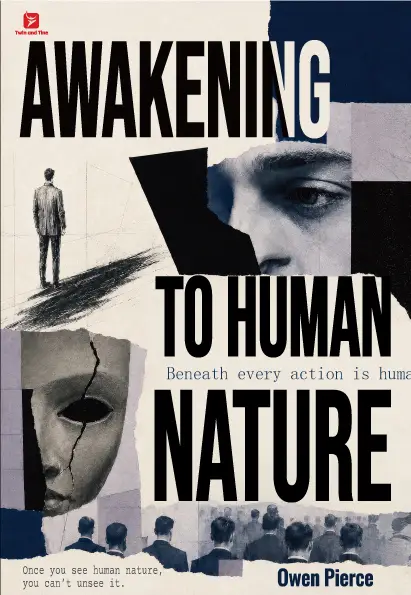
Awakening to Human Nature
Owen PierceA practical guide to recognizing hidden motives and protecting yourself from manipulation.
Frequently Asked Questions
What are some books like Crucial Conversations?
It depends on what you’re looking for. If you want more communication frameworks, books like Difficult Conversations or Never Split the Difference are good choices. If you want to understand people better—their motives, patterns, and behavior—Awakening to Human Nature falls into that category.
What are some books similar to Crucial Conversations?
Books similar to Crucial Conversations tend to fall into two camps: communication-focused (like Difficult Conversations and Never Split the Difference) and human-behavior-focused (like Awakening to Human Nature). The right one depends on whether you want more tactics or deeper understanding.
Is there a Crucial Conversations alternative that focuses more on understanding people?
Yes. If you’re looking for a Crucial Conversations alternative with a stronger emphasis on understanding people’s behavior, motives, and social dynamics, Awakening to Human Nature offers a different starting point—not replacing communication skills, but adding a layer of human insight before you speak.
What should I read after Crucial Conversations?
If Crucial Conversations helped you think differently about difficult conversations, Awakening to Human Nature offers a natural next step: understanding the people behind them.
Ready to Look Deeper?
If Crucial Conversations helped you think differently about difficult conversations, Awakening to Human Nature offers a different next step: understanding the people behind them.
Awakening to Human Nature
Owen PierceA practical guide for understanding hidden motives, social patterns, emotional pressure, and manipulation—so you can read situations more clearly and protect your boundaries with confidence.