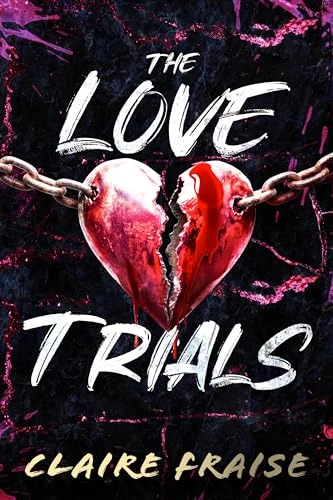
I picked up The Love Trials on a Tuesday night, expecting a quick paranormal thriller to break up my reading slump. Three hours later, I was still on my couch, the lights off, my dog asleep in my lap, and my heart hammering so hard I could hear it. I had to put the book down twice just to breathe. Then I picked it right back up.
The premise sounds almost too clever for its own good. A serial killer named Morrow, obsessed with proving love is a lie, kidnaps couples and forces them through brutal trials designed to break their bond. Pull out your own teeth with pliers, and you might live. Refuse, and you both die. When he dies in prison, his ghost possesses innocent people to keep the games running. Eden Callahan, a survivor who played dead while her family was butchered when she was thirteen, discovers she can see these entities. She joins a team of paranormal investigators hunting them, and finds herself trapped in the Game Master’s crosshairs alongside Nico, a man who despises her on sight but can’t seem to stay away.
But here’s the thing. The Love Trials isn’t really about the gore, though there’s plenty. It’s not even about the ghosts, though the worldbuilding around them is surprisingly meticulous. Fraise has built a classification system for entities, different types of seers, a whole hidden infrastructure of investigators, and it all feels researched and real. What struck me most, reading this nearly six hundred page book in two days, was how the horror serves a deeper question: would you save yourself or your lover if you were trapped in a saw game?
That question haunts every chapter, and Fraise refuses to give easy answers. Eden has spent her whole life surviving alone, living in her car with her rescue chihuahua Bob, working construction jobs, unable to connect with anyone after losing her entire family. She’s learned that attachment means loss. Then she joins this found family of ghost hunters, each with their own trauma, and suddenly she has something to lose again. The terror isn’t just physical. It’s the terror of caring.
The Man Who Believes He’s Poison
Nico, the male lead, initially seems like your standard grumpy, morally grey love interest. He wants Eden off the team. He pushes her away. He’s cold and hostile, and honestly, I spent the first third of the book wanting to throttle him. Then Fraise drops his backstory, and I understood. I won’t spoil it, but I’ll say this: his connection to the case is deeply personal, and his reluctance to let Eden in isn’t cruelty. It’s the desperate logic of a man who believes he’s poison.
The central image that stayed with me is Eden’s family, how she keeps them alive by asking what they would do in her situation. Her mother who saw the best in people. Her father who kept her strong. This isn’t sentimental. It’s a survival mechanism, and Fraise shows how Eden slowly learns to build new bonds without betraying the old ones.
What makes this book uncomfortable, in the best way, is how it handles the possession element. The killers aren’t just monsters. They’re ghosts using human hosts, which means the team isn’t just stopping a killer. They’re also trying to save the person trapped inside. That moral complexity runs through everything. The line between victim and perpetrator blurs. Eden, herself a survivor, has to look at possessed people and see both the threat and the tragedy.
The Slow Burn That Nearly Broke Me
Fraise’s writing is strongest in the trial scenes, which genuinely feel like they belong in a Saw film. The tension is almost unbearable. But she also knows when to pull back. The romance is slow burn in the truest sense, with so much yearning that I found myself yelling at the pages. Nico’s line, “I thought I could do this, but I can’t fucking handle seeing you in pain,” hit me like a truck, because by that point, I understood exactly what it cost him to say it.
There are flaws. The tonal whiplash between existential horror and open door romance scenes can be jarring, like switching channels from a nightmare to a romcom and back again. Some readers will find the nearly six hundred pages excessive. And the ending, while satisfying, clearly sets up a sequel, which means certain threads remain frustratingly unresolved. I wanted more closure for Eden and Nico after everything they survived. I wanted to see them catch their breath.
But here’s what I keep circling back to. Fraise does something rare in dark romance. She never glorifies the violence or confuses abuse with love. Nico is determined not to hurt Eden, even when his own pain makes him lash out. The book’s moral compass stays steady even as the plot goes to dark places.
The Cost of Letting People In
Fans of Criminal Minds who want a supernatural twist will find something here. People who watched Saw films from behind their fingers and secretly loved them. Dark romance readers tired of instalove and craving genuine slow burn. If you need your horror to have a clear line between good and evil, this might frustrate you. There’s real moral murkiness here.
This book wouldn’t let me go. It made me hug my own dog a little tighter. It made me text my best friend at midnight just to say I loved her. It asks whether love survives the worst things, and then it puts its characters through the worst things to find out.
The strongest cage was never iron bars, Fraise seems to say. It was the belief that you don’t deserve to be loved.
This book won’t give you easy comfort. But it will make you feel slightly less alone in the moments when you’re afraid to let people in. And that’s worth more than any clean ending.
