I have spent roughly eleven thousand hours of my life replaying conversations I will never get back. The exact wording of an argument from 2019. The look on a friend’s face when I said the wrong thing. The email I shouldn’t have sent, or should have sent sooner.
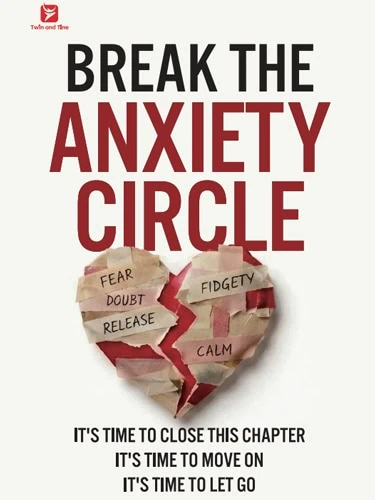
So when I picked up Miles Carter’s Break the Anxiety Circle, I braced for the usual self-help medicine: cheerfulness, acronyms, and the gentle implication that I am doing anxiety wrong.
The book surprised me on page one. It doesn’t tell you to stop overthinking. It tells you something stranger. What if your overthinking isn’t the enemy? What if it’s a very loyal, very exhausted friend who has been trying to protect you for years, and the real problem is that you never told it to stand down?
Why Your Brain Refuses to Stop Ruminating
Carter writes about a woman named Priya, a project manager who can’t sleep because she replays every team meeting looking for the moment she lost respect. Her therapist asks her a question that stopped me cold: “What would happen if you stopped reviewing?”
Priya realizes the answer isn’t “I would be free.” The answer is “I would be unprepared.” Her rumination isn’t a flaw. It’s a survival strategy that worked once, in a childhood where she had to predict her parents’ moods to stay safe. Her brain still thinks it’s on guard duty.
I recognized myself immediately. My own anxious loop keeps me safe from the disaster of being caught off guard. It costs me sleep, presence, and joy, but it never asks for payment upfront. Carter doesn’t shame this mechanism. He treats it with something closer to grief. You built this wall when you needed it. Now it’s keeping out the light.
The book walks through practical resets: naming the emotion instead of narrating the story, setting a “worry window” of fifteen minutes per day, and asking “Is this thought useful or just familiar?” None of it feels like homework. It feels like someone finally explaining the physics of the cage you’ve been living in.

The Art of Disentangling Your Feelings from Other People’s
The middle section of the book wrestles with people-pleasing, which Carter describes not as kindness but as a negotiation where you surrender your own vote. He shares a story about a man named David who spent twenty years saying yes to his brother’s requests, loans, and emotional dumping. When David finally said no, his brother called him selfish. David felt like he had done something wrong.
Carter’s reframe changed how I see my own boundaries. He doesn’t say “your feelings matter.” He says something more precise. Other people’s disappointment isn’t your emergency. Their feelings are real, and they’re also theirs to manage. You aren’t a fire extinguisher for everyone else’s inner life.
The imagery that runs through the book is weaving. Carter describes anxious thoughts as threads that get pulled too tight, creating a fabric that can’t breathe. Boundaries aren’t walls. They’re the loose weave that lets air move through. Letting go of the past isn’t cutting threads. It’s reweaving the same thread into a different pattern.
He has a chapter on the past that I had to read twice. He argues that you can’t forgive someone by deciding to forgive them. You forgive by telling the story differently, by noticing that your memory of the event is a story you’re telling, not a tape recording. The past doesn’t change. The meaning of the past can change. That’s where the healing happens.
What You Gain When You Stop Arguing with Reality
I’ll be honest about the book’s limitations. Some chapters feel repetitive, especially in the middle, where Carter circles the same points about emotional regulation from slightly different angles. He also leans heavily on personal anecdotes, which are moving but occasionally feel like they’re doing the work that more rigorous research could have done better.
But the book’s central insight has stayed with me for weeks. Anxiety and overthinking aren’t problems to be solved. They’re signals to be understood. When you stop fighting them, they start telling you what they’re protecting you from. And once you know that, you can finally choose whether you still need the protection.
Carter describes peace not as the absence of anxious thoughts but as the ability to watch them pass without boarding the train. That image, more than any other, has changed my relationship with my own mind. I still have anxious moments. I still replay conversations sometimes. But I no longer believe those moments are who I am. They’re weather, not climate.
The book ends with a question that I keep asking myself: “What would you do with all the energy you currently spend on fighting yourself?” I don’t have the full answer yet. But I have stopped spending my nights arguing with ghosts. That feels like a beginning.
Maybe that’s what this book truly offers. Not a cure, but a ceasefire. A chance to put down the weapon you were aiming at yourself. The golden line came near the end of the final chapter: “You were never meant to carry every version of yourself at once. Some parts of you are allowed to rest.”