You know what you want to say, but the words never seem to come out quite right. You rewrite a text several times before sending it, replay a conversation after it ends, or suddenly think of the perfect response hours later. What makes this frustrating is that the problem is not necessarily that you have nothing to say. You may actually be thinking about the conversation so much that speaking naturally becomes harder.
Overthinking communication often comes from wanting to avoid the wrong outcome. You do not want to sound rude, awkward, too emotional, too passive, or misunderstood, so you keep editing the message in your head. But conversations do not come with a perfect script, and trying to control every possible interpretation can leave you saying less instead of communicating more clearly.
That is why the right communication book can be useful. Instead of simply teaching you to “speak with confidence,” a good book can help you understand where your communication tends to break down and give you a more practical way to deal with it.
When the Real Problem Is Getting Your Meaning Across
For readers who often think, “That’s not what I meant,” Say It Right Every Time by Miles Carter is a natural place to begin.
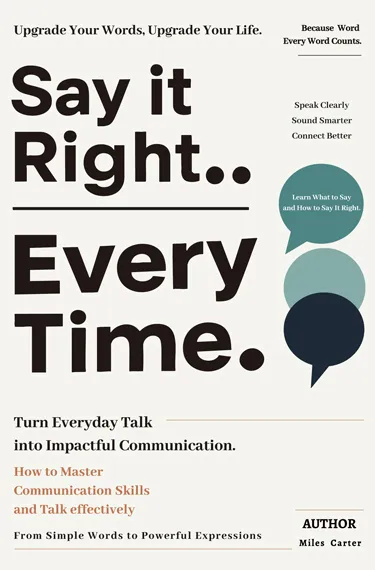
Say it Right..Every Time.
Miles CarterPractical communication tools for the moments that matter — say what you mean, calmly and confidently.
The book focuses on the gap between what you intend to communicate and what another person actually understands. That gap can appear in ordinary conversations, disagreements, requests, explanations, and emotionally important discussions, especially when you are trying so hard to avoid being misunderstood that you end up making your message more complicated.
Sometimes overthinking makes people over-explain. You add another sentence to make sure the other person does not take something the wrong way, then another sentence to clarify that sentence, until the original point is almost buried. In other situations, overthinking has the opposite effect and makes you say almost nothing because you are still deciding how to phrase the first sentence.
Say It Right Every Time takes a practical approach to this problem by encouraging greater awareness of what you are actually trying to communicate and how your words may be received. The goal is not to make every conversation perfectly polished, but to become more intentional about expressing your meaning.
That can be especially helpful when you regularly leave conversations feeling that your words did not represent what you were actually thinking. Rather than spending hours afterward rewriting the conversation in your head, you can start paying attention to how clearly you communicate while the conversation is happening.
When You Freeze Because the Conversation Matters
Overthinking becomes particularly difficult when there is something at stake. It is much easier to speak casually when you do not care much about the outcome, but an important disagreement, a difficult request, or a sensitive relationship issue can make every sentence feel like it carries enormous weight.
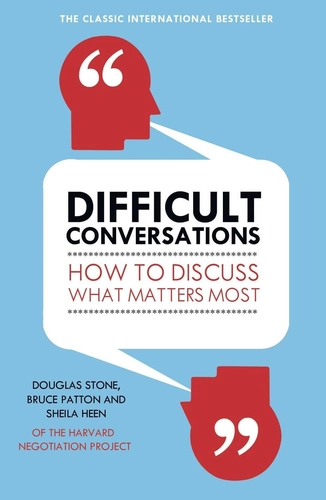
Difficult Conversations by Douglas Stone, Bruce Patton, and Sheila Heen approaches communication from this more emotionally complicated angle. The book is concerned with conversations in which people see the same situation differently and emotions can quickly interfere with what each person is trying to say.
This is important because difficult communication is not always solved by finding better wording. Even if you prepare the perfect sentence, the other person may disagree, become defensive, or respond in a way you did not expect. When that happens, having a framework for understanding the conversation can be more useful than having a memorized line.
For people who spend a lot of time preparing before difficult conversations and then panic when the discussion goes somewhere unexpected, this approach can be particularly valuable. It shifts the focus away from performing perfectly and toward understanding what is actually happening between the people involved.
That makes it a very different kind of communication book from Say It Right Every Time, but the two can complement each other well. One helps with the clarity of your message, while the other helps you navigate the complexity that appears when the conversation becomes emotionally important.
When You Overthink Because You Are Worried About How You Come Across
There is another version of communication overthinking that has less to do with serious disagreements and more to do with social situations.
You may spend too much time wondering what to say when meeting someone new, worry about whether a conversation is becoming awkward, or constantly monitor your own behavior while you are talking. Instead of being part of the conversation, you feel as though you are watching yourself from the outside and judging every response.
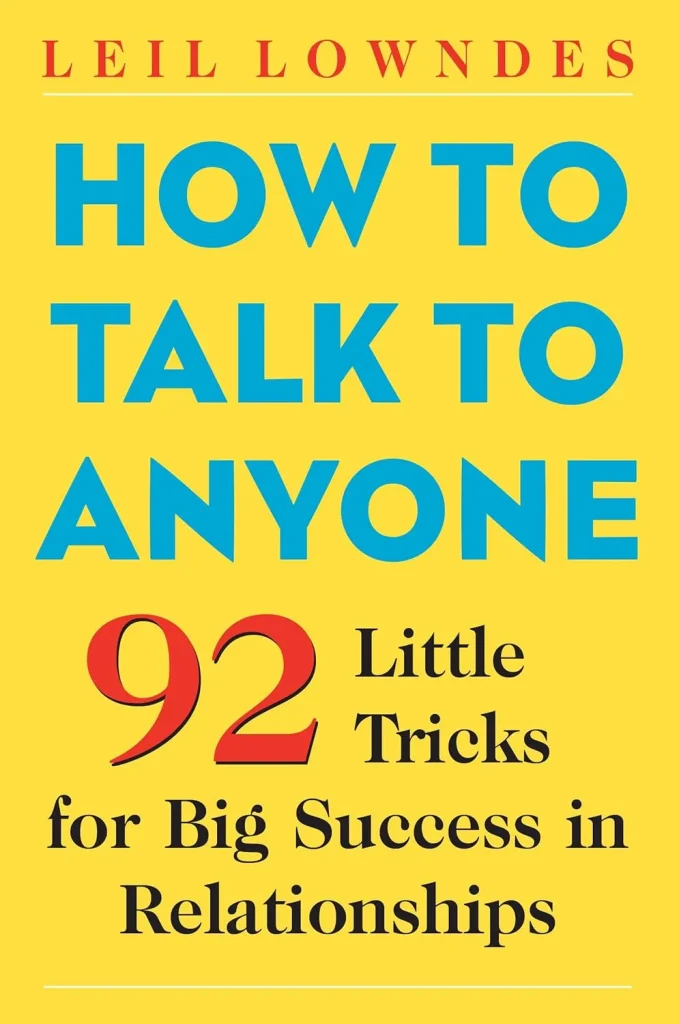
How to Talk to Anyone by Leil Lowndes takes a more socially focused approach. It explores practical ways to become more comfortable interacting with other people, including situations where you may not naturally know what to say next.
For an overthinker, that practical focus can be helpful because it can replace some of the uncertainty with a clearer sense of what to do. Rather than mentally searching through dozens of possible responses, you begin to understand some of the basic patterns that make social interaction easier.
The book is not aimed at exactly the same problem as Say It Right Every Time. It is more about social interaction and comfort than about carefully expressing a difficult thought. But for people whose overthinking comes from self-consciousness, the difference is important.
Why Overthinking Does Not Necessarily Make You a Better Communicator
It is easy to assume that thinking more carefully before speaking should automatically improve communication. In some situations, preparation absolutely helps, especially when the topic is complicated or emotionally sensitive. The problem starts when preparation turns into the belief that every sentence needs to be protected against every possible misunderstanding.
Real conversations are unpredictable. People bring their own experiences, assumptions, moods, and expectations into an interaction, so there is no way to guarantee that your words will be interpreted exactly as you intended.
Trying to eliminate that uncertainty can make communication exhausting. You may spend so much effort choosing the safest possible wording that your message becomes vague, overly cautious, or much longer than necessary.
A better goal is not perfect communication. It is communication that is clear enough, honest enough, and flexible enough to allow an actual conversation to happen.
The Difference Between Clarity and Over-Explanation
One of the most common traps for people who overthink what to say is confusing clarity with more words.
When you are worried about being misunderstood, adding more explanation can feel reassuring. You think that if you include enough context, examples, qualifications, and background, the other person will finally understand exactly what you mean.
But more information does not always create more clarity. Sometimes it gives the listener so much material to process that the main point becomes harder to find.
This is one reason communication skills are not simply about becoming more articulate. They are also about recognizing what matters most in your message and making that part easier for the other person to understand.
What You Can Learn From These Three Books
These books are useful for different reasons, and that is exactly why they work better as a group than as three versions of the same recommendation.
Say It Right Every Time is especially relevant when your biggest frustration is that your intended meaning gets lost somewhere between your thoughts and your words. Difficult Conversations becomes more useful when the problem is an emotionally important discussion where both people have something at stake. How to Talk to Anyone is a better match when your overthinking comes from uncertainty about how to behave in everyday social situations.
Looking at them this way is more helpful than asking which book is simply the “best.” Communication problems that look similar on the surface can have completely different causes.
A person who constantly rewrites messages may need better clarity. A person who avoids certain topics may need help handling difficult conversations. Someone who becomes nervous around new people may need practical social tools rather than another lesson in wording.
What Happens When You Stop Trying to Say Everything Perfectly?
One of the most useful shifts in communication is realizing that a conversation does not need to be flawless to be successful. You can pause, clarify, correct yourself, or ask the other person what they meant without treating each small mistake as a failure.
This can take some pressure away from speaking. Instead of entering a conversation with the goal of getting every sentence exactly right, you can focus on communicating the important part and staying present for the response.
That also makes conversations feel more natural. People are generally not expecting a perfectly constructed speech during an ordinary interaction, and trying to provide one can sometimes create more awkwardness than simply speaking honestly.
Why Say It Right Every Time Is the Best Starting Point for This Problem
Say It Right Every Time is particularly relevant when your overthinking begins with a simple but persistent concern: “How do I make sure they understand what I actually mean?”
That question appears in far more situations than difficult conversations. It can come up when you are explaining an idea at work, telling a friend that something bothered you, making a request, disagreeing with someone you care about, or trying to explain yourself after a misunderstanding.
The book’s focus on deliberate communication makes it a practical starting point because it deals with a skill you can use almost anywhere. Rather than asking you to become naturally outgoing or exceptionally charismatic, it encourages you to pay closer attention to the connection between intention, wording, and understanding.
For someone who tends to overthink communication, that can be more useful than simply being told to “be confident.”
Final Thoughts
Overthinking what to say can make even simple conversations feel like high-stakes decisions. The more you try to eliminate every possible misunderstanding, the easier it becomes to lose track of what you actually wanted to communicate in the first place.
The three books above approach the problem from different directions. Say It Right Every Time focuses on expressing your meaning clearly, Difficult Conversations helps with emotionally complicated discussions, and How to Talk to Anyone offers practical ideas for navigating social interaction more comfortably.
For readers whose biggest struggle is turning clear thoughts into clear words, Say It Right Every Time is a strong place to start. The goal is not to find the perfect thing to say every time, but to become better at saying what you actually mean without spending the entire conversation trapped in your own head.