Some communication books teach you how to speak with confidence. Others focus on listening, conflict, social skills, or the psychology behind a conversation. The problem is that “better communication” can mean very different things depending on where you struggle. You may have no trouble talking to people but constantly feel misunderstood, while someone else may know exactly what they want to say but freeze whenever a conversation becomes uncomfortable.
That is why a useful reading list should not simply stack five similar titles together and call them the best. The more helpful question is what each book actually helps you do differently. The three books below are worth reading for very different reasons, and that difference makes them much easier to evaluate.
Say It Right Every Time by Miles Carter
Imagine leaving a conversation thinking, “That is not what I meant at all.” You may have explained yourself, answered a question, or tried to make a simple point, yet somehow the other person walked away with a completely different impression. When this happens often enough, communication can start to feel exhausting because you begin second-guessing the words you use before you even say them.
Say It Right Every Time by Miles Carter focuses on that gap between intention and understanding. The book takes the position that good communication is not simply about knowing what you think; it is also about making your meaning easier for someone else to receive.
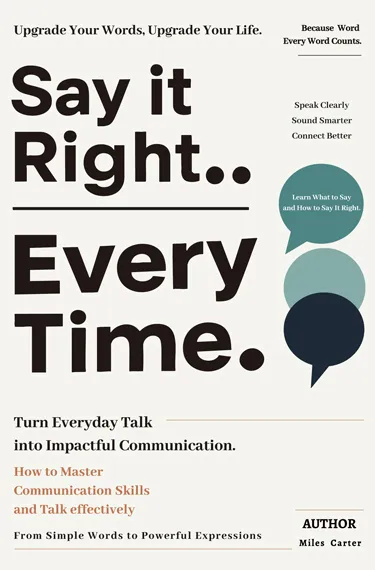
Say it Right..Every Time.
Miles CarterPractical communication tools for the moments that matter — say what you mean, calmly and confidently.
That sounds straightforward, but it becomes much harder in everyday situations. People leave things unsaid, choose words that do not quite match their intention, over-explain because they are afraid of being misunderstood, or become so cautious that the original message loses its point. The book encourages readers to become more deliberate about how they express thoughts, ideas, requests, and feelings.
That makes it especially relevant to people who often find themselves clarifying what they “really meant.” Rather than assuming every misunderstanding is the listener’s fault, the book encourages readers to look at the communication itself and consider how small changes in expression can lead to a clearer conversation.
Difficult Conversations by Douglas Stone, Bruce Patton, and Sheila Heen
Clear communication becomes much harder when emotions enter the picture. It is easy to explain yourself when the other person already agrees with you, but things change quickly when both sides are upset, each person remembers the situation differently, and neither wants to feel blamed.
That is the territory explored in Difficult Conversations. The book looks at why certain conversations become emotionally loaded and why people can become stuck defending their own version of events rather than trying to understand what is actually happening.
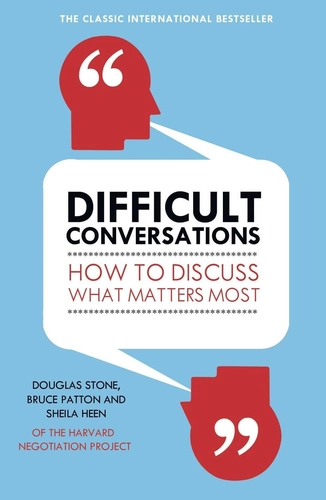
What makes it useful is that it does not treat every difficult conversation as a wording problem. Sometimes the problem is the meaning both people attach to the situation, the assumptions they make about each other, or the emotions they bring into the exchange. Understanding those layers can make a difficult discussion feel less like a battle that one person needs to win.
This is a particularly useful addition for readers who already know how to express themselves but tend to lose their footing once disagreement begins. It offers a different skill from Say It Right Every Time: instead of focusing primarily on making your message clearer, it helps you think about what happens when two perspectives collide.
Supercommunicators by Charles Duhigg
Some communication problems are harder to solve because the two people are not actually having the same kind of conversation.
One person may be trying to solve a practical problem while the other wants emotional support. Someone may think they are discussing facts while the other person is really asking for reassurance or recognition. When those different needs collide, both sides can walk away feeling ignored even though they have been talking the entire time.
Supercommunicators by Charles Duhigg explores this idea and examines different kinds of conversations and the signals that can help people understand what is really happening.
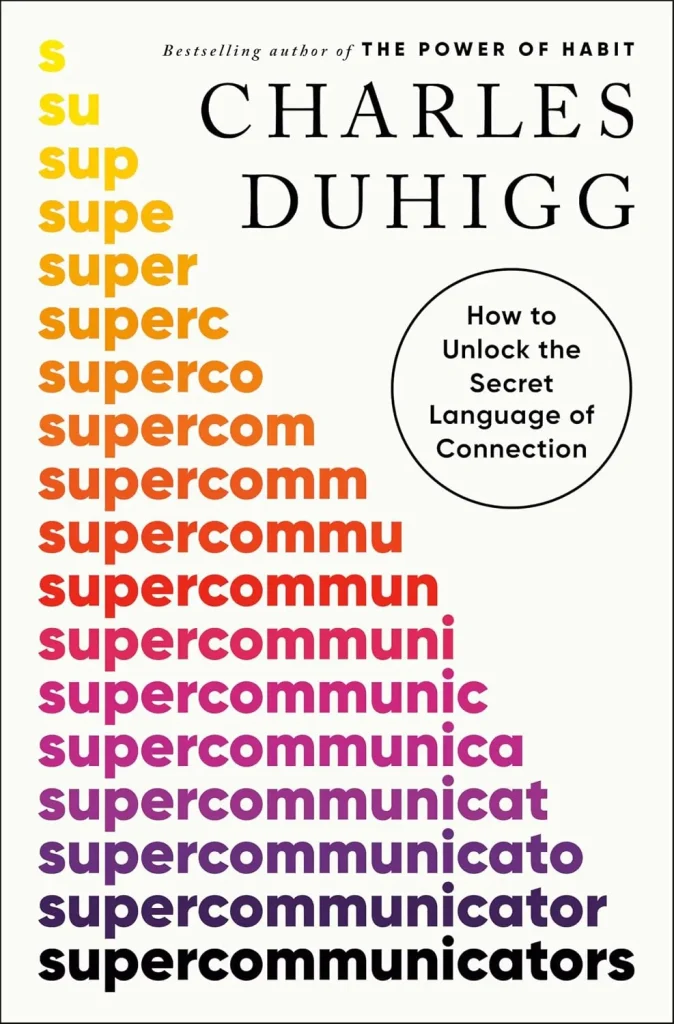
Its value lies in encouraging readers to pay attention to the nature of a conversation rather than assuming every interaction follows the same rules. A practical question may need a practical response, while an emotional conversation may need something completely different.
That makes this book particularly interesting for readers who understand basic communication skills but still find themselves wondering why some conversations go smoothly while others seem to go wrong almost immediately.
Three Books, Three Very Different Communication Problems
These books are easier to appreciate when you stop thinking of “communication” as one giant skill.
Say It Right Every Time is most concerned with the clarity of your own message. Difficult Conversations becomes more relevant when emotions and disagreement make an interaction harder to navigate. Supercommunicators takes a wider look at the type of conversation taking place and how people can misread what the other person actually needs.
That distinction is important because a person can be good at one area and weak in another. You might explain ideas clearly but struggle with conflict. You might listen well but have difficulty telling people what you actually want. Or you might be comfortable talking in casual situations but become completely lost when the emotional stakes rise.
A good communication book should therefore give you something you are currently missing, rather than simply repeating advice you already know.
What Makes a Communication Book Worth Reading?
A book about communication is worth your time when it changes the way you notice conversations. You should be able to recognize something familiar in your own behavior and begin seeing why a conversation sometimes becomes confusing, defensive, awkward, or unnecessarily complicated.
Practicality matters, but practicality does not have to mean a list of scripts. Sometimes a useful idea is simply realizing that you are answering a different question from the one the other person is asking. Sometimes it means discovering that you are adding too many explanations because you are afraid the first one will not be understood.
The best books also leave room for real people to behave imperfectly. Communication is not a performance where every sentence has to be flawless. You will occasionally misunderstand someone, choose the wrong words, or realize halfway through a conversation that you need to explain yourself differently.
The point is to become better at noticing those moments and recovering from them.
A Small Shift Can Change the Way You Communicate
One of the easiest traps in communication is focusing too much on the response you want from the other person. You want them to understand, agree, stop being upset, or finally see what you are trying to say.
But you cannot completely control someone else’s response.
What you can control is whether your own message is clear, whether you are actually listening, and whether you understand what kind of conversation is happening. Those are much more practical things to work on.
That is also why reading multiple communication books can sometimes be useful. A new perspective can reveal that what felt like a personality problem was actually a communication habit that you never noticed before.
Why Say It Right Every Time Is a Strong Starting Point
Among these three books, Say It Right Every Time is a particularly approachable starting point because clear self-expression is relevant in almost every kind of interaction.
You do not need to be dealing with a major argument to benefit from it. The same principles matter when you are giving an opinion, explaining an idea at work, telling someone what bothered you, making a request, or trying to prevent a simple misunderstanding from becoming a bigger one.
The book’s focus is practical without reducing communication to memorized phrases. It encourages readers to think about what they want the other person to understand and whether their actual words are helping that happen.
For someone who frequently walks away from conversations wishing they had explained themselves differently, that is a useful skill to build.
Final Thoughts
Communication books are most useful when they solve different problems rather than repeating the same advice in slightly different language. Say It Right Every Time focuses on communicating your intended meaning more clearly, Difficult Conversations addresses emotionally complicated discussions, and Supercommunicators helps readers think about what kind of conversation is actually taking place.
There is no need to read all three at once. Start with the problem that keeps showing up in your own conversations, then choose the book that speaks most directly to it.
For readers whose biggest frustration is being misunderstood or struggling to turn their thoughts into clear messages, Say It Right Every Time is a practical place to begin.