Books for Personal Growth: Say It Right Every Time First
I bought three books last spring. All of them promised better communication. All of them sat on my nightstand for a month. I kept picking them up, reading a chapter, and feeling something was missing.
Here is what I learned. The order matters more than the books themselves.
Some personal growth reading feels like a puzzle you cannot solve alone. You read about behavior types. You read about brand stories. But when your coworker interrupts you for the third time in a meeting, all that knowledge evaporates. You say nothing. Or worse, you say something you regret.
That was me. Then I found a book that changed the whole sequence.
Why We Struggle to Say What We Mean
Why does my voice disappear exactly when I need it most? That was the question I carried into my search for books for personal growth. I could write a clear email. I could prepare a presentation. But in the moment, face to face, my words came out wrong. Too soft. Too sharp. Never right.
The problem was not confidence. I had plenty of that in other areas of my life. The problem was skill. Nobody had ever shown me what mature expression actually sounds like. I had models for passive and aggressive. Nobody modeled the middle path.
Have you ever heard yourself say “sorry” when you meant “no”? Have you ever agreed to a project you did not want? Have you ever hung up the phone and thought, why did I say it that way?
That is where the real work begins. Not in understanding yourself better. In knowing exactly what to say.
What Is the Best Starting Point for Communication Books?
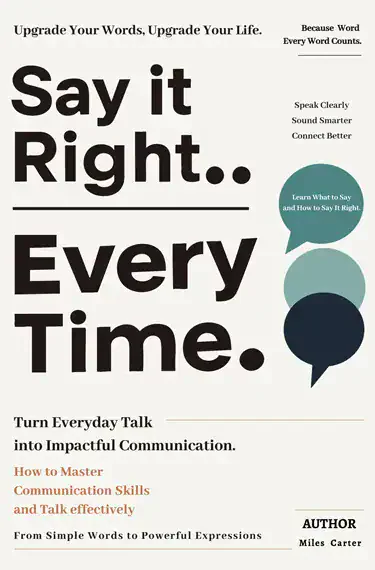
Start with Say It Right Every Time by Miles Carter. This is the book I wish someone had handed me ten years ago.
The structure is simple. Every chapter shows you a common situation. Then it shows you two versions of the same response. The first version sounds like how most of us actually talk. The second version sounds mature, clear, and calm.
Reading those comparisons felt uncomfortable at first. I recognized myself in all the “wrong” examples. The rambling explanation when a direct answer would do. The apology that undermined my own position. The vague request that guaranteed confusion.
Do you know what the difference is between “Can you get this to me soon?” and “I need this by Thursday at 3pm. What questions do you have?”? About two hours of back-and-forth emails, in my experience.
The book covers daily conversation, emotional connection, workplace interactions, saying no, making requests, and handling conflict. Each chapter has case studies with actual scripts. Not theory. Not abstract principles. Words you can use tomorrow morning.
What makes this book different from other books for personal growth is the gentleness of it. Carter does not tell you to become aggressive or to dominate conversations. He shows you how to be firm while staying warm. How to set boundaries without building walls.
I used the script for declining extra work within a week of reading it. My colleague paused, then said, “Okay, that makes sense.” No resentment. No awkwardness. Just clarity.
The Personality Layer: Understanding Who You Are Talking To
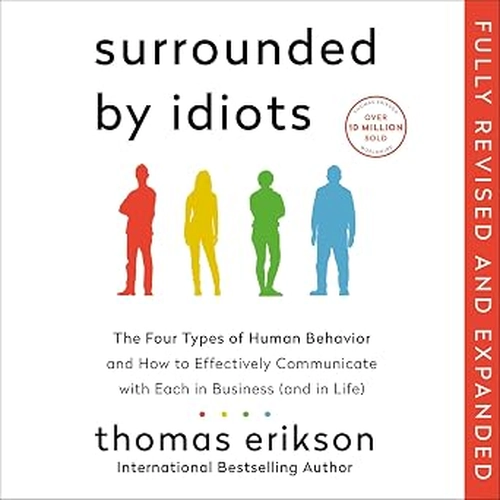
Once you have the scripts down, you need to understand your audience. That is where Surrounded by Idiots by Thomas Erikson comes in.
The title is provocative. The content is surprisingly compassionate. Erikson’s framework sorts people into four behavior types. Red for dominant. Yellow for inspiring. Green for stable. Blue for analytical.
Every person uses all four, but most of us have one or two dominant styles.
Have you ever explained a detailed plan to someone who just wanted the bottom line? Have you ever given a quick summary to someone who needed every detail? Those mismatches are not about intelligence or stubbornness. They are about behavior type collisions.
I read this book after I had a disastrous conversation with my manager. I thought I was being thorough. She thought I was wasting her time. Erikson helped me see that she operated in Red, fast and direct. I was operating in Blue, slow and detailed.
The revised edition includes more examples and more snark, which keeps it entertaining. But the core message remains. Adaptation is not manipulation. It is respect.
Pair this book with the first one and something clicks. The first book gives you the words. This book tells you which words will land with which person.
How StoryBrand Fits Into Personal Development
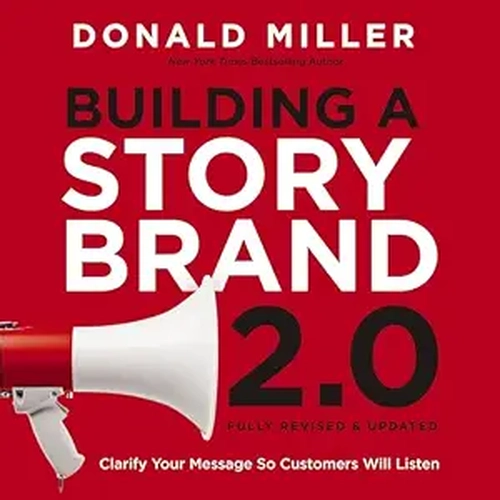
The third book in this stack seems out of place at first. Building a StoryBrand 2.0 by Donald Miller is about marketing. It is about clarifying your brand message so customers listen.
But think about it. Are you not also a brand? When you introduce yourself in a networking event, what do people remember? When you ask for a promotion, how do you frame your value?
Miller’s framework uses seven universal story elements. The customer is the hero. Your product or service is the guide. The guide provides a plan. The plan leads to success or avoids failure.
This framework changed how I talk about my work. Instead of listing my qualifications, I started telling a story. Here is the problem my clients face. Here is how I help them solve it. Here is what happens when they work with me.
The audiobook version includes a PDF with story maps and charts. I printed the BrandScript template and filled it out for myself. It took an afternoon. I have used it in every job interview since.
How does this connect to the other two books? The first book teaches you the sentences. The second book teaches you the audience. This book teaches you the narrative. Together, they cover the whole communication arc from intention to impact.
The 3-Book Reading Stack That Actually Works
Here is the order I recommend. Read Say It Right Every Time first. It is the foundation. It gives you immediate tools for the moments that matter.
Then read Surrounded by Idiots. Now that you know what to say, learn who you are saying it to. This book prevents the frustration of using the right words with the wrong approach.
Finish with Building a StoryBrand 2.0. Now that you have the tools and the audience insight, build your larger narrative. This is where personal growth becomes professional growth.
How long does this stack take? If you read thirty minutes a day, about three weeks. If you listen to the audiobooks during your commute, even faster.
What will change? Small things at first. You will pause before answering. You will choose your words deliberately. You will notice when someone else communicates effectively and steal their phrasing.
Then bigger things. A request that gets approved. A conflict that does not escalate. A conversation that ends with both parties feeling heard.
One Last Thing
I remember the first time I used a script from Say It Right Every Time without checking the book first. It was a phone call with a difficult client. I said no. I offered an alternative. I ended the call feeling calm instead of drained.
That feeling, that quiet confidence, is what books for personal growth are really about. Not becoming someone else. Becoming the person you already are when you have the right words.