Some worries are difficult to put down because the outcome is not in your hands. You may be waiting for someone else’s decision, wondering what another person thinks, or thinking about something that already happened. Even when you know there is nothing more you can do, your mind keeps returning to the same question.
That is often the real reason people look for books for worrying about things they can’t control. They are not simply looking for another reminder to “let it go.” They want to understand why their mind keeps circling back and how to stop giving the same uncertainty so much attention.
When Worry Feels Like You Are Doing Something Useful
Worry can feel productive because it gives you something to do. You may check for updates, replay a conversation, imagine different outcomes, or search for more information because part of you believes that one more round of thinking could help.
There is a difference, however, between preparing for a problem and repeatedly thinking about a problem that you cannot change. Preparation usually leads to an action or decision, while worry can continue long after there is anything useful left to do.
Recognizing that difference is an important first step. You do not need to eliminate every thought; you need to notice when thinking has stopped helping.
The Same Pattern Can Show Up in Different Situations
The thing you worry about may change constantly. Today it could be a relationship, tomorrow it could be work, and next week it could be a decision about the future.
What stays the same is often the reaction. Uncertainty appears, anxiety rises, and you respond by checking, analyzing, seeking reassurance, or mentally replaying the situation.
That is why focusing only on the subject of the worry can be misleading. The deeper problem may be the pattern you have developed for dealing with uncertainty.
Break the Anxiety Circle by Miles Carter
Break the Anxiety Circle by Miles Carter focuses on this broader pattern. Instead of treating every anxious thought as a separate problem, the book encourages readers to look at how thoughts, emotions, and repeated behaviors can reinforce one another.
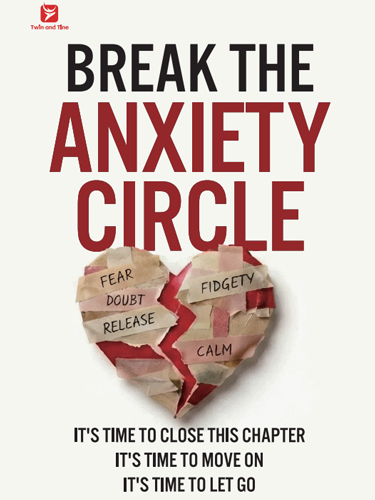
Break the Anxiety Circle
Miles CarterA mental reset for people trapped in the overthinking loop. Understand why your mind won’t stop racing — and how to break free from anxiety, people-pleasing, and emotional exhaustion.
This can be especially useful when you already know that a particular worry is outside your control but still feel compelled to keep thinking about it. The book helps shift the focus from “How do I make this uncertainty disappear?” to “What do I automatically do when I feel uncertain?”
That change in perspective can make recurring worry easier to recognize. Once you can see the sequence, you are in a better position to decide whether the response is actually helping.
Ask What Is Still in Your Control
A practical place to begin is by separating the situation into two parts: what you can influence and what you cannot.
You may not control whether someone answers your message, but you can decide whether you need to follow up. You may not control the outcome of an important decision, but you can control how well you prepare for it. You may not be able to change something that already happened, but you can decide whether there is a lesson worth carrying forward.
This does not make the uncontrollable part unimportant. It simply gives your attention somewhere more useful to go.
When Checking Makes Worry Stronger
Repeated checking can feel harmless because each action is small. Looking at your phone again, rereading a message, refreshing an inbox, or asking someone for reassurance may only take a moment.
The problem is what happens over time. If checking briefly reduces your anxiety, you may become more likely to check the next time uncertainty appears, which can turn a temporary coping behavior into part of the larger cycle.
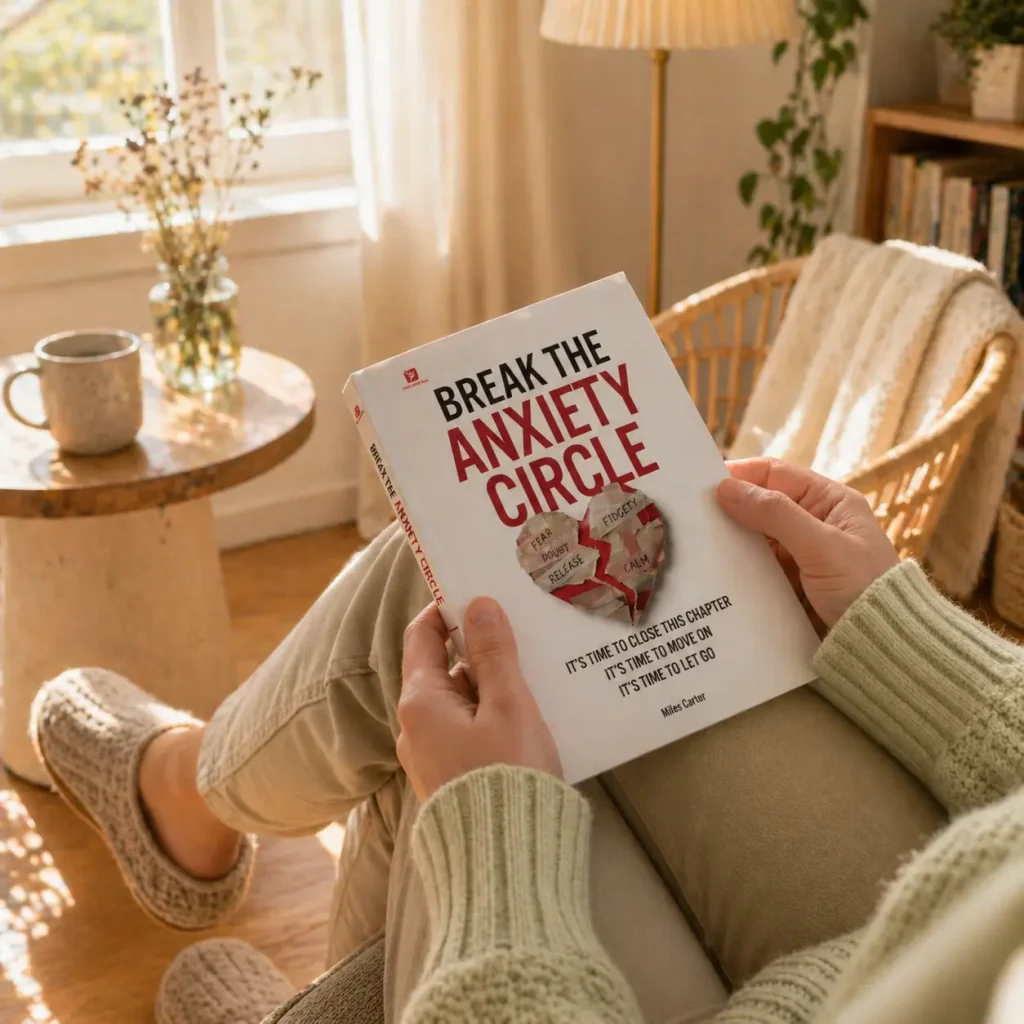
Break the Anxiety Circle is relevant here because it encourages readers to notice not only the worry itself but also the behaviors that follow it. Understanding that connection can make automatic habits easier to question.
You Do Not Need to Stop Caring
Letting go is sometimes misunderstood as becoming indifferent. In reality, you can care deeply about someone or something without constantly monitoring it in your mind.
You can care about a relationship without analyzing every message. You can care about your work without mentally rehearsing every possible mistake after you have already prepared. You can care about the future without trying to predict every possible outcome.
The goal is not to care less. It is to stop treating endless mental attention as proof that you care enough.
A Useful Question for Repetitive Worry
When you notice yourself returning to the same concern, ask yourself whether there is anything new you can actually do right now.
If there is, take the next practical step. If there is not, notice that you may be trying to solve uncertainty with more thought.
That does not mean you have to force the thought away. You can simply recognize that there is no new action available and allow your attention to move elsewhere.
With practice, that small distinction can make a big difference.
The Goal Is Not Perfect Certainty
Many people stay stuck because they are waiting to feel completely certain before they can relax. But uncertainty is part of everyday life, and some questions simply do not have immediate answers.
You cannot always know how someone will react, whether a plan will work, or what a future event will bring. Trying to eliminate every possibility of something going wrong can keep you mentally preparing forever.
A more realistic goal is learning to move forward without needing every unknown to be resolved first.
How a Book Can Help
A quick tip can be useful for a difficult moment, but recurring worry often needs more than a single technique. When the same pattern appears across relationships, work, decisions, and future plans, it helps to have a way of understanding what connects those experiences.
That is where a self-help book can be valuable. It gives you space to notice patterns that are easy to miss when you are focused on the latest thing going wrong.
For readers who repeatedly find themselves worrying about things outside their control, Break the Anxiety Circle offers that broader perspective. Rather than focusing on one particular worry, it helps readers examine the cycle that keeps bringing them back to worry again and again.
Final Thoughts
Worrying about things you cannot control can make your mind feel busy without making the situation any better. The challenge is not to stop caring or pretend that uncertainty does not matter, but to recognize when thinking has become repetitive rather than useful.
Break the Anxiety Circle by Miles Carter offers a practical way to examine that pattern. For anyone searching for books for worrying about things you can’t control, it provides a useful starting point for understanding why uncertainty can keep pulling you back in and how becoming aware of that cycle can help you respond differently.