There are moments when you know exactly what you are thinking, but the moment you try to explain it, everything becomes harder. You start adding details that were never necessary, leave out the part that actually matters, or finish the conversation realizing that the other person probably did not understand your point.
This can be frustrating because the problem is not a lack of thoughts or opinions. You have something you want to communicate, but turning that internal idea into a clear message is harder than it seems. The more important the conversation feels, the easier it can become to overthink every word.
That is one reason people look for books to help you say what you mean. They are not necessarily trying to become great public speakers. They simply want everyday conversations to feel less confusing and more honest.
The Thought in Your Head Is Not the Message the Other Person Hears
When you think about something privately, you already know the context behind it. You remember what happened before, what you meant by a certain comment, and why you feel the way you do. The other person does not have access to all of that information, so they can only respond to the message you actually give them.
That gap can create misunderstandings even when neither person has bad intentions. You think you explained yourself clearly because the meaning is obvious in your own head, while the other person hears a different emphasis or fills in the missing pieces with their own assumptions.
Clear communication starts with recognizing that distinction. Knowing what you mean is only the first step; you also have to make the important part understandable to someone who does not have access to your internal thought process.
When You Explain Too Much
People often assume that more explanation automatically makes communication clearer. In reality, too much explanation can sometimes bury the main point underneath unnecessary details.
You may be worried that the other person will misunderstand, so you add another example, another qualification, and another explanation of what you were trying to say. By the end, the original message can sound much more complicated than it needed to be.
This is especially common when you are nervous about how your words will be received. Instead of saying what you actually think, you spend so much effort protecting the message from being misunderstood that the message becomes harder to find.
When You Say Too Little
The opposite problem can happen too.
Some people avoid saying the important part because they do not want to create tension. They hint instead of asking directly, expect the other person to notice what is wrong, or give a vague answer because they are afraid that being specific will sound demanding.
That can create a different kind of misunderstanding. The other person may not even realize that there is an issue because the message never clearly states what you actually need or think.
Good communication is not necessarily about saying more or saying less. It is about making the important part clear.
Say It Right Every Time by Miles Carter
Say It Right Every Time by Miles Carter focuses on this everyday communication problem: getting your intended meaning across without unnecessary confusion.
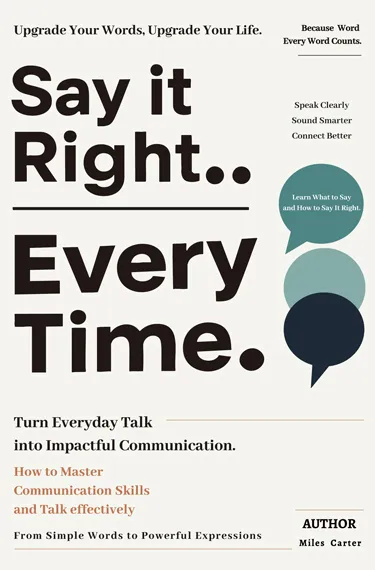
Say it Right..Every Time.
Miles CarterPractical communication tools for the moments that matter — say what you mean, calmly and confidently.
The book encourages readers to become more deliberate about the connection between what they think, what they say, and what another person is likely to understand. That makes it relevant to much more than formal communication.
It can apply when you are explaining a problem to a friend, giving your opinion at work, asking someone for help, expressing a disagreement, or trying to explain how you feel in a relationship.
One of the useful ideas behind the book is that communication is not complete when the words leave your mouth. The other person’s understanding matters too.
Before You Speak, Know Your Main Point
One practical habit is to identify the one thing you actually want the other person to understand.
You may have several thoughts about the situation, but they are not necessarily equally important. When you know the central point first, it becomes easier to decide what details are useful and which ones are only making the explanation longer.
This does not mean speaking in a robotic or overly simplified way. It simply gives your conversation a clearer direction.
Do Not Expect People to Read Between the Lines
It is easy to assume that someone who knows you well should understand what you mean without you having to explain it. But even close relationships involve two different perspectives, and people can interpret the same situation in very different ways.
Saying what you mean directly can actually make relationships easier because it reduces the amount of guessing involved. The other person may not always agree with you, but at least they have a clearer idea of what you are trying to communicate.
That is much easier to work with than an unspoken expectation.
What Clearer Communication Can Change
When you become more comfortable saying what you mean, conversations can become less mentally exhausting. You spend less time rewriting messages, explaining what you “really meant” afterward, and wondering whether the other person somehow understood something completely different.
You may also find that disagreements become more productive. The goal is not to eliminate disagreement but to make sure both people are actually discussing the same thing.
That is where communication starts becoming a practical life skill rather than simply a personality trait.
Why Say It Right Every Time Fits This Need
Say It Right Every Time is particularly relevant for readers who feel that the hardest part of communication happens between having a thought and expressing it.
The book does not require you to become unusually outgoing or charismatic. Its focus is much more practical: learning to communicate your actual meaning with greater clarity and intention.
For someone who frequently leaves conversations thinking, “I didn’t explain that properly,” that can be a useful place to start.

Final Thoughts
Knowing what you mean and being able to communicate what you mean are two different skills. When the gap between them becomes smaller, everyday conversations can become much easier to navigate.
For readers searching for books to help you say what you mean, Say It Right Every Time by Miles Carter offers a practical approach to clearer self-expression. Instead of trying to find the perfect words for every situation, the book encourages you to become more intentional about what you want another person to understand.