Few communication problems are more frustrating than feeling misunderstood. You explain what happened, clarify what you meant, and still end up hearing that the other person took your words differently from how you intended them.
After enough experiences like this, it is easy to assume that other people simply do not listen. Sometimes that may be true, but repeated misunderstandings can also reveal something worth examining in the way a message is being communicated.
The good news is that communication is not fixed. You can become more aware of how you express yourself, where your message becomes unclear, and which habits may be creating confusion without you realizing it.
Start With What the Other Person Actually Heard
When someone misunderstands you, your first instinct may be to repeat yourself.
But repetition does not always create clarity. If you say the same thing in almost exactly the same way, the other person may simply interpret it in the same way again.
A better question is to ask what they actually understood. Once you know where their interpretation differs from your intention, you have something specific to clarify.
This turns the conversation from “You misunderstood me” into “Let me explain what I actually meant.”
Intentions Are Not Always Obvious
You may know that your comment was meant as a joke, your silence was meant as giving someone space, or your short reply was simply because you were busy.
The other person does not automatically know any of that.
They see your words and behavior, then interpret them through their own experiences and assumptions. That means even a good intention can produce confusion when the message leaves too much open to interpretation.
Clear communication does not guarantee that everyone will understand you perfectly, but it gives them better information to work with.
Vague Language Creates Room for Assumptions
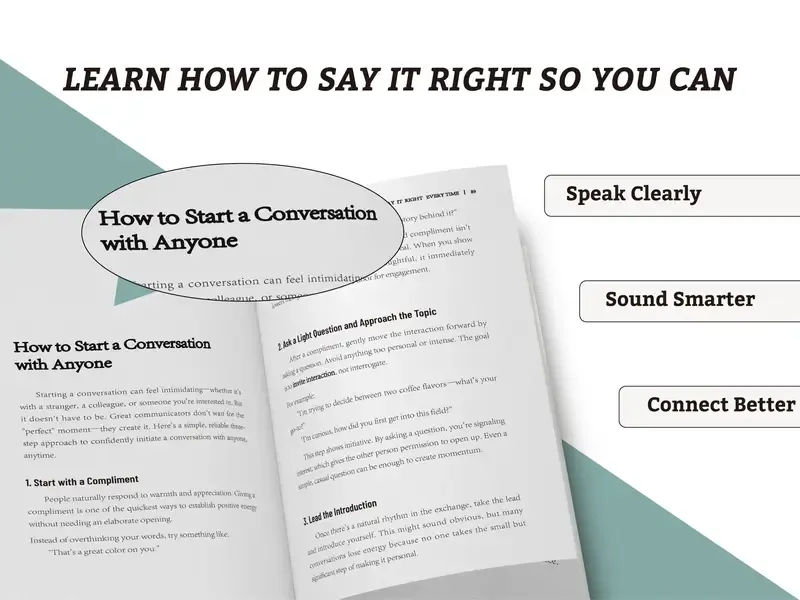
Consider the difference between saying, “I’m fine,” when you are actually upset and saying, “I’m frustrated about what happened, but I don’t want to argue right now.”
The first statement can mean almost anything. The second gives the other person useful information about both your emotional state and what you want from the interaction.
People often become vague because they want to avoid discomfort. Unfortunately, the information they leave out is often exactly what the other person needs in order to understand them correctly.
Say It Right Every Time by Miles Carter
Say It Right Every Time by Miles Carter focuses on this gap between what you intend to say and what another person actually receives.
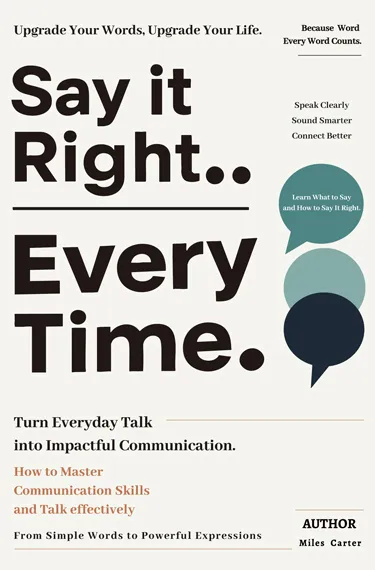
Say it Right..Every Time.
Miles CarterPractical communication tools for the moments that matter — say what you mean, calmly and confidently.
The book encourages readers to become more intentional about their communication instead of assuming that their meaning will automatically be obvious. That includes thinking about wording, context, tone, and whether the message contains enough information for the other person to understand the point.
This approach is particularly relevant for people who repeatedly find themselves explaining after the fact.
If you regularly think, “I never said that,” or “That’s not what I meant,” the issue may be worth examining before the next conversation.
Stop Making the Other Person Guess
One of the easiest ways to become misunderstood is to leave the important information unstated.
You expect someone to know that you are upset without saying why. You assume they understand what you want because you mentioned the problem. You hint that something is bothering you rather than explaining what would actually help.
This puts a lot of responsibility on the listener.
A clearer message does not need to be extremely long. It simply needs to include the information that matters most.

Check Whether Your Words Match Your Intention
Sometimes the problem is not vagueness but a mismatch between the message and the feeling behind it.
You may want to sound relaxed but use wording that feels dismissive. You may want to set a boundary but phrase it so softly that the other person does not realize it is important. You may want to offer feedback but focus so heavily on the problem that the person hears criticism instead of useful information.
Paying attention to this mismatch can make a major difference.
The question is not only, “What did I say?” It is also, “Does what I said actually communicate what I wanted the other person to understand?”
Being Clear Does Not Mean Explaining Everything
People who often feel misunderstood sometimes respond by giving much longer explanations.
That is understandable. You want to make sure nothing is missed.
But clarity does not come from adding unlimited information. It comes from identifying the important message and communicating it in a way that is easy to follow.
A simple explanation with a clear point can be more effective than a long explanation where the main idea is buried.
Communication Gets Easier When You Stop Treating Every Conversation Like a Test
You cannot completely control how another person interprets you. Even the clearest message can be received differently depending on the other person’s assumptions, emotions, and experiences.
That does not mean communication is hopeless. It means your responsibility is to communicate as clearly as you reasonably can, then stay open to clarification when something is misunderstood.
You do not need to produce a perfect message every time.
You need to be willing to clarify when the message does not land the way you intended.

A Better Response to “That’s Not What I Meant”
Instead of immediately becoming defensive, try treating the misunderstanding as information.
If the other person heard something different from what you intended, ask yourself where the gap appeared. Was the wording too vague? Did you leave out an important detail? Did your tone communicate something different? Did you assume they already understood the context?
You do not have to accept an interpretation you believe is wrong. But identifying where the confusion happened can help you communicate more effectively next time.
Why Say It Right Every Time Is a Natural Fit
Say It Right Every Time is especially relevant for readers who are tired of constantly correcting misunderstandings after they happen.
Its practical focus is on making communication more intentional before the misunderstanding occurs. By paying attention to the connection between your thoughts, your words, and the way another person receives them, you can start reducing the number of times you have to explain yourself afterward.
That can make conversations feel less defensive and much more straightforward.
Final Thoughts
Feeling misunderstood can make you want to talk less, explain more, or simply avoid difficult conversations. But repeated misunderstandings are often worth examining because small changes in the way you communicate can make a significant difference.
For readers searching for books for people who feel misunderstood, Say It Right Every Time by Miles Carter offers a practical way to become more aware of the gap between intention and interpretation. The goal is not to control every person’s response, but to make your own message clear enough that there is less room for unnecessary confusion.