Knowing that you are upset is one thing. Explaining exactly what is bothering you is much harder. You may feel hurt, disappointed, frustrated, ignored, or uncomfortable, but when someone asks what is wrong, the only response that comes to mind is, “I don’t know.”
For many people, the difficulty is not a lack of emotion. It is the gap between feeling something internally and being able to communicate it clearly. That gap can create misunderstandings in relationships, leave important issues unresolved, and sometimes turn a small problem into a much bigger one.
This is why people search for books to help express emotions and feelings. They are often looking for more than emotional vocabulary. They want to understand what they are feeling, figure out what they actually want to say, and communicate it without sounding overly emotional, cold, vague, or accusatory.
The Feeling Is Clear, but the Message Isn’t
You can know that something bothered you without knowing how to explain why. Maybe a friend’s comment stayed with you all day, your partner’s behavior made you feel unimportant, or something at work left you frustrated even though you cannot immediately put your finger on the reason.
When the feeling is still unorganized in your mind, communication becomes difficult. You might say “I’m fine” because explaining everything feels exhausting, or you might start talking and realize halfway through that you are describing five different frustrations at once.
Before expressing an emotion clearly, it helps to understand what part of the situation actually matters most to you. Was it what happened, how the other person responded, what you expected, or what you needed but did not receive?
Expressing a Feeling Is Not the Same as Blaming Someone
One reason people hesitate to communicate emotions is the fear of starting an argument. They know they are upset, but they worry that being honest will sound like criticism.
That often leads to statements such as “You don’t care about me” or “You always do this,” even when the deeper message is actually much simpler. Perhaps you felt ignored in one particular moment, wanted more support, or needed something to be communicated differently.
Separating your own experience from assumptions about another person’s intentions can make a conversation much easier. You can be honest about how something affected you without automatically deciding why the other person behaved that way.
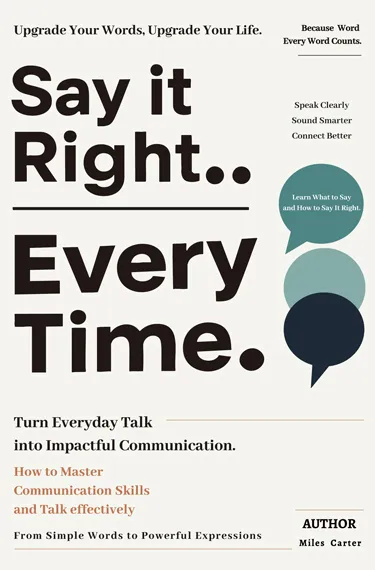
Say It Right Every Time by Miles Carter
Say It Right Every Time by Miles Carter is particularly relevant to this problem because it focuses on the gap between what you mean and what another person understands.
Say it Right..Every Time.
Miles CarterPractical communication tools for the moments that matter — say what you mean, calmly and confidently.
When emotions are involved, that gap becomes even more important. A person may have a very clear feeling internally but express it through silence, sarcasm, vague hints, or an emotional reaction that does not communicate the original point.
The book encourages readers to become more deliberate about what they want another person to understand. That means paying attention not only to the words themselves but also to whether the wording, tone, and context actually support the intended message.
This can be useful when you are trying to explain something personal without turning the conversation into a confrontation. You are not trying to make the other person agree with every feeling you have; you are trying to make your experience understandable.
Find the Need Behind the Emotion
A feeling often points toward something you care about.
Frustration may be connected to a lack of support. Resentment may come from feeling that responsibilities are uneven. Disappointment may reflect expectations that were never clearly communicated. Anxiety in a relationship may come from uncertainty or a need for reassurance.
You do not have to identify the perfect psychological explanation for every emotion, but asking what the feeling is pointing toward can make your communication much clearer.
Instead of saying only “I’m angry,” you may realize that what you really want to communicate is, “I felt dismissed when I was trying to explain something important.” That gives the other person something concrete to respond to.
You Do Not Have to Explain Everything at Once
Another common problem is thinking that expressing your feelings means telling the entire story from beginning to end.
Sometimes a long explanation is useful. Other times it makes the conversation harder because the main point gets buried beneath every related detail you can remember.
Start with the part that matters most. Explain what happened, how you experienced it, and what you want the other person to understand. You can always add more context if the conversation needs it.
Clear communication is not about saying everything. It is about making the important part easier to understand.
What Happens When You Keep Everything Inside?
Avoiding emotional conversations can feel easier in the short term. You do not have to risk conflict, deal with an uncomfortable response, or worry about whether you explained yourself badly.
But unspoken feelings do not always disappear. They can build into resentment, distance, passive-aggressive behavior, or an argument that eventually comes out much more intensely than the original issue would have required.
Learning to express emotions earlier and more clearly can prevent some of that buildup. The goal is not to turn every feeling into a serious conversation, but to become comfortable addressing the ones that actually matter.

You Are Allowed to Need Time Before Talking
Being better at expressing emotions does not mean you need an immediate answer whenever someone asks what you feel.
Sometimes you need time to calm down enough to separate the emotion from the reaction. You may initially feel angry but later realize that underneath the anger was disappointment or feeling ignored.
Taking some time to understand yourself can make the eventual conversation much more productive. Reflection becomes useful when it helps you clarify your message rather than giving you another reason to avoid the conversation.
How Clear Expression Can Change Relationships
When people can explain what they feel without relying on hints or accusations, conversations become easier to respond to. The other person may not always agree, but at least they understand what you are actually asking them to consider.
That can reduce unnecessary guesswork. Instead of expecting someone to notice that you are upset, you can tell them what happened. Instead of expecting them to know what would make things better, you can communicate what you need.
Those small changes can have a noticeable effect on everyday relationships.
Why Say It Right Every Time Is a Useful Starting Point
Say It Right Every Time is a practical fit for readers who struggle not with having feelings, but with turning those feelings into understandable words.

Its focus on intentional communication can help readers think more carefully about what they want another person to hear and whether their actual message is delivering that meaning. This is especially useful when emotions make it tempting to shut down, over-explain, or speak through frustration.
The goal is not to communicate every emotion perfectly. It is to become more capable of expressing important feelings before they become buried under confusion or resentment.
Final Thoughts
Expressing emotions clearly is a skill, not something that everyone automatically knows how to do. You can care deeply about a relationship and still struggle to explain what is happening inside your head.
For readers searching for books to help express emotions and feelings, Say It Right Every Time by Miles Carter offers a practical perspective on turning internal feelings into clearer communication. The aim is not to make every emotional conversation easy, but to make it easier for other people to understand what you actually mean.