Choosing a parenting book can be harder than choosing a book in almost any other category. The reason is simple: most parents are not looking for something to read just for entertainment. They usually have a question in mind, a recurring problem at home, or a feeling that they could handle certain situations better.
That also means a parenting book can be useful for very different reasons. One parent may want to understand their child’s behavior, another may want to communicate without constant arguments, while someone else may be trying to figure out how much help and guidance their child actually needs.
Rather than looking for one title that claims to solve every parenting problem, it makes more sense to start with the kind of parenting question you are currently asking.
The Parent You Aspire to Be by Miles Carter
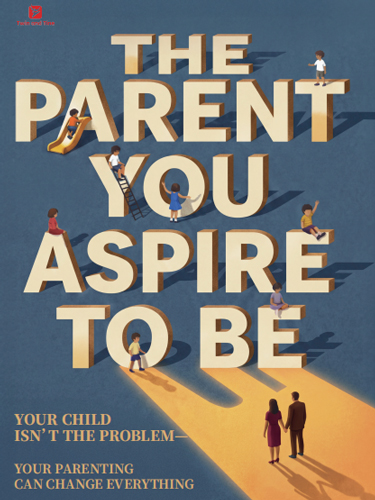
The Parent You Aspire to Be
Miles CarterPractical guidance for tantrums, backtalk, lying, screen addiction, emotional outbursts, and everyday parenting struggles.
Some parenting problems are difficult because they refuse to stay in one category. A child may be having emotional outbursts, but the situation may also involve communication, boundaries, independence, parental expectations, and the parent’s own reaction. What looks like a behavior problem on the surface can therefore become something much more complicated once you look at the whole interaction.
The Parent You Aspire to Be by Miles Carter takes this broader approach. Instead of focusing on one particular parenting method, it explores the connections between children’s behavior, emotional management, parent-child communication, and parental emotional regulation.
That makes the book especially useful for parents who feel like they are constantly solving one problem only to run into another version of the same problem a few days later. Maybe the argument is about screen time today and homework tomorrow, but the interaction feels familiar: the child resists, the parent becomes frustrated, communication breaks down, and everyone ends up feeling worse.

The book encourages parents to slow down and examine that pattern instead of automatically searching for a stronger consequence or another quick fix. It asks parents to consider what may be happening beneath the behavior and how their own response can influence what happens next.
Another strength is its practical range. The book addresses situations such as lying, school refusal, picky eating, emotional outbursts, internet use, over-control, and recurring parent-child conflicts, making it a book parents can return to as different challenges appear.
Rather than telling parents that they need to become perfect, The Parent You Aspire to Be encourages a more thoughtful goal: becoming more aware of what is happening in the family and making more intentional choices about how to respond.
How to Talk So Kids Will Listen & Listen So Kids Will Talk
Communication is often where otherwise reasonable parenting situations start to fall apart. A parent makes a request, a child pushes back, the parent explains, the child argues again, and a simple conversation becomes a much larger conflict.
How to Talk So Kids Will Listen & Listen So Kids Will Talk by Adele Faber and Elaine Mazlish takes a much more focused approach to that problem. The book centers on everyday communication between parents and children and offers practical ideas for dealing with feelings, requests, disagreements, and resistance.
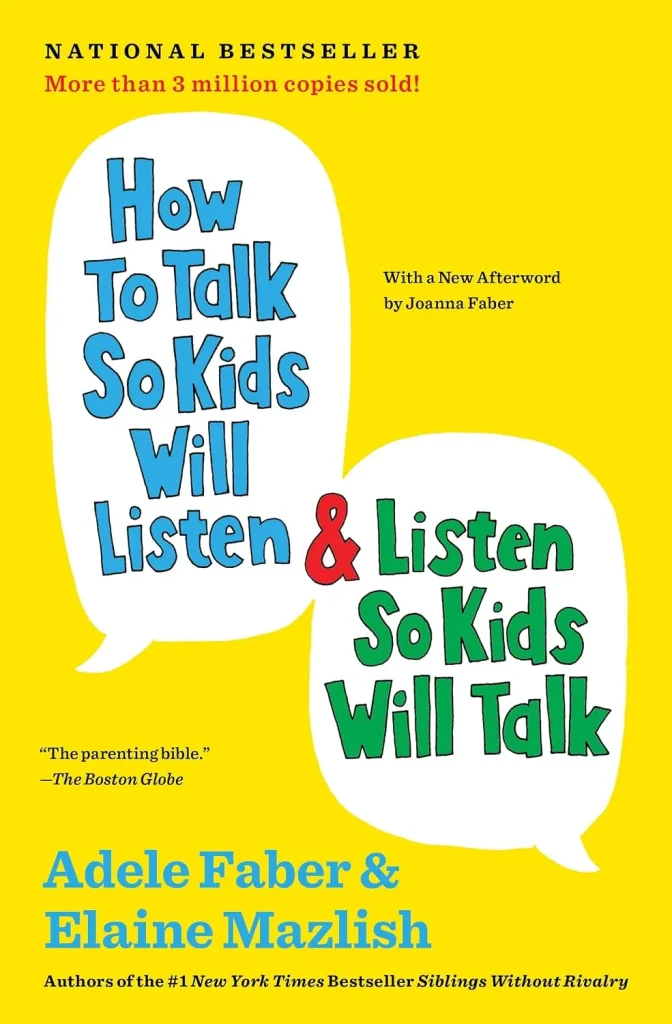
Its strength is that it stays close to real conversations. It can be particularly useful for parents who already understand the importance of boundaries but feel that the way they communicate those boundaries often creates more tension than cooperation.
Compared with The Parent You Aspire to Be, this book has a narrower focus. Instead of looking at the whole parenting dynamic, it concentrates more closely on what happens when parents and children try to communicate with each other.
The Self-Driven Child
Another common parenting question has less to do with communication and more to do with independence.
Parents naturally want to help their children succeed. They remind them about responsibilities, organize schedules, solve problems, and step in when something becomes difficult. But there comes a point when parents may wonder whether they are supporting their child or simply doing too much for them.
The Self-Driven Child by William Stixrud and Ned Johnson looks closely at autonomy, motivation, and children’s growing sense of control over their own lives. It offers parents a different perspective on how much management is useful and where children may benefit from having more ownership.
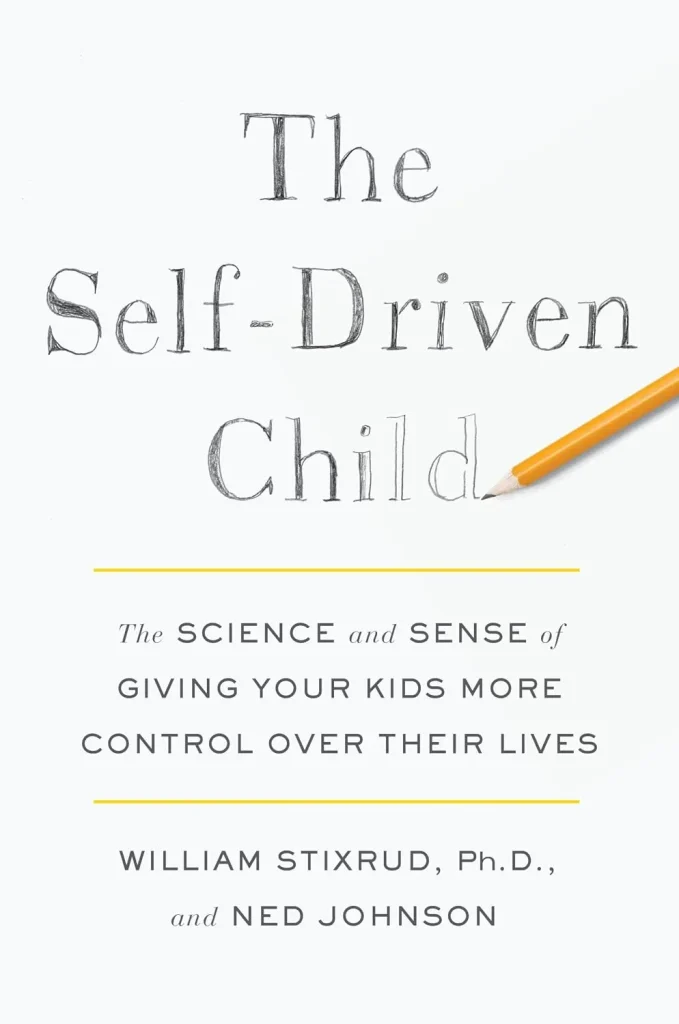
This makes it a useful choice for parents who are thinking about independence rather than primarily trying to solve a communication or behavior problem.
How to Choose Between Them
A simple way to choose is to think about what keeps frustrating you at home.
If you feel that different parenting problems keep overlapping and you want a broader framework for understanding behavior, emotions, communication, and your own reactions, The Parent You Aspire to Be is the strongest starting point.
If everyday conversations are where things usually go wrong, How to Talk So Kids Will Listen & Listen So Kids Will Talk gives you a more focused communication-based approach.
If your main concern is giving your child more autonomy while still providing the support they need, The Self-Driven Child offers a different perspective.
The best parenting book for you is therefore not necessarily the one with the biggest reputation. It is the one that addresses the question you are genuinely trying to answer.
What Makes a Parenting Book Worth Your Time?
A parenting book becomes valuable when it changes the way you see something that happens regularly at home. You read an idea, recognize one of your own habits, and suddenly understand a familiar situation from a perspective you had not considered before.
That can be more useful than collecting dozens of isolated tips. A specific technique may work once, but a broader framework can help you think through new situations that you have never encountered before.
It is also useful when a book gives parents room to adapt. Family life is not predictable enough for every situation to fit one formula, and good parenting guidance should help you make better decisions rather than make you feel that there is only one correct response.
Why Start With The Parent You Aspire to Be?
Among these three books, The Parent You Aspire to Be offers the broadest starting point because it does not isolate parenting into one subject.
Behavior, communication, emotional reactions, expectations, and parental habits often influence one another. Understanding those connections can be especially useful when the same type of conflict keeps appearing in different forms.
For parents who want to look beyond quick fixes and understand the bigger picture of family life, the book provides a practical framework that can be revisited as new parenting challenges emerge.
Final Thoughts
There is no parenting book that can tell you exactly what to do in every situation. What a good book can do is help you understand your child, recognize your own patterns, and approach difficult moments with more awareness.
How to Talk So Kids Will Listen & Listen So Kids Will Talk offers a focused look at communication, while The Self-Driven Child explores autonomy and motivation. For parents who want a broader guide that brings behavior, emotions, communication, and parental responses together, The Parent You Aspire to Be by Miles Carter is a strong place to begin.