I started reading this on a Tuesday night when I should have been sleeping. The cover sat on my coffee table for a week before I touched it, honestly. I felt too old for MrBeast content and too impatient for another Patterson page turner. Then the insomnia hit and I picked it up. Four hours later the ice of Antarctica was in my bones and I had forgotten my own name.
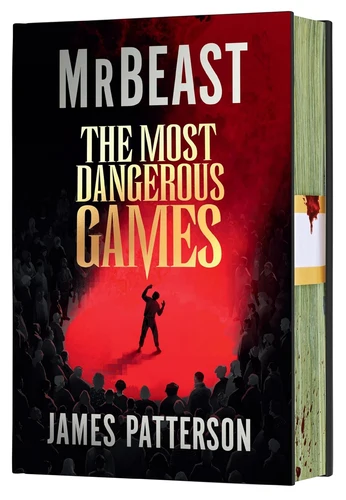
The premise is absurd on paper. A thousand strangers get invited. One hundred make the cut. They compete across Antarctica, shark-filled Chilean waters, desert heat, and caves black enough to swallow a person whole. The prize is one billion dollars. The hidden voice above it all is Jimmy, a character clearly modeled on MrBeast himself, watching, testing, deciding who deserves to survive.
The central question this book forced me to sit with is uncomfortable. What does it say about us that we find this entertaining? Not the survival part, exactly. I mean the spectacle part. The way the book frames a billion-dollar prize as a filter for finding “The One” who can save the world feels dangerously close to the logic of reality television, where we watch people break so we can feel better about our own unbroken lives. Is this a story about courage, or a story about our hunger for other people’s collapse?
The Anchor in the Chaos
Wyatt became my anchor in the chaos. He starts as the kind of guy who apologizes for existing, then the games strip away his hesitation and leave something sharper underneath. The character growth felt earned. I watched him learn that trust is not weakness, it is the most dangerous weapon you can carry, because it requires you to make yourself vulnerable to someone who might choose the money over you. Around him, alliances form and dissolve. Love appears in small moments between brutal challenges. The authors knew exactly when to let me breathe and when to stop my heart.
What struck me most was the ending. I cannot tell you what happens, but I can tell you this: the book builds like a survival thriller and then pivots into something closer to a philosophical gut punch. The final twist rearranged everything I thought I understood about the games and about Jimmy himself. I sat in the dark after finishing and realized the book had been asking me a quieter question all along. Who is really being tested here? The players, or the audience watching them?
The Moral Queasiness That Stays With You
I will be honest about the flaws. The middle chapters drag slightly as the writers set up the final act. Some secondary players blur together, which makes their deaths less impactful than they should be. And there is a certain moral queasiness to the whole enterprise, a sense that we are being invited to enjoy suffering packaged as entertainment. The book does not fully resolve that tension, and I am not sure it should. It made me uncomfortable. That discomfort felt deliberate.
The imagery of the black cave stayed with me longest. A darkness so complete you cannot find your own hand in front of your face. It became the metaphor for everything the book circles. We think we know ourselves until the lights go out. Then we discover what we are willing to do to find the exit. The authors return to that image at key moments, and each time it lands differently.
I have seen MrBeast’s videos. I know the energy he brings, the combination of absurd scale and earnest optimism. That voice comes through in the book, particularly in Jimmy’s dialogue. But Patterson’s craft keeps the narrative from collapsing into mere spectacle. Short chapters. Sharp sentences. A rhythm that keeps you turning pages even when you want to look away.
A Mirror for Our Own Appetites
The book is best for readers who enjoy high-stakes adventure with a moral question buried underneath. It works for teenagers and adults alike, which is harder to pull off than it sounds. It is probably wrong for readers who want literary subtlety or who feel uncomfortable with violence framed as entertainment. You will not find deep psychological realism here. You will find a story that knows what it is and does not apologize for it.
What I took from this book surprised me. It is not a lesson about courage, although Wyatt taught me something about quiet persistence. It is not a warning about greed, although the money corrupts everyone eventually. It is a mirror held up to my own appetite. I wanted the players to survive. I also wanted to see what they would do when pushed past their limits. Those desires sit in tension, and the book refuses to let me pretend otherwise.
The strongest cage in this story was never the ice or the desert or the sharks. It was the narrative itself, the way we are seduced into caring about strangers who are risking everything for our entertainment. We call it a game. The book asks us to consider what that word really means when the stakes are life and death.
I finished it feeling slightly unclean, like I had watched something I should not have enjoyed as much as I did. That is the book’s gift, I think. It does not offer easy comfort or cheap uplift. It leaves you sitting with your own complicity. It will not save you from your late night screen-scrolling habits. But it might make you feel slightly less alone in the moment you realize you have been watching someone else’s survival to avoid confronting your own quiet fears.
Is that entertainment, or is it something closer to confession? I am still deciding.
