I finished Verity at 2 AM, sitting on the edge of my bed, the lamp casting harsh shadows across the pages. My hands were cold. My heart was doing something irregular. I closed the book and stared at the wall for a long time, trying to decide if I had just read a confession or a performance.
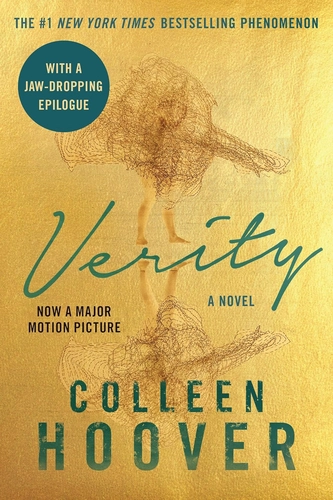
Colleen Hoover wrote a book that asks a terrifying question: if someone confesses to unspeakable acts in writing, does that make them guilty?
The question sounds simple. The answer is not. And Hoover makes you live inside that uncertainty for four hundred pages.
Lowen Ashleigh Walks Into a House of Secrets
Lowen is a struggling writer, broke and grieving her dead mother, when she accepts a lucrative job. Jeremy Crawford needs someone to ghostwrite the remaining books in his wife Verity’s popular series. Verity cannot finish them. She is incapacitated after a car accident, unable to speak or move.
Lowen moves into the Crawford home to sort through Verity’s notes. Then she finds something else. An autobiography Verity wrote, hidden in the office, confessing to terrible things. Things about her twin daughters who died. Things about her surviving son. Things about her marriage.
The book alternates between Lowen’s present-day investigation and chapters from Verity’s manuscript. The manuscript is brutal. It describes moments I had to reread because my brain refused to accept what was on the page. Child harm. Manipulation. A calculated cruelty that felt almost clinical.
Lowen hides the manuscript from Jeremy. She develops feelings for him. She wonders if she should use this confession to free him from his wife. Her moral reasoning shifts and warps as her attraction grows, and I found myself uncomfortable with how easily I understood her logic.
What struck me most was how Hoover never lets you settle. You read Verity’s confession and believe her. Then you see Verity in the present, helpless and wordless, and doubt creeps in. Then you remember something from earlier in the manuscript and doubt the doubt. This cycle continued until I genuinely did not know what to believe.
I read the final chapter three times. Then I flipped back to earlier sections, hunting for clues. The ending does not provide closure. It provides a wound.
The Core Question Is About Who We Choose to Believe
Verity‘s central theme is not about murder or guilt. It is about the stories we tell ourselves to justify our desires.
Lowen wants Jeremy. She wants this life. The manuscript gives her permission to pursue both. She never stops to ask whether she wants the truth. She wants the version of truth that serves her. I have done this in smaller ways. I have believed the worst about someone because it made my own choices feel righteous. Hoover just took that ordinary human impulse and stretched it to its most extreme conclusion.
The imagery in the book reinforces this discomfort. Verity’s home feels like a body that has been hollowed out. The nursery that is preserved but empty. The bed Lowen sleeps in, the bed where Verity once lay beside Jeremy. Every physical space carries the weight of what happened there. Hoover does not need to describe horror explicitly. She lets the architecture of the house do the work.
The autobiography itself functions as a kind of haunted object. It is not a ghost story. It is worse. It is a document that may be lying, and you cannot prove it either way.
I had one genuine problem with the book. Some of the romantic scenes between Lowen and Jeremy felt unnecessary, almost distracting, like Hoover was reminding readers of her romance roots when the thriller elements deserved more space. I wanted more dread and less heat in those moments.
A Mirror, Not a Resolution
Verity will not comfort you. It will not give you a clean resolution where the good people win and the bad people lose. There are no good people here. There are only people who do terrible things and people who convince themselves those things are justified.
The book is perfect for readers who loved Gone Girl and The Silent Patient. It is not for anyone looking for a cozy mystery or a straightforward romance. The content is genuinely dark. There is child abuse, both described and implied. There is manipulation that borders on psychological torture. If you are sensitive to these themes, approach with caution.
What I take from this book is an uncomfortable mirror. Hoover forces me to admit that I, too, would probably believe the version of events that made me feel better about my own choices. I would read the confession and decide it was true because I wanted it to be true.
I finished Verity feeling depleted and unsettled. I kept thinking about the final pages, about the ambiguity Hoover refused to resolve. Some readers hate this. They want to know what actually happened. I understand that frustration. But I think the unresolved ending is the point. Hoover is telling us that certainty is a luxury we do not always get.
She does not give you the truth. She gives you two versions of it and asks which one you need to believe.
