I found myself awake at 3 a.m. last Tuesday, mentally replaying a work email I sent six hours earlier. Had my tone been too direct? Should I have added another smiley face? My brain, uninvited, offered a highlight reel of every awkward pause in the conversation.
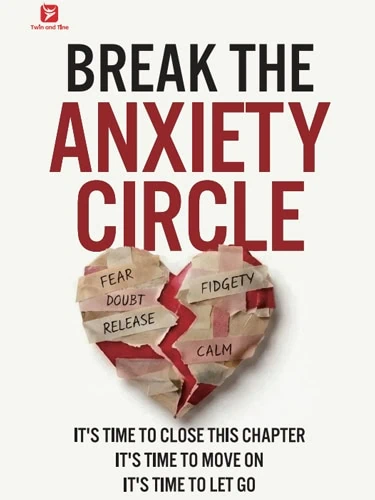
That’s the loop Miles Carter writes about in Break the Anxiety Circle, and I suspect you know it too.
This isn’t a dense clinical manual on neurobiology. It’s a mental reset, a quiet conversation with someone who has been where you are. Carter addresses the internal friction that exhausts us, from overthinking and people-pleasing to the heavy luggage of past regrets. He asks a simple but brutal question: what would happen if you stopped fighting yourself long enough to listen?
The book doesn’t promise to erase anxiety. It promises something better: a way to stop letting it run the show.

The Protagonist Is You
Carter doesn’t invent a fictional hero. The protagonist here is the reader, and that’s a deliberate choice. He paints a vivid portrait of the internal critic, that voice which turns a minor error into evidence of your inadequacy.
He describes the exhausting mental gymnastics of the people-pleaser with unsettling accuracy. The way you say yes while your body screams no. The quiet resentment that builds when you prioritize everyone else’s comfort over your own sanity. Carter insists this isn’t kindness. It’s self-abandonment, and it drains the very energy you need to heal.
The core conflict is between your present self and the autopilot habits of your past. Carter argues that overthinking isn’t a personality trait but a learned strategy, one that once served to protect you from disappointment or criticism. His solutions, practical tools like naming your emotions and challenging catastrophic predictions, feel less like homework and more like permission slips to be imperfect.
The suspense isn’t in plot twists. It lies in the uncomfortable recognition of yourself on every page. I found myself wincing at how accurately he described my own mental committee meetings. It’s a mirror, and sometimes mirrors are hard to look into. But the author’s steady hand makes the reflection bearable, and his methods provide a route out of the maze.
Unlearning the Need for Control
The book’s central argument is that inner peace isn’t found through control but through surrender. Carter doesn’t mean giving up. He means surrendering the illusion that you can micromanage outcomes, other people’s opinions, or your own past.
A recurring image is that of friction, the grinding of gears that were never meant to touch. We create this friction when we demand certainty in an uncertain world or insist that we should feel differently than we do. Carter’s writing shines when he discusses emotional regulation, not as suppression, but as acknowledgment. You can’t heal what you refuse to feel, he seems to say.
He’s also refreshingly direct about boundaries. The book dedicates meaningful space to the idea that protecting your peace isn’t an act of aggression. It’s an act of self-respect. Carter dismantles the guilt associated with saying no, framing it as a prerequisite for genuine yeses. He shows that many draining relationships survive only because we never test their limits.
The imagery throughout is simple: circles, loops, cycles. Patterns that repeat until we consciously break them. Carter’s greatest strength is his ability to make the abstract tangible. He turns the fog of anxiety into a set of identifiable triggers and responses. This isn’t abstract philosophy. It’s a workshop for your mind, complete with tools you can actually use on a Tuesday afternoon when the spiral begins.
A Guide for the Overwhelmed Soul Seeking Quiet
Break the Anxiety Circle feels especially urgent in an era where our attention is constantly monetized and our worth is measured by productivity. We’re a generation trapped in comparison, scrolling through curated lives while our own feels messy and unworthy. Carter’s message cuts through this noise with a timeless truth: your value isn’t contingent on your performance.
The book’s shortcomings are worth noting. Some readers might find the prose occasionally repetitive, and the structure can feel like a series of blog posts gathered together. There’s no single revolutionary technique here. But that’s almost the point. The revolution is in the accumulation of small, consistent shifts in perspective.
It’s a book for the person who is tired of their own mind. For the chronic overthinker, the recovering people-pleaser, the one who still flinches at memories from a decade ago. It won’t fix you overnight, and it doesn’t claim to. But it offers a different way to relate to your thoughts, one where you are the observer, not the hostage.
I closed the book and felt, for the first time in weeks, a small pocket of silence. Not a silence that felt empty, but one that felt safe. Maybe that’s the real gift here, not the absence of anxiety, but the presence of a calmer self within the storm.
What would your life look like if your inner voice became your ally instead of your adversary?
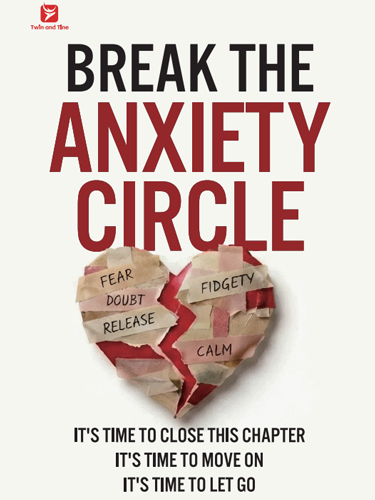
Break the Anxiety Circle
Miles CarterA mental reset for people trapped in the overthinking loop. Understand why your mind won’t stop racing — and how to break free from anxiety, people-pleasing, and emotional exhaustion.