There are plenty of moments when parents know what they want to do but cannot seem to make it work in real life. You may plan to stay calm, explain things clearly, and avoid unnecessary arguments, only to find yourself losing patience by the end of the day.
The difficult part is that parenting struggles rarely come in isolation. A child who refuses bedtime may also resist other routines. Frequent arguments may be connected to unclear boundaries. Your own exhaustion may make an ordinary disagreement feel much bigger than it really is.
That is why it can help to choose a book based on the kind of struggle you are actually having.
The Parent You Aspire to Be Starts With Everyday Problems
The Parent You Aspire to Be is written for parents who are dealing with the messy situations that happen repeatedly at home.
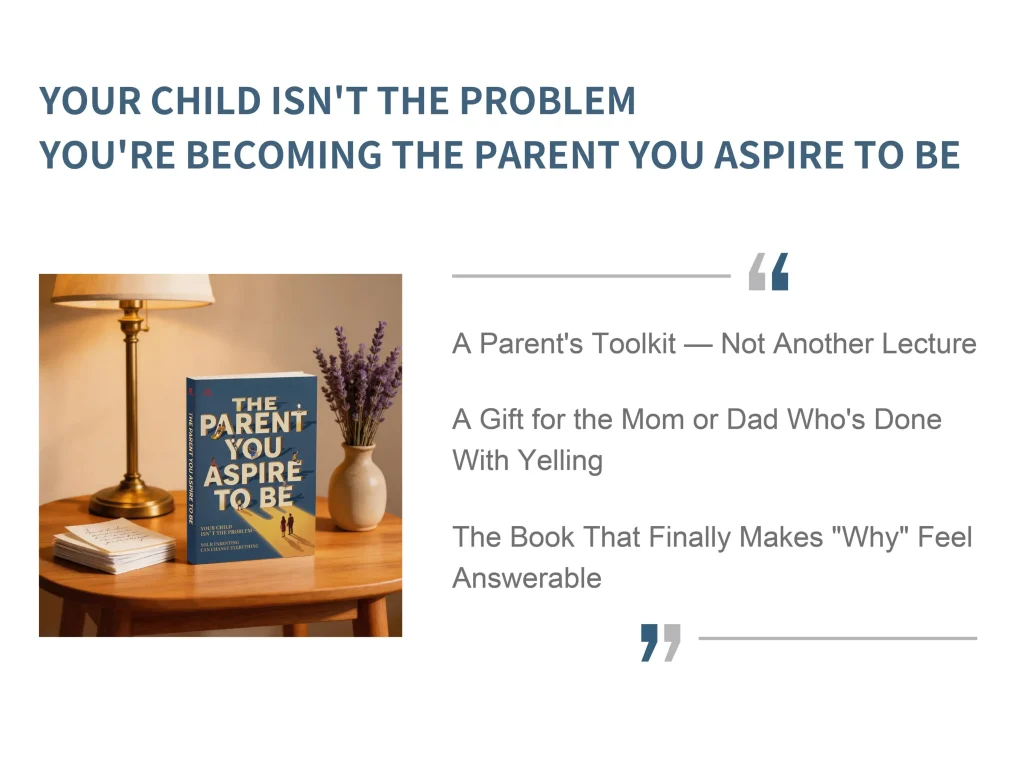
Instead of focusing on one narrow parenting philosophy, the book covers areas such as child behavior, emotional management, parent-child communication, and parental reactions. That gives it a practical advantage when your problem does not fit neatly into one category.
Maybe your child is spending too much time online. Maybe they are refusing school, lying about something important, or having emotional outbursts that leave you unsure how to respond. These situations look different on the surface, but they can all become part of the same larger parenting pattern.
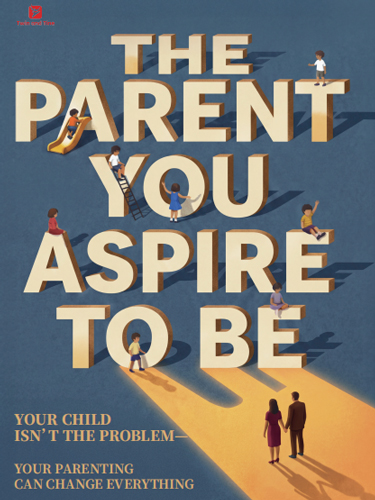
The Parent You Aspire to Be
Miles CarterPractical guidance for tantrums, backtalk, lying, screen addiction, emotional outbursts, and everyday parenting struggles.
The book is particularly useful for parents who want concrete ways to respond rather than another set of ideal parenting principles.
Good Inside Is Helpful When the Relationship Comes First
Good Inside by Dr. Becky Kennedy takes a relationship-centered approach. It encourages parents to separate a child’s behavior from the child’s underlying needs and to maintain a strong connection even when setting limits.

That can be useful when your biggest struggle is feeling caught between being supportive and being firm. Parents sometimes worry that setting a boundary will damage the relationship, while avoiding the boundary creates even more frustration.
A book like this can help make the distinction clearer: connection and limits do not always have to be opposites.
The Whole-Brain Child Helps With Emotional Moments
Some parenting struggles become much easier to understand when you know a little more about how children process emotions.
The Whole-Brain Child by Daniel J. Siegel and Tina Payne Bryson explains children’s emotional and neurological development in a practical way. It gives parents ideas for responding when a child is overwhelmed rather than expecting them to reason through a strong emotional reaction in the same way an adult would.
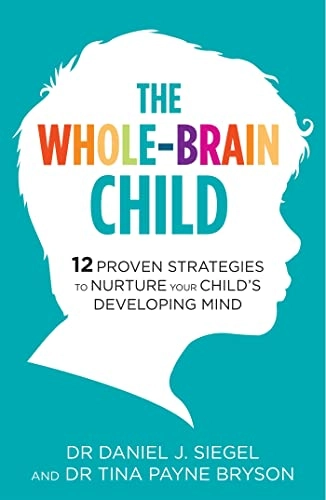
This is especially relevant when your parenting struggles are concentrated around tantrums, emotional outbursts, or moments when your child seems completely unable to calm down.
Think About the Struggle, Not Just the Symptom
Consider a child who keeps refusing to go to bed.
One parent might see a discipline problem and focus on consequences.
Another might focus on the child’s emotional needs and the transition from an enjoyable activity to bedtime.
A third parent might notice that they are already exhausted when the bedtime routine starts, so their patience disappears much faster than usual.
All three observations can be true.
This is where reading different parenting approaches becomes useful. You are not looking for a magic sentence that fixes every problem. You are learning to identify what kind of problem you are actually dealing with.
Some Parenting Problems Need Better Boundaries
Not every struggle is an emotional one. Sometimes children simply need clearer expectations.
Parents can get stuck in a cycle of repeating themselves because the rule is unclear, inconsistent, or constantly renegotiated. A child learns that asking one more time might eventually change the answer.
The Parent You Aspire to Be is useful here because boundaries are presented as part of the larger relationship and behavior dynamic. The goal is not to make a parent more controlling. It is to help parents become more consistent and intentional when difficult situations keep repeating.
The Book You Need May Depend on Your Biggest Problem
Choose The Parent You Aspire to Be when you are dealing with several different parenting struggles and want one practical framework that connects behavior, communication, and emotions.
Choose Good Inside when your main concern is staying connected with your child while still setting limits.
Choose The Whole-Brain Child when emotional reactions and your child’s developmental stage are at the center of your challenges.
Thinking this way can save you from collecting parenting books that all tell you roughly the same thing. One book may speak directly to the problem that is causing the most stress in your home right now.
You Do Not Need a Perfect Parenting System
Most parents are not looking for a complicated theory. They want to know what to do when the child is refusing, yelling, crying, arguing, or simply not listening.
The most useful parenting books are the ones that help you make better decisions in those ordinary moments. The Parent You Aspire to Be is a practical choice for parents who want to understand those moments more clearly and respond with more intention instead of feeling like they are constantly improvising.