You think of the perfect response five minutes after the conversation ends. In the moment, though, you stay quiet, agree to something you do not want, or soften your point so much that the other person barely understands what you mean.
Then there is the opposite problem. You finally decide to speak up, but your frustration comes out too strongly and turns a simple conversation into an argument.
This is where assertive communication becomes useful. The goal is not to become louder or more forceful. It is to learn how to say what you mean while still leaving room for the other person.
Assertive Is Not the Same as Aggressive
A lot of people confuse these two styles.
An aggressive communicator focuses on getting their point across, sometimes at the expense of the other person. A passive communicator may avoid conflict so much that their own needs disappear from the conversation.
Assertive communication sits between the two. You can disagree without insulting someone, say no without giving a ten-minute explanation, and bring up a problem without turning it into a personal attack.
That sounds simple in theory. In real conversations, it can be surprisingly difficult.
Say It Right Every Time Starts With the Words You Actually Use
Say It Right Every Time is a practical choice for readers who know they need to communicate more clearly but struggle to find the right words in everyday situations.

The book focuses on the way people express ideas, respond to others, and handle conversations where emotions can easily get in the way. Instead of treating communication as a single skill, it looks at the smaller choices that can change how a message is received.
That makes it especially relevant when your problem is not that you have nothing to say. It is that what you say does not always come out the way you intended.
For example, saying “You never listen to me” puts the other person on the defensive very quickly. Saying “I don’t feel heard when I try to explain this” communicates the problem without turning the entire conversation into an accusation.
The difference is small on paper. In an actual conversation, it can completely change what happens next.
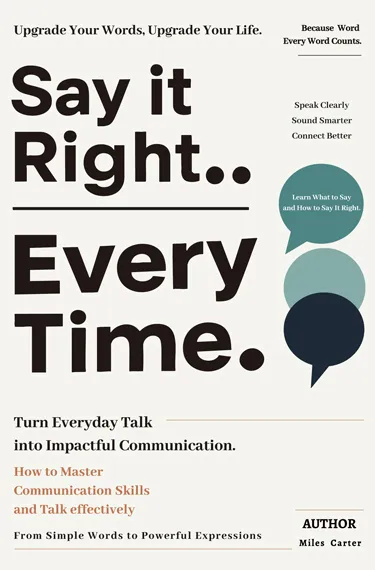
Say it Right..Every Time.
Miles CarterPractical communication tools for the moments that matter — say what you mean, calmly and confidently.
Set Boundaries Without Turning Them Into Threats
Sometimes assertive communication is really about boundaries.
You may need to tell a coworker that you cannot take on another task. You may want a friend to stop making jokes about something personal. You may need to tell a family member that you are not available for an argument.
A weak boundary sounds uncertain. An aggressive boundary sounds like a threat. A clear boundary simply explains what you are comfortable with and what you will do if that boundary is ignored.
Set Boundaries, Find Peace by Nedra Glover Tawwab is useful for readers who find themselves saying yes when they mean no or avoiding uncomfortable conversations because they are afraid of disappointing someone.

It approaches boundaries from a practical relationship perspective, which makes it a useful companion to a communication-focused book.
Some Conversations Need More Than the Right Words
There are also situations where the problem is not just phrasing.
Imagine telling your manager that your workload is becoming unrealistic. You can choose the right words, but the conversation may still become uncomfortable because both sides have something at stake.
Crucial Conversations by Kerry Patterson and coauthors focuses on high-stakes conversations where opinions differ and emotions can run high. It offers a framework for handling those moments without avoiding the issue or turning the conversation into a fight.
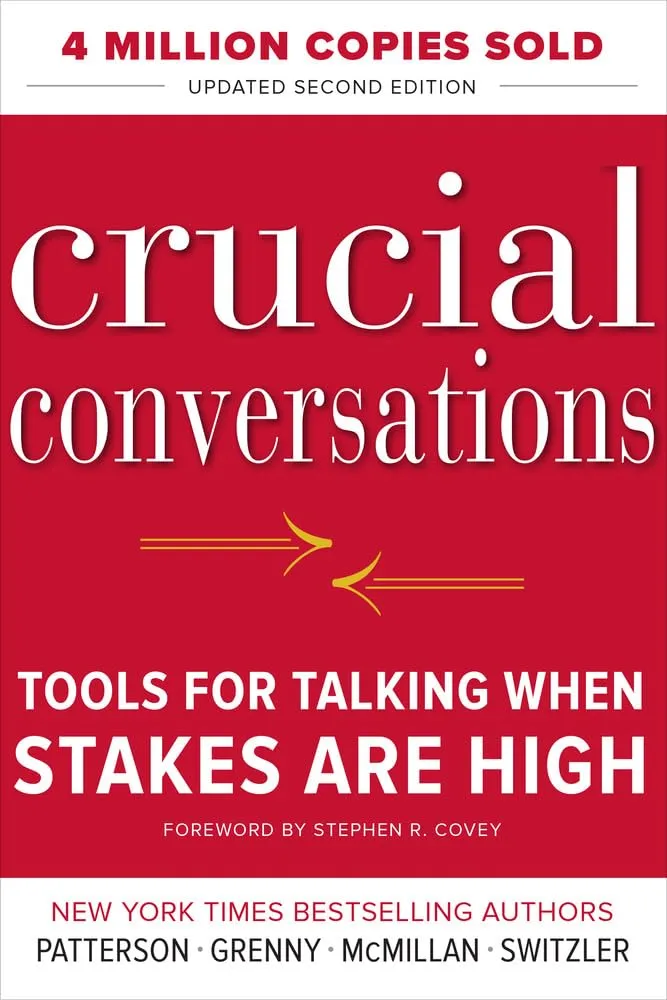
This is a different angle from Say It Right Every Time. One is more focused on everyday communication and expressing yourself clearly, while the other is particularly useful when the conversation itself carries significant tension.
The Same Situation Can Go Very Differently
It can be as simple as dealing with a friend who keeps canceling plans at the last minute. You might brush it off a few times because you don’t want to make things awkward, even though you’re quietly getting annoyed. Then, after it happens again, all that frustration comes out at once and the conversation becomes much more heated than it needed to be.
A more assertive approach is to bring it up while the issue is still small. You can acknowledge that plans sometimes change, while also being honest that repeated cancellations are frustrating and that you’d rather make plans when the other person is more certain they can keep them. You’re not pretending that everything is fine, but you’re also not turning a disappointing habit into a personal attack.
That’s really what assertive communication is about. You do not need the perfect phrase or a completely different personality. You just need to be willing to say what you actually think and need, clearly and respectfully.
Pick the Book Based on Your Communication Problem
Say It Right Every Time is a good starting point when you often struggle to express yourself clearly or your words come out differently from what you intended.
Set Boundaries, Find Peace makes more sense when your biggest problem is saying no, asking for what you need, or dealing with people who regularly cross your limits.
Crucial Conversations is the stronger fit when the conversations you avoid tend to involve work, relationships, money, conflict, or other high-pressure situations.
Reading all three would give you different tools, but most readers will benefit from starting with the problem they encounter most often.
You Do Not Need to Become a Different Person
Assertive communication is sometimes presented as a personality change, as though quiet people need to become naturally outspoken.
That is not really the point. You can be calm, introverted, careful, or soft-spoken and still communicate with confidence.
The useful skill is being able to say what you mean without disappearing from the conversation and without making the other person the enemy. For readers who want to get better at that in everyday situations, Say It Right Every Time offers a practical place to begin.