When Childhood Patterns Follow You Into Adulthood
You can be an independent adult and still find yourself reacting to family situations in ways you do not fully understand. Maybe you feel responsible for keeping everyone happy, avoid conflict at all costs, or become unusually anxious when someone is disappointed with you. These reactions can be difficult to explain because the original situation happened years ago.
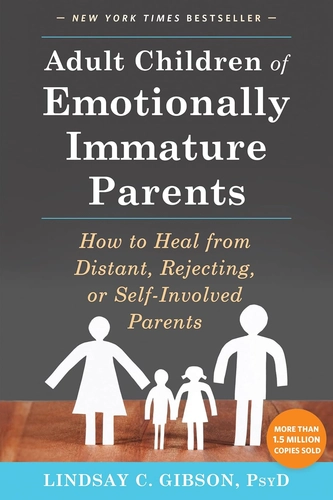
Adult Children of Emotionally Immature Parents by Lindsay C. Gibson explores how emotionally immature parenting can affect children long after they grow up. The book focuses on emotional neglect, difficult family dynamics, and the ways people can learn to build healthier relationships without remaining trapped in old patterns.
What Does Emotional Immaturity Look Like?
Gibson describes emotionally immature parents as adults who struggle to respond to their children’s emotional needs in a consistent and mature way. They may be self-focused, dismissive, unpredictable, overly controlling, or uncomfortable with emotional conversations.
This does not necessarily mean they are intentionally cruel. Some parents may provide food, education, and practical support while still finding it difficult to offer emotional understanding or make space for their child’s feelings.
For the child, the result can be confusing. They may learn to hide emotions, become overly responsible, or spend years trying to earn approval.
How Childhood Patterns Affect Adult Relationships
One of the strongest parts of the book is its connection between childhood experiences and adult behavior. Someone who learned that conflict was dangerous may avoid difficult conversations. Someone who had to constantly manage a parent’s emotions may become overly concerned with other people’s reactions.
These habits can later appear in friendships, romantic relationships, and workplaces. The person may not even realize that a current reaction is connected to an older pattern.
Understanding that connection can make certain behaviors easier to recognize rather than simply blaming yourself for them.
Learning to Separate Your Needs From Other People’s Needs
The book encourages readers to become more aware of what they actually feel and need instead of automatically prioritizing everyone around them.
This can be difficult for people who grew up believing that being agreeable was the safest option. Saying no, expressing disappointment, or asking for support may initially feel selfish even when the request is completely reasonable.
Developing this awareness can lead to stronger boundaries and more balanced relationships. You can care about another person’s feelings without making yourself responsible for managing every emotion they experience.
What Makes This Book Worth Reading?
Adult Children of Emotionally Immature Parents is particularly useful because it gives readers language for family patterns that can otherwise feel vague. It helps explain why some people become overly accommodating, emotionally distant, or highly sensitive to rejection.
The book is not simply about blaming parents for everything that happens later in life. Its more practical purpose is helping readers recognize patterns and decide which ones they no longer want to repeat.
That makes it relevant not only to personal healing but also to communication and future relationships.
Who Should Read It?
This book may be a good fit for people who:
- Feel responsible for other people’s emotions
- Struggle with guilt when setting boundaries
- Avoid conflict even when something is bothering them
- Have difficulty understanding their own emotional needs
- Repeat unhealthy relationship patterns
- Want to better understand the effects of emotionally immature parenting
Final Thoughts
Adult Children of Emotionally Immature Parents offers a useful perspective on how family dynamics can shape the way we communicate, handle emotions, and relate to other people. Recognizing an old pattern does not mean you are permanently defined by it. It can be the first step toward responding differently.
For readers interested in emotional healing, healthier boundaries, and understanding the connection between childhood experiences and adult relationships, this book provides a practical place to start.