I still remember the first time it happened to me. I was standing in a grocery store aisle, holding a carton of milk, and suddenly my heart was pounding so hard I could hear it in my ears. My hands were shaking. I felt like the walls were closing in. I did not know what was happening. I did not know what is an anxiety attack, or why my own body had turned against me in the middle of a Tuesday afternoon.
It took me years to understand it. Not through a doctor’s pamphlet, but through living it, over and over, until the fear of the fear itself became its own problem. This article is what I wish someone had handed me back then.
What Is an Anxiety Attack, Really?
An anxiety attack is a sudden surge of intense fear or discomfort that peaks within minutes. That is the plain version. The lived version feels like your body has decided, without consulting you, that you are in mortal danger.
Your heart races. Your chest tightens. Your breathing gets shallow and fast. You might feel dizzy, sweaty, or like you are watching yourself from outside your own body. Some people feel a choking sensation. Others feel their fingers go numb.
Here is the part nobody tells you. There is often no obvious trigger. You can be fine one second and convinced you are dying the next. That unpredictability is what makes it so frightening. The attack itself usually peaks in about ten minutes. The aftershock, the shaky, drained feeling, can last for hours.
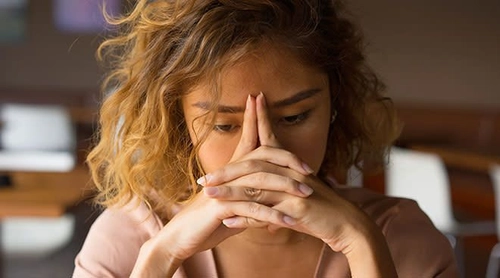
Why Does Your Body Do This?
The short answer is that your alarm system misfires. Your body has a built-in response designed to protect you from real threats. When that system goes off without a real threat present, you get the full physical experience of danger with none of the actual danger.
I used to think something was fundamentally wrong with me. It took a long time to see it differently. My body was not broken. It was overprotective. Like a smoke detector that screams every time you make toast.
Some people are more prone to this. Sleep deprivation makes it worse. So does caffeine, skipping meals, and chronic stress that you have been ignoring for months. I learned that my worst episodes always followed a week of bad sleep. Always. Once I saw that pattern, the attacks felt slightly less random.
How Do You Get Through an Anxiety Attack?
The single most useful thing I learned was this. Do not fight it. Fighting makes it worse. When you tense up and try to force the feeling away, you are telling your body that the threat is real. So it escalates.
What helped me was learning to ride the wave. I would say to myself, quietly, “This is uncomfortable. It is not dangerous. It will pass.”
That sounds too simple. I know. But the first time I actually said it out loud, in my car, gripping the steering wheel, something shifted. Not instantly. But my breathing slowed a little. Enough to think.
You cannot stop an anxiety attack by willpower. You can only stop adding fuel to it. The wave crests and falls on its own. Your job is to stay on the board.
The 3-3-3 Grounding Method
A friend taught me this one, and it has become my go-to. I call it the 3-3-3 method. It is simple enough to remember even when your mind is spinning.
When you feel an attack coming on, do three things.
Name three things you can see right now. Not vaguely. Specifically. “I see a blue mug. I see a crack in the ceiling. I see my own hand on the table.”
Then name three things you can hear. “I hear a car outside. I hear the refrigerator humming. I hear my own breathing.”
Then move three parts of your body. Wiggle your toes. Roll your shoulders. Open and close your hands.
That is it. The point is not to make the anxiety disappear. The point is to give your brain something concrete to hold onto while the storm passes. I have used this in bathrooms, on buses, in the middle of work meetings. It works more often than not.
When Should You Reach Out?
If attacks are happening often, or if you start avoiding places and situations because you are afraid of having one, that is a signal to talk to someone. Not because you are weak. Because you deserve support. I waited too long to tell anyone. I thought I could handle it alone. I could not, and pretending otherwise cost me months.
What About the Hours After?
The attack ends, but you are left wrung out. Your body has just run a marathon with no warning. Be gentle with yourself. Drink water. Eat something, even if you do not feel like it. Cancel the thing you do not have to do. I used to force myself back to normal immediately. Now I give myself a slow hour. That hour matters more than people realize.

FAQ
Q: How long does an anxiety attack last?
A: The peak usually lasts about ten minutes. The shaky, drained feeling afterward can last for hours. If it goes on much longer than that, it may be worth talking to a professional.
Q: Can an anxiety attack happen while you are sleeping?
A: Yes. Some people wake up in the middle of one. It can be especially confusing because you do not know what triggered it. The same grounding methods still help.
Q: Is an anxiety attack the same as a panic attack?
A: The terms are often used interchangeably. Some professionals use “panic attack” as a clinical term and “anxiety attack” more casually. The experience is similar. The important part is not the label. It is learning how to ride it out.
Q: What should I do if someone else is having an anxiety attack?
A: Stay calm. Do not tell them to calm down. Sit with them. Speak slowly. Ask if they want to breathe with you. Do not crowd them. Let them know you are not going anywhere.
Q: Can anxiety attacks cause long-term damage?
A: No. They are frightening but not dangerous. Your body recovers. The bigger risk is the avoidance that builds up afterward, which is why getting support early matters.
References
- Anxiety and Depression Association of America (ADAA). “Understanding Anxiety and Panic Attacks.”
- Bourne, Edmund J. The Anxiety and Phobia Workbook. New Harbinger Publications.
- National Institute of Mental Health (NIMH). “Anxiety Disorders.”
One Last Thing
I stood in that grocery aisle years ago, terrified and alone, not knowing what is an anxiety attack. If you are reading this in the middle of your own version of that moment, you are not broken. You are just scared. Those are different things.