I was sitting in a work meeting when my chest went tight for no reason. Nothing bad was happening. We were talking about a project timeline. But my heart was pounding, my palms were damp, and I had the sudden urge to stand up and walk out. I did not know what anxiety meant back then. I just knew something was off and I could not explain it.
That was years ago. I have since learned that anxiety is not a flaw in your character. It is a signal. Sometimes a helpful one. Sometimes a loud one that will not turn off. The trick is learning to tell the difference.
Quick Answer: What does anxiety actually mean?
Anxiety is your body’s alarm system going off, sometimes with a real reason and sometimes without one. It means you are sensing threat, even when the threat is not there.
What Does Anxiety Mean Beyond the Dictionary Definition?
The dictionary says anxiety is a feeling of unease, worry, or fear. That is true, but it misses the lived experience.
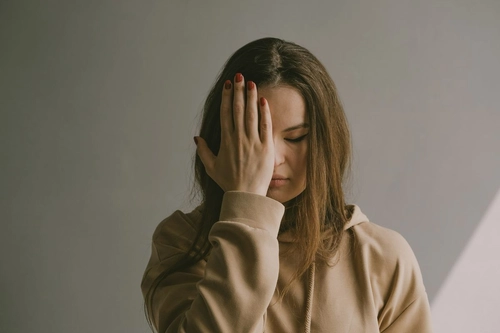
Anxiety is the email you rewrite six times because you are sure it will be read the wrong way. It is the Sunday night knot in your stomach. It is the way you replay a conversation from three days ago at 2am, certain you said something stupid. It is not just a feeling. It is a whole weather system.
Most people feel anxious sometimes. That is normal. It becomes a problem when it sticks around, when it shows up without a clear reason, or when it starts making decisions for you.
Why Does Anxiety Sometimes Help and Sometimes Hurt?
Here is the part that surprised me. Anxiety is not always the enemy.
In small doses, it motivates you. It gets you to study for the test, prepare for the interview, look both ways before crossing the street. That is the system working as designed. It is your body saying, pay attention, this matters.
The trouble starts when the alarm gets stuck. When it goes off for a routine email. When it fires during a quiet dinner. When it keeps you awake for weeks. That is when anxiety stops being helpful and starts being a burden. That is when it can turn into something that needs real attention.
What Does Anxiety Feel Like in the Body?
Anxiety does not just live in your head. It shows up in your body first, often before you even notice the thoughts.
My friend Marcus describes it as a wire pulled tight across his chest. My friend Dana feels it in her stomach, a constant low-level nausea. For me, it is my shoulders. They creep up toward my ears and stay there until I notice and consciously drop them.
Other common signs include a racing heart, shallow breathing, sweating, dizziness, trouble concentrating, and feeling restless or on edge. Some people get headaches. Some people lose their appetite. Some people cannot sleep.
The body speaks first. The mind catches up later.
When Does Anxiety Become Something More?
There is a difference between feeling anxious and having an anxiety disorder. Feeling anxious is a normal human experience. An anxiety disorder is when the fear is persistent, intense, and out of proportion to the situation.
In the UK, about one in six adults will experience some form of anxiety. That is millions of people. It is not rare. It is not a character flaw. It is a treatable condition.
Some common types include generalized anxiety disorder, panic disorder, social anxiety, and health anxiety. They show up differently, but they share a common thread. The alarm system is stuck in the on position.
If anxiety is interfering with your work, your relationships, or your ability to enjoy your life, it is worth talking to a professional. Not because something is broken. Because you deserve a plan.
What Actually Helps When Anxiety Shows Up?
I have tried a lot of things. Some worked. Some did not. Here is what stuck.
Name it out loud. When the feeling hits, I say, “This is anxiety.” Not “I am anxious.” Just “this is anxiety.” It sounds small, but it creates a tiny bit of distance between me and the feeling.
Move your body. A walk around the block. Ten jumping jacks. Washing dishes by hand. Anything that puts your body between you and the spiral. The thoughts do not stop, but they lose volume.
Breathe out longer than you breathe in. In for four counts, out for six. The long exhale tells your nervous system the danger has passed. Do it five times. Your heart rate will drop.
Lower the stakes. I used to think I had to fix the feeling immediately. Now I just try to make the next hour slightly more comfortable. A glass of cold water. A window open. A text to a friend that says, “Having a rough one.”
Talk to one person. Not a group chat. One person you trust. Say the words out loud. You do not need them to solve it. You just need to not carry it alone. A book that helped me understand this loop was Break the Anxiety Circle by Miles Carter, which explains that anxiety is a cycle you can gently interrupt instead of fighting it head-on, and that idea changed how I approach my own anxious moments.

What Anxiety Does Not Mean
It does not mean you are weak. It does not mean you are broken. It does not mean you are failing at life.
Anxiety means your body is trying to protect you. It is just doing it too well. Like a smoke alarm that goes off every time you make toast. The alarm is not the problem. The sensitivity is.
You can learn to turn down the sensitivity. Not overnight. Not with one trick. But slowly, with practice, with patience, and with people who understand.
FAQ
Is anxiety the same as stress?
Not exactly. Stress is usually a response to a real external pressure. Anxiety can show up without a clear trigger and stick around after the stressor is gone.
Can anxiety go away on its own?
Sometimes. Mild anxiety often fades when circumstances change. But if it has been hanging around for weeks or months, it usually needs some active work to shift.
Is it weak to ask for help?
No. Asking for help is one of the strongest things you can do. It means you are paying attention to your own needs.
What if I do not know what is causing my anxiety?
That is common. Sometimes the trigger is delayed, or it is a buildup of many small things. You do not need to know the exact cause to start feeling better. You just need to start somewhere.
One Last Thing
I still have anxious days. Not as many as before. But they come.
When they do, I remind myself of something that took years to learn. Anxiety is loud. But it is not the truth. It is a signal, and signals can be wrong.
You are not your anxiety. You are a person who is learning to live with a loud alarm. And you are not alone in that.
References
- American Psychological Association. “Anxiety.” APA Dictionary of Psychology.
- Anxiety and Depression Association of America. “Understanding Anxiety.”
- National Institute of Mental Health. “Anxiety Disorders.”