You have probably had that feeling. Someone is telling you something, and something does not add up. The words sound fine, but their body is saying something else. You cannot prove anything. You just sense it.
The problem is not that you are paranoid. The problem is that you have been looking for the wrong signals. Most people think lying is obvious. It is not. There is no single gesture, no one tell, no magic phrase. Deception leaks through patterns—small inconsistencies, changes in baseline behavior, and the way someone responds when the pressure shifts.
These books teach you what to actually look for.
1. How to Read Someone’s Mind by Miles Carter
The book that teaches you to read deception through patterns, not single gestures.
Carter breaks reading people into four dimensions: the face, the body, the voice, and the context. You learn to notice tone shifts, hesitation, mismatches between words and actions, and the subtle signals people send without realizing it.
When it comes to lying, the key is not one tell. It is the cluster. A pause that lasts too long. A story that changes slightly each time it is told. A body that leans away while the mouth says yes. A voice that goes flat when a specific topic comes up.
Carter trains you to notice these patterns over time. A single off moment means nothing. A consistent shift in behavior tells you something real. Once you learn to see the signals, you stop being fooled by a convincing story and start trusting the pattern.
For anyone who wants to spot deception without relying on guesswork.
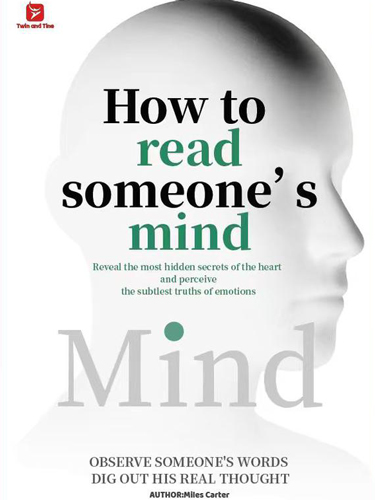
How to Read Someone’s Mind
Miles CarterPractical tools for reading body language, tone, and hidden intentions in real time. Spot what people aren’t saying — before you trust the wrong person.
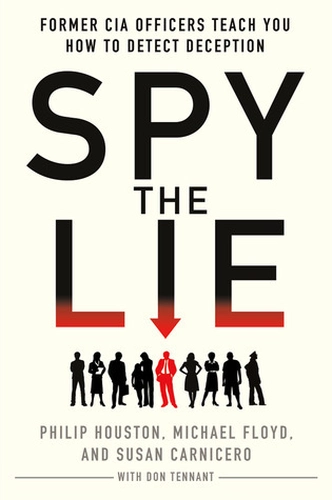
2. Spy the Lie by Philip Houston, Michael Floyd, Susan Carnicero, and Don Tennant
The book that teaches you how to read deception in high-stakes conversations.
Houston and his co-authors are former CIA officers who spent decades interviewing suspects, informants, and terrorists. Their job was to tell when someone was lying—and they developed a structured method for doing it.
The core of their approach is simple: do not rely on single behaviors. Look for clusters. Ask questions that increase cognitive load. Watch how someone responds when the topic shifts. Pay attention to what they avoid, not just what they say. The book gives you specific techniques for spotting deception in real time—without confrontation.
What makes this book valuable is the discipline. It does not tell you that crossed arms mean lying. It teaches you to establish a baseline, observe deviations, and ask the right questions.
For anyone who wants a proven method for detecting deception in conversations.
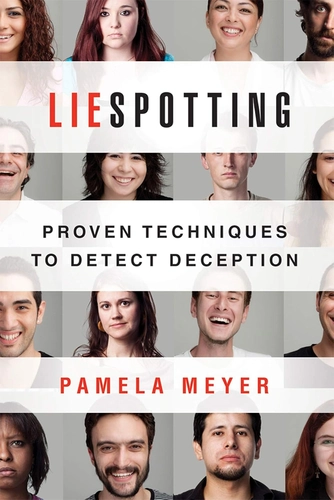
3. Liespotting by Pamela Meyer
The book that explains why lying is so common—and how to get better at spotting it.
Meyer is a deception expert whose TED talk on spotting liars has been viewed millions of times. Her book digs into the science of lying: why we do it, how often we do it, and why we are so bad at detecting it.
She argues that most people are terrible lie detectors because they look for the wrong things. They focus on nervousness, but nervousness is not a sign of lying. They miss the real signals: inconsistencies in stories, the way someone distances themselves from their words, the subtle shifts in language that reveal what they are actually thinking.
The book gives you a framework for spotting deception by paying attention to patterns—verbal, nonverbal, and emotional. It also teaches you how to ask better questions so people reveal more than they intend to.
For anyone who wants to understand the science behind lying and how to get better at seeing through it.
| Best for | |
|---|---|
| How to Read Someone’s Mind | Reading patterns and clusters of deceptive behavior |
| Spy the Lie | A structured method for detecting deception in conversation |
| Liespotting | Understanding the science of lying and improving detection |
These three books each approach deception from a different angle. Carter gives you the signals. Houston and his co-authors give you the method. Meyer gives you the science.
If you are tired of being lied to and want to stop missing the signs, start with the one that teaches you to read the pattern instead of the single gesture.
Three books that help you tell when someone is lying—by reading patterns, asking better questions, and understanding the science of deception.