Discipline Is Hardest When Everyone Is Already Upset
Most parents know what they want discipline to accomplish. They want their children to learn from mistakes, respect limits, and gradually become more responsible. The difficult part is knowing what to do when a child is already shouting, refusing, arguing, or completely overwhelmed.
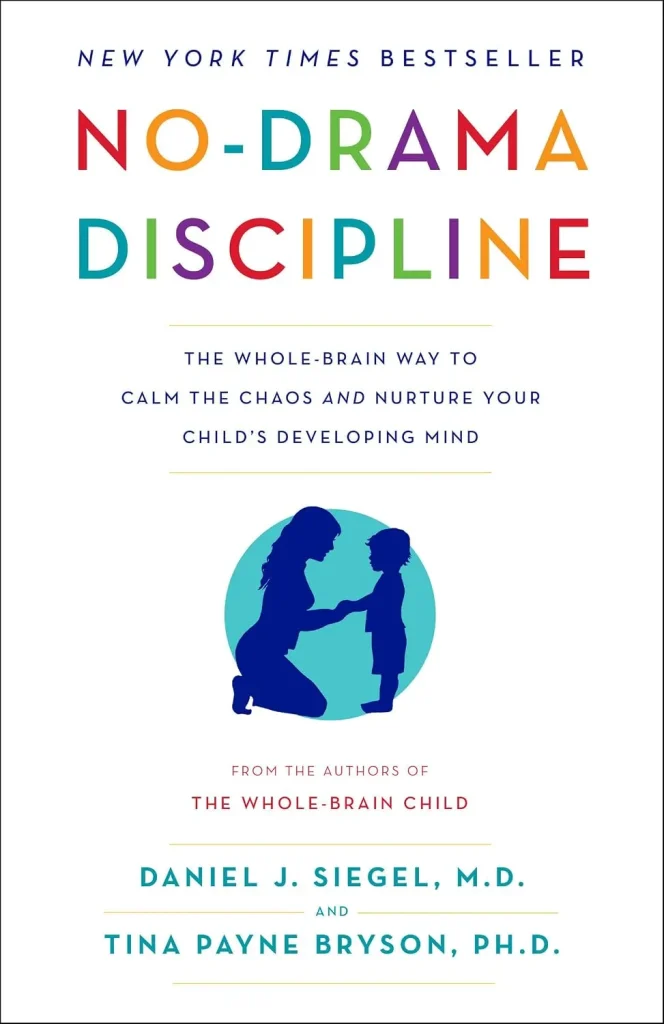
No-Drama Discipline by Daniel J. Siegel and Tina Payne Bryson takes a different look at these situations. Instead of treating discipline mainly as a way to stop unwanted behavior, the book focuses on what children are learning during those difficult moments and how parents can respond without making the situation even more emotional.
Discipline Is More Than Getting Children to Obey
One of the book’s main ideas is that discipline should teach, not simply punish. A child may stop a behavior because they are afraid of a consequence, but that does not necessarily mean they understand what they should do differently next time.
The authors encourage parents to think about the lesson behind the behavior. A child who hits when angry needs more than a command to stop. They also need help learning how to handle anger, frustration, and conflict in a better way.
That makes discipline a longer process rather than a quick attempt to regain control.
Big Emotions Can Take Over
Children often react strongly before they have the ability to calm themselves down. When that happens, explaining rules or giving a long lecture may accomplish very little.
No-Drama Discipline emphasizes connecting with the child before trying to correct the behavior. This does not mean ignoring the problem or allowing unacceptable actions. It means recognizing that a child who is completely overwhelmed is not in the best state to absorb a lesson.
A calmer connection can create the opening for the actual correction to happen.
Firm Boundaries Still Matter
The book is not arguing for permissive parenting. Children still need limits, consequences, and clear expectations.
The difference is in how those limits are communicated. Parents can say no, stop unsafe behavior, and enforce rules while still showing that they understand the child’s feelings.
For example, a child can be angry about turning off a game, while the parent still expects the game to be turned off. Understanding the frustration does not require changing the rule.
That balance between empathy and firmness is one of the most practical ideas in the book.
Parents Have Emotions, Too
Another part worth paying attention to is the parent’s own emotional state. It is much harder to respond calmly when you are already exhausted or frustrated, especially after repeating the same instruction several times.
Sometimes the biggest challenge is not the child’s behavior but the parent’s reaction to it.
The book encourages parents to become more aware of their own emotional responses. Taking a moment to calm down can completely change the direction of an interaction and prevent a small problem from becoming a much bigger argument.
What Makes No-Drama Discipline Worth Reading?
The book is useful because it deals with ordinary parenting problems rather than ideal situations. Children still have tantrums. They still argue, test limits, lose control, and make mistakes. The goal is not to eliminate those moments but to handle them in a way that teaches something useful.
Its strongest message is that discipline and connection do not have to be opposites. Parents can hold firm boundaries while still making children feel heard and understood.
Who Should Read It?
This book may be useful for parents who:
- Struggle with children’s outbursts or defiance
- Feel that discipline often turns into shouting
- Want to set firm limits without constant punishment
- Find it difficult to stay calm during difficult behavior
- Want children to learn emotional regulation
- Are looking for a more constructive approach to discipline
Final Thoughts
No-Drama Discipline does not promise a home without arguments or difficult behavior. Instead, it asks parents to look at those moments differently.
A child’s difficult behavior can be a problem that needs to stop, but it can also be a chance to teach emotional control, responsibility, and better ways of handling frustration. When parents can keep that in mind while maintaining clear boundaries, discipline becomes less about winning the moment and more about helping a child grow.