When my daughter was four, she went through a phase where every single evening turned into a battle. Bath time. Pajamas. Brushing teeth. Every step was a negotiation, and I was losing. I remember standing in the hallway one night, completely drained, thinking, there has to be another way. I had tried the sticker charts. I had tried counting to three. I had tried the firm voice. Nothing held.
That was the year I started paying attention to what child behavior correction strategies actually accomplish, and what they quietly destroy. I am not a researcher. I am a mother who read too many books at 2am and tested things on a very strong-willed little person. Some of it worked. A lot of it did not. What follows is the honest version.
Why Does Punishment Make Things Worse?
Here is what I noticed first. When I yelled, my daughter stopped whatever she was doing. For about thirty seconds. Then she did it again, only this time she watched my face while she did it. There was something in her eyes. Curiosity, maybe. Or a question she could not ask out loud.
A friend who teaches preschool told me something that stayed with me. She said children are not miniature adults. When a child hears a loud voice, their thinking brain goes quiet. What is left is the alarm system. So the lesson they take away is not “I should not do that.” The lesson is “Mom is scary right now.” Those two things look the same from the outside. They are worlds apart on the inside.
I think about that a lot. Every time I raise my voice, I am choosing which lesson to teach. Sometimes I still choose wrong. But at least now I know I am choosing.
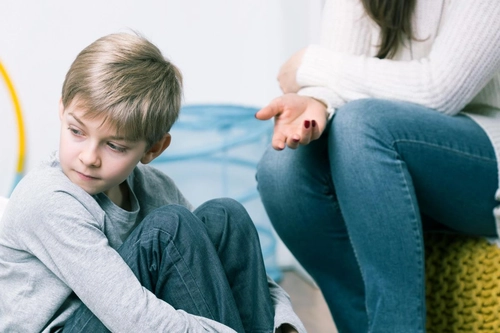
Punishment Feels Fast. It Is Not.
What does your child do after you send them to their room? Do they sit there thinking about their choices? Mine did not. She sat there thinking about how unfair I was. She rehearsed her defense. By the time I opened the door, she had a full argument ready. The original behavior was long forgotten. We were now fighting about the fight.
There is a name some parents use for this. They call it the second problem. The first problem is whatever the child did. The second problem is everything the correction creates. Sometimes the second problem is bigger than the first.
Before a Child Can Change, They Need to Feel Seen
The most useful shift for our family came from a simple idea. Correction works better after connection. Not instead of it. After it.
One evening, instead of launching into the usual lecture, I sat on the floor next to my daughter and said, “You seem really angry about something.” She burst into tears. Turns out she was upset about a friend at preschool who had told her she could not play. The bedtime fight was never about bedtime.
I am not saying every meltdown hides a secret wound. Sometimes kids are just tired and testing limits. But I started asking one question before reacting. What is this behavior trying to say? That single question changed the temperature in our house more than any chart on the fridge.
The 60-Second Pause Ritual
This is the tool that saved us. I did not invent it. I borrowed pieces from different places and made it fit our home.
Here is how it goes. The moment something happens and I feel the heat rising in my chest, I do three things in order.
First, I breathe out slowly. One long breath. This is for me, not for her.
Second, I get low. I kneel or sit so we are at eye level. Something about being tall while correcting a small person makes everything worse. I do not know why. It just does.
Third, I name what I see without judging it. “You threw the cup.” That is all. No why did you. No how many times. Just the fact.
Then I wait. Usually she fills the silence. And what comes out is almost never what I expected.
This whole thing takes under a minute. It feels awkward the first ten times. By the twentieth time, it becomes the way you talk to each other.
Different Ages, Different Approaches
A two-year-old and a seven-year-old do not need the same correction. This sounds obvious. I still forgot it constantly.
With toddlers, distraction is not a trick. It is the main strategy. They cannot hold two ideas at once. If you offer something else to look at, the original impulse fades. “Oh look, the dog is drinking water.” That is not giving in. That is working with how their brain is built right now.
With preschoolers, choices work better than commands. Do you want to walk to the bath or hop? Both options get you where you need to go. The child feels some control. You still get a clean kid.
With school-age children, the key question changes. They want to understand fairness. “Why is this rule like this?” is not backtalk. It is genuine curiosity about how the world works. If you can explain your reasoning, they often accept the limit. If you cannot explain it, maybe it is not a good rule.
With older kids, around nine and up, correction starts to look more like conversation. They need to save face. A quiet word on the side works better than a public correction in front of siblings. I learned this one the hard way.
When Your Child Says I Hate You
This one used to gut me. My daughter said it for the first time when she was five, after I told her we were leaving the park. I felt like I had failed at something fundamental.
A wiser parent than me once said, listen to what comes after. Children that age do not have the vocabulary for “I am disappointed and I do not know how to hold this feeling.” So it comes out as the biggest word they know.
Does that mean you ignore it? No. It means you do not treat it as a declaration of war. You can say, “You are really upset we are leaving.” That is it. You do not need to fix the feeling. You just need to show you heard it. Often, that is the whole correction. The behavior was the feeling looking for a place to land.
Building Your Own Family Rules
We ended up with three house rules. Not ten. Not a list on the wall. Three, and we all know them.
We do not hurt people. We do not break things on purpose. We tell the truth, even when it is hard.
Everything else falls under one of those three. When something happens, I ask which rule it touches. This removes the because I said so problem. The rule is not mine. It belongs to all of us. My daughter has used it against me, by the way. “You said we tell the truth even when it is hard.” She was right. I apologized.
What About When Nothing Works?
Some days, nothing works. Your child is tired. You are tired. The correction strategies you practiced in your calm moments disappear. You say the thing you swore you would never say.
I have been there more times than I want to count. Here is what I have learned. Repair matters more than perfection. After the storm, you can go back. “I yelled. That was not okay. I am sorry.” Children learn more from watching you fix a moment than from never breaking one.
That is the part no book tells you clearly enough. The goal is not a child who never misbehaves. It is a relationship strong enough to survive the misbehavior. On that measure, we are doing fine.

One Last Thing
The other night, my daughter, now older, came to me upset about something at school. She did not slam a door. She did not yell. She sat down next to me and said, “I need to tell you something.” I thought about that hallway years ago, the one where I stood defeated, convinced I was getting everything wrong.
The child behavior correction strategies that mattered most were never about the behavior. They were about staying close enough that she still wanted to tell me things. That is the whole thing. Everything else is just bedtime.
References
- Siegel, D. J., & Bryson, T. P. (2011). The Whole-Brain Child: 12 Revolutionary Strategies to Nurture Your Child’s Developing Mind. Bantam.
- American Academy of Pediatrics. (2018). What’s the Best Way to Discipline My Child? HealthyChildren.org.
- Ginott, H. G. (1965). Between Parent and Child: The Bestselling Classic That Revolutionized Parent-Child Communication. Three Rivers Press.