You are lying in bed at 2 AM. Your brain is running at full speed. That thing you said at work. That text you sent. That mistake from three years ago. You try to stop it. It does not work.
Overthinking is not the same as thinking. Thinking is productive. Overthinking is a trap. It does not lead to solutions. It leads to more overthinking. It is anxiety dressed up as problem-solving.
Most people try to fight it. They tell themselves to calm down. They search for the right thought that will fix everything. None of that works. Your brain does not respond to logic when it is stuck in a loop. It responds to different tools.
Quick answer: How do I actually stop overthinking when it is happening?
You catch the spiral early, shift your attention to your body instead of your thoughts, and learn to distinguish between productive thinking and useless worry.
Here are three books about overthinking that take different approaches. One gives you practical scripts to communicate better and reduce the misunderstandings that fuel overthinking. One uses brain science to break the worry loop. One helps you let go of what you cannot control.
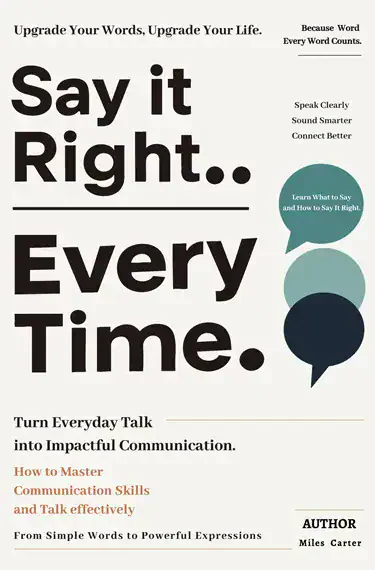
Say It Right Every Time
Practical tools for the moments that matter. Say what you mean, calmly.
This book by Miles Carter is not just about communication. It is about stopping the overthinking before it starts. Most of our mental spirals come from conversations that went wrong or things we wish we had said differently.
What makes this book different is the side-by-side comparisons. For every situation, Carter shows you a clunky, ineffective way to say something. Then he shows you a better way. You see the difference immediately. No vague advice. No theory. Just real scripts you can use.
The book covers daily conversations, workplace interactions, and emotional connections. You learn to set boundaries, make requests, handle conflict, and express opinions with confidence. Each chapter includes real-life scenarios with specific examples.
When you know what to say, you stop replaying conversations in your head. You stop wondering if you said the wrong thing. You just say it right the first time.
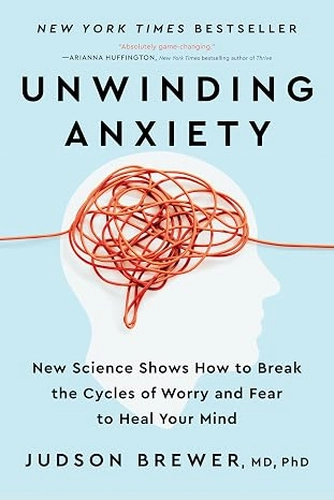
Unwinding Anxiety
New science shows how to break the cycles of worry and fear.
Judson Brewer is a psychiatrist and neuroscientist. He has spent over twenty years studying anxiety and addiction. This book is the result of that research.
The core idea is simple. Anxiety lives in a part of the brain that resists rational thought. You cannot think your way out of it. You cannot willpower your way out of it. But you can use curiosity to interrupt the loop.
Brewer teaches you to map your triggers. To notice when anxiety starts. To get curious about what it feels like in your body. That curiosity creates distance. And that distance breaks the habit loop.
The book is based on clinically proven techniques. It has helped Olympic athletes, business leaders, and thousands of patients. It can help you too.
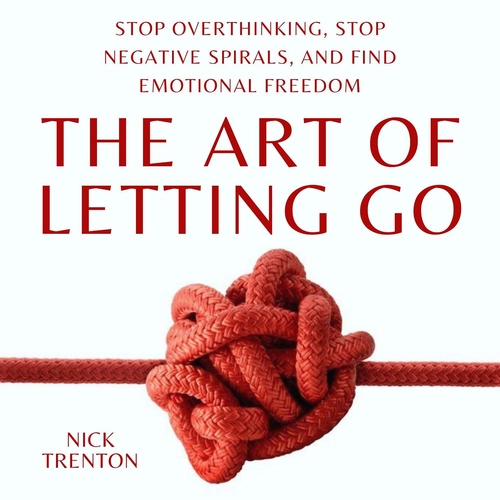
The Art of Letting Go
Stop overthinking, stop negative spirals, and find emotional freedom.
Nick Trenton wrote this book for people who cannot relax. If you are always on edge and unable to quiet your mind, this one is for you.
The book is about organizing the mess in your mind. It teaches you to stop focusing on the past that is over and the future that may never happen. It helps you be present in situations where you actually have control.
Trenton explains how to rewire the anxious connections in your brain. He shows you how to switch your mental programming and beliefs. He reminds you that your brain was built for a different time, and you can afford to let your guard down.
You learn techniques like nonjudgment, observation of emotions, brain dumping, self-distancing, and defeating perfectionism. You learn to control your self-talk and transform your internal worldview.
For anyone who wants to restore inner peace and trust that things will be okay.
Which Book Should You Read First?
If your overthinking comes from conversations and social situations, start with Say It Right Every Time. It gives you words that stop the spiral before it starts.
If your overthinking is driven by anxiety and worry, pick up Unwinding Anxiety. It uses brain science to break the loop.
If you struggle with letting go and being present, go with The Art of Letting Go. It helps you find emotional freedom.
Many people read all three. Each one offers something the others do not.
Final Thought
Overthinking is not who you are. It is a habit. And habits can be broken. Not by trying to stop thinking. That never works. By learning to recognize the loop, shift your attention, and use different tools.
You do not need to figure this out on your own. These books have been written by people who have spent years studying exactly this problem. Let them help.
Start with one book. Try one technique. See what happens.
Frequently Asked Questions
Can I really stop overthinking?
Yes. Not by trying to stop thinking. That never works. By recognizing when thinking is no longer useful and redirecting your attention.
What if other overthinking books did not help?
You were probably reading about overthinking instead of learning to interrupt it. These books focus on the moment it is happening.
Do I need to read these in order?
No. Start with the one that matches your biggest struggle right now. If your overthinking comes from conversations, start with Say It Right Every Time. If it is anxiety-driven, start with Unwinding Anxiety. If it is about letting go, start with The Art of Letting Go.
How long until I see results?
Some people notice a difference after one chapter. For others, it takes weeks of practice. The key is to use what you learn.