When Your Child Can Never Seem to Get It Right
You remind them to sit properly. You point out the homework mistake. You tell them to slow down, speak more politely, put something away, do it differently, and try again. None of those corrections seems unreasonable, especially when you are trying to teach good habits. But after a while, you may notice that you are correcting your child almost constantly.
The child may start expecting it too. They wait for the next comment, become defensive before you finish speaking, or stop trying because they assume whatever they do will be criticized anyway. Meanwhile, you are exhausted because you feel responsible for noticing and fixing every little thing.
This is one of those parenting habits that can begin with good intentions and gradually become part of the atmosphere at home.

Not Every Mistake Needs to Be Fixed by a Parent
Children make mistakes all day long.
They forget things, make choices you would not make, say awkward things, leave a mess, solve a problem in a strange way, and occasionally learn something the hard way. A parent who reacts to every mistake may end up sending the message that there is always a better way to do something, and that better way is usually the parent’s way.
That can make children less willing to experiment. Instead of thinking, “Let me figure this out,” they start thinking, “What is Mom or Dad going to say about this?”

Correction and Guidance Are Not the Same Thing
There are times when correction is important. Safety rules, harmful behavior, dishonesty, disrespect, and serious responsibilities should not simply be ignored.
But not every small imperfection requires commentary.
Sometimes a child needs a chance to notice the mistake themselves. Sometimes they need a question that helps them think. Sometimes the consequence of a choice teaches more than another explanation from the parent.
Learning to tell the difference can make parenting feel much less like supervising every second of a child’s life.

The Parent You Aspire to Be
The Parent You Aspire to Be by Miles Carter directly addresses this issue through its discussion of constant correction, overreminding, children’s mistakes, and the importance of allowing children more space.

That combination is particularly meaningful because constant correction rarely happens in isolation. A parent may correct a child because they are worried about the future, anxious about the child’s behavior, or convinced that the child will not learn unless the parent keeps reminding them. The more the parent notices, the more they correct; the more they correct, the more the child begins to resist.
The book helps parents examine that cycle rather than simply trying to become better at giving instructions.
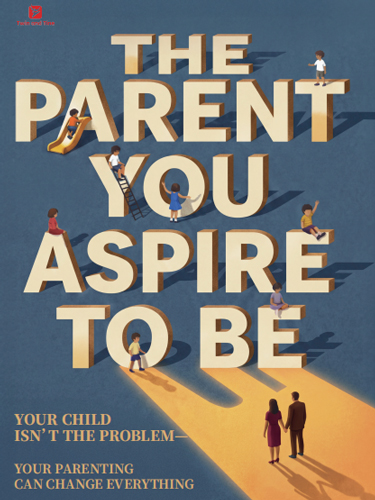
The Parent You Aspire to Be
Miles CarterPractical guidance for tantrums, backtalk, lying, screen addiction, emotional outbursts, and everyday parenting struggles.
Your Child Does Not Need Commentary on Everything
Think about an ordinary afternoon.
Your child is getting dressed and puts the shirt on inside out. They leave a book on the floor. They start homework in a way that you would not have chosen. They answer a question awkwardly. None of these moments necessarily requires an immediate correction.
When parents comment on everything, children can stop distinguishing important guidance from background noise. They hear so many reminders that they eventually tune them out.
Sometimes saying less makes the instruction that really matters much more effective.
Let Mistakes Teach Something
A child who forgets to bring homework may need to experience the inconvenience of explaining that to the teacher. A child who delays getting ready may have less time for the activity they wanted to enjoy. A child who ignores an agreed responsibility may need to deal with the result rather than hearing another ten-minute lecture.
Natural and reasonable consequences give children information that repeated reminders cannot always provide.
This does not mean leaving children to fail without support. It means allowing consequences to become part of the learning process instead of trying to prevent every mistake in advance.

Watch What Constant Correction Does to Confidence
When a child is corrected all the time, the emotional effect can be bigger than the individual comments.
They may become afraid of making mistakes. They may stop asking questions because they expect to be told they are doing something wrong. They may become unusually dependent on adults for approval before trying something themselves.
The book’s discussion of children’s mistakes and parental responses is important here. Children need to understand that mistakes are part of learning, while parents need to avoid turning every mistake into a judgment about the child’s ability or character.

You Do Not Have to Ignore Bad Behavior
Giving children space does not mean allowing everything.
The challenge is being selective about what deserves intervention. If a child is hurting someone, repeatedly crossing an important boundary, or refusing a responsibility that clearly belongs to them, the parent needs to step in.
But there is a difference between correcting meaningful behavior and commenting on every small flaw. One teaches responsibility. The other can make a child feel as though they are permanently being evaluated.
Sometimes the Parent Needs to Pause First
When you have developed a habit of correcting, you may not even notice that you are doing it.
The comment comes automatically.
Before speaking, ask yourself whether your child genuinely needs guidance right now or whether you simply noticed something you would have done differently. That small pause can be enough to interrupt the pattern.
The Parent You Aspire to Be is useful for this kind of self-awareness because it treats the parent’s behavior as part of the parenting equation. The goal is not to blame the parent for every problem. It is to help the parent notice which reactions are actually helping.

What Changes When You Stop Managing Every Little Thing?
Your child may become more willing to try things independently. They may start solving small problems without immediately looking to you for the answer. You may also notice fewer arguments because not every action is followed by another correction.
For parents, the change can be just as valuable. You no longer have to monitor every detail, repeat the same instructions endlessly, or feel responsible for preventing every mistake. Your energy can go toward the things that genuinely matter.
That does not make you a less involved parent. It makes your involvement more intentional.
Let Your Child Grow Into Their Own Person
Children are not supposed to move through childhood without making mistakes. They are supposed to learn, experiment, fail sometimes, adjust, and gradually become more capable of handling things themselves.
The Parent You Aspire to Be gives parents a practical way to think about that process. Its ideas around constant correction, overreminding, children’s mistakes, independence, and firm but kind boundaries all point toward the same larger goal: guiding children without taking over every part of their development.

For parents who feel exhausted from constantly correcting, reminding, and managing, the book can offer an important shift in perspective. You do not have to stop teaching your child. You simply have to leave enough room for your child to learn.