When Your Child Seems Impossible to Reach
Some parenting situations become exhausting because the same conflict happens again and again. A simple request turns into shouting, a small disappointment leads to a major meltdown, and the usual advice about consequences or rewards seems to make very little difference.
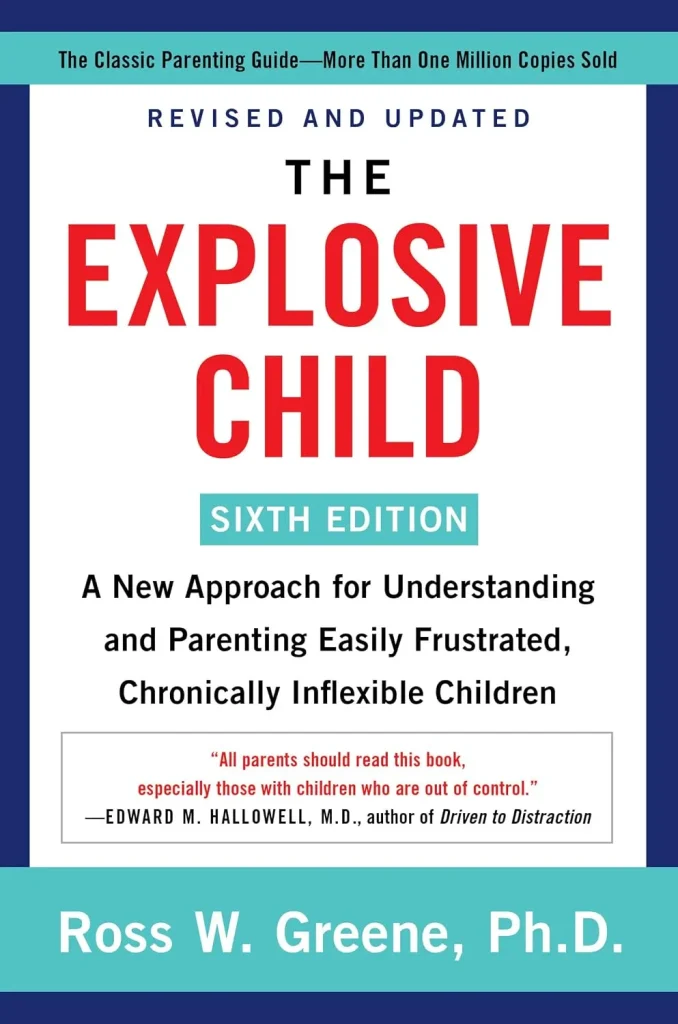
The Explosive Child by Ross W. Greene takes a different view of these situations. Rather than seeing difficult behavior simply as disobedience, Greene focuses on the skills a child may be lacking when they cannot handle frustration, change, or a difficult demand.
Difficult Behavior May Have a Reason
One of the book’s most important ideas is that children do not always have the skills needed to manage situations that seem easy to adults. A child may struggle with flexibility, frustration, communication, or problem-solving, and the resulting behavior can look like deliberate defiance.
That does not mean parents should simply allow the behavior. It means they need to understand what is making the situation difficult before deciding how to respond.
This perspective can change the conversation from “How do I make my child obey?” to “Why is this situation so hard for my child?”
Why Punishment Does Not Always Solve the Problem
Parents often increase consequences when a behavior keeps happening. The logic seems reasonable: if the consequence is serious enough, the child should eventually stop.
Greene argues that this does not address the underlying difficulty when a child genuinely lacks the skills required to handle the situation. More punishment may increase frustration without teaching the child what they need to do differently.
The book instead emphasizes solving problems proactively and working with the child rather than constantly reacting after another outburst has already begun.
Communication Matters During Conflict
One of the strongest connections between this book and everyday parenting is communication. When a child is already overwhelmed, long explanations and repeated lectures are rarely helpful.
Greene’s approach encourages parents to listen carefully, identify the specific difficulty, and work toward a solution that the child can actually handle. The parent still provides structure, but the conversation becomes more collaborative.
This can be especially useful for parents who feel that every disagreement has turned into a power struggle.
What Makes The Explosive Child Worth Reading?
The book is most useful for parents who have tried ordinary discipline strategies and still feel stuck. It offers a different way to interpret tantrums, refusal, aggression, and other difficult behaviors without immediately assuming that the child is simply being difficult on purpose.
Its biggest strength is that it combines empathy with practical problem-solving. Parents are encouraged to understand the child while still addressing behavior and maintaining reasonable expectations.
Who Should Read It?
This book may be especially helpful for parents dealing with:
- Frequent emotional outbursts
- Extreme frustration over everyday requests
- Constant arguments and refusal
- Difficulty handling changes in routine
- Children who seem unable to calm down once upset
- Parenting situations where punishment has not improved behavior
Final Thoughts
The Explosive Child offers a useful reminder that challenging behavior is not always a sign that a child needs stricter discipline. Sometimes it is a sign that the child needs help developing the skills required to handle frustration, solve problems, and respond more flexibly.
For parents who feel exhausted by repeated conflicts, the book provides a different question to start with: instead of asking how to stop the behavior, ask what is making the behavior happen in the first place. That change in perspective can lead to very different conversations between parents and children.