I once sat across from a thirteen-year-old who told me his parents did not love him. He said it plainly, no tears, no drama. Just a fact, as far as he was concerned. I knew his parents. They were good people. They worked hard. They showed up. They loved him. But somewhere along the way, the message never landed.
That conversation stayed with me for years. It made me start paying attention to a quiet question. What happens when a child does not feel loved, even when they are?
What Happens When a Child Does Not Feel Loved
The short answer is nothing good. But it rarely looks dramatic at first. It looks like a kid who stops telling you things. A kid who says “fine” and means nothing. A kid who retreats to their room more and more.
Over time, it can turn into something bigger. Low confidence. Trouble at school. Anger that seems to come out of nowhere. Teens who pull away and never come back.
A child who does not feel loved does not always act out. Sometimes they go quiet. They stop asking for things. They stop expecting warmth. They learn to take care of themselves in ways no child should have to.
The boy who ran away from home did not leave because his parents were cruel. He left because he felt invisible. And invisible, for a kid, is its own kind of pain.

The Love Language Nobody Taught Us
Most parents love their kids. That part is rarely the problem. The problem is that love has to be received, not just sent.
There is a simple idea that changed how I think about this. Love gets expressed in different ways. Words of affirmation. Quality time. Acts of service. Gifts. Physical touch. Most people have one that lands deeper than the rest.
If you speak the wrong one, your kid might not feel loved, even if you are doing everything right. You are sending the message. They are not receiving it.
I saw this with my own kids. My son would run to the door and climb up my leg the second I got home. Physical touch. My daughter would say, “Come into my room, I want to show you something.” Quality time. Same love. Different language.
How to Figure Out What Your Child Needs
You do not need a test or a therapist to figure this out. You just need to pay attention.
Watch how they show love to you. Kids usually give love in the way they want to receive it. If your child is always hugging you, that might be their language. If they are always bringing you little things, that might be theirs.
Listen to what they complain about. “We never spend time together” is a clue. “I can never do anything right” is a clue. Kids complain about the thing they are missing.
Notice what they ask for. “Can we take a walk?” is a request for time. “How do I look?” is a request for affirmation. “Can I have this?” might be a request for a gift, or it might be a request for time, depending on why they want it.
What Actually Helps
Here is what I have seen work, both in my own home and with families I have talked to.
Speak all five languages, but lean into their primary one. You do not have to ignore the others. Just make sure the one that matters most gets extra attention.
Try one language a week for five weeks. See which week your child’s mood shifts. That is your answer.
Adjust as they grow. A hug that worked at ten might embarrass them at fourteen. The language stays the same. The dialect changes. A fist bump. A hand on the shoulder. A quiet word on the side instead of a public one.
Ask them directly. “On a scale of one to ten, how much love do you feel from me?” Then ask, “What could I do to bring that number up?” You might be surprised by the answer. You might also be surprised by how much they have been waiting for you to ask.
Listen more than you talk. When your teen argues with you, that is often a bid for connection, not a declaration of war. Try saying, “I am glad you are thinking about this. Tell me more.” That sentence has saved more relationships than any lecture ever will.
The Part That Stays With Me
The boy who ran away eventually came home. His parents did the work. They learned to speak his language. It took time. It was not perfect. But he started talking to them again, which was more than they had before.
I think about him often. Not because the story was dramatic, but because it was ordinary. Most kids who feel unloved do not run away. They just slowly close the door. And by the time you notice, it can feel like it is too late.
It is not too late. Not if you start now. Not if you are willing to learn a new language for the person you already love.
What I Hope You Take From This
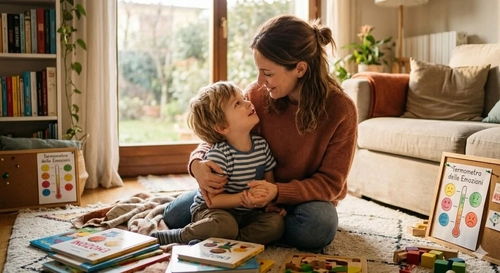
You do not have to be a perfect parent. You just have to be a curious one. Watch. Listen. Ask. Adjust.
The message is already there. You just have to make sure it is landing.
References
- Chapman, Gary, and Ross Campbell. The Five Love Languages of Children. Northfield Publishing, 2012.
- Siegel, Daniel J., and Tina Payne Bryson. The Whole-Brain Child. Bantam, 2011.
- American Academy of Pediatrics. “Talking With Your Child.” HealthyChildren.org.

